Global sustainability and corporate social responsibility: Be sustainable (Coursera)

Offered by Macquarie University,
Global sustainability and corporate social responsibility: Be sustainable (Coursera)

It is no longer acceptable for organisations to focus entirely on financial success if they are to be competitive on the global stage. As corporate scandals continue to make headlines, you will expand your strategic thinking beyond your organisation’s competitive financial environment to consider its broader impact on society. You will grapple with the conflicting outcomes of maximising financial return and societal impact as you develop the skills to create a balance that is sustainable.

Class Deals by MOOC List - Click here and see Coursera's Active Discounts, Deals, and Promo Codes.

Through structured learning activities (video lectures, quizzes, discussion prompts and written assessments) you will gain an appreciation of how important sustainability will be for every organisation in the future – and how to achieve it.
What You Will Learn

  • Assess business decisions using metrics including financial maximization, shareholder value, customer well-being, and societal impact
  • Apply the principles and tools of complex systems thinking to sustainable business challenges and/or opportunities
  • Identify and evaluate strategies, processes and leadership techniques that enable successful sustainability transitions in a business context

Course 3 of 4 in the Strategising: Management for Global Competitive Advantage Specialization.

Syllabus

WEEK 1
The nature of sustainability
What is sustainability, why, and when did the concept develop, and why is it of crucial strategic importance for business? This week you will be introduced to the drivers that have given rise to the concept of sustainability; the diverse range of ethical, social, and environmental issues it contains; and the main global definitions, goals and frameworks of sustainable development. To provide context for the above, you will start by reviewing contemporary examples, from some of the world's most powerful corporations, of how neglect of sustainability has resulted in massive financial, reputational, and social costs.

WEEK 2
Concerns with business impacts
What is it about the history and practices of business that have given rise to wider societal concerns regarding its impact on the sustainability of our world? Focussing upon three major developments – i) industrialisation, ii) neoliberalism, and iii) globalisation – this week you will examine the root of concerns with business impact on areas such as environmental pollution, inequality, and the quality of working lives. Understanding some of this wider critical context is an essential foundation if businesses and business leaders are to retain or gain the trust of the community, consumers, regulators, and employees.

WEEK 3
Strategic responses to sustainability
Given the complexities of the relationship between business and sustainability, what are the key sustainable strategies that businesses can employ? You will be introduced to three such strategies this week, organised around: i) business ethics, ii) corporate social responsibility (CSR) and corporate philanthropy, and iii) natural or green capitalism. Through an examination of contemporary business practices, you will see that strategies in the above areas may still signal a variety of value positions by businesses, including those proactively committed to, reactive to, and resistant of sustainability.

WEEK 4
The difficulty of being ethical in organisations
Why is it that some business leaders may knowingly engage in strategies that are unsustainable? Is there something particular to formal organisational structures that make them spaces where being ethical can seem the hardest thing to do? This week we consider important social scientific research that examines the dynamics by which such things as organisational hierarchy, too close an identification with work roles, a focus on procedures and instrumental outcomes, even relations of authority, can dramatically inhibit or subvert our sense of ethical responsibility in organisations.

WEEK 5
New and emerging sustainable business strategies
Much of the strategy field concentrates upon the strategies of large, profit maximising, corporations. Some of the most interesting and innovating strategies however may emerge across different types of organisation and context. This week you will examine some of these – concentrating upon the areas of social entrepreneurship, micro-finance, public-private partnerships, and examples of smaller businesses embedding sustainability in their local communities. There is considerable promise with some of the above strategies and practices, but as we shall examine, even here we still need to be attentive to tensions and open to critique in terms of how sustainability is achieved.

WEEK 6
Taking sustainable strategy forward
How can you transfer knowledge about sustainable strategies into effective practices in the business domain? This week directs you to resources that you can draw upon to seek to develop more sustainable strategy in your own current and future organisational roles. Organised around industry, firm, and individual levels, these lessons considers international best practice on corporate governance systems, global business sustainability compacts, guidance on responsible supply chain practices, and research on raising ethical issues in a business setting.

Go to Class
MOOC List is learner-supported. When you buy through links on our site, we may earn an affiliate commission.

Related Courses

Introduction to the Arctic: Climate (Coursera) Coursera
University of Alberta

Introduction to the Arctic: Climate (Coursera)

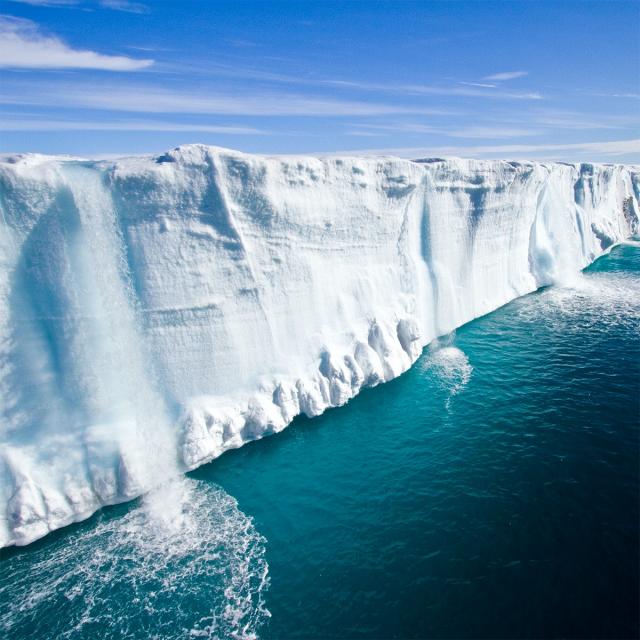
The University of Alberta, the University of Tromso and the University of the Arctic invite you to explore this four week course that examines the environment and climate of the circumpolar North. This course is the result of an international collaboration and provides you with an insight into our planet's North. Following an overview of regional geography, we will focus on the cryosphere (ice), as well as the atmosphere and ocean of the region.

Jun 1st 2026
4 Weeks
Sustentabilidad y Economías Sociales (Coursera) Coursera
Universidad de Chile

Sustentabilidad y Economías Sociales (Coursera)

En los últimos años el fenómeno del Emprendimiento con Sentido, la Innovación Social y la relevancia de la Sustentabilidad dan cuenta de la imperiosa necesidad de modernizar los esquemas de gestión de empresas y adaptarlos a una realidad cambiante, modificando paradigmas hacia las nuevas economías enfocadas en un desarrollo sustentable.

Jun 1st 2026
5-12 Weeks
Big Data, Artificial Intelligence, and Ethics (Coursera) Coursera
University of California, Davis

Big Data, Artificial Intelligence, and Ethics (Coursera)

This course gives you context and first-hand experience with the two major catalyzers of the computational science revolution: big data and artificial intelligence. With more than 99% of all mediated information in digital format and with 98% of the world population using digital technology, humanity produces an impressive digital footprint.

Jun 1st 2026
4 Weeks
Energy: The Enterprise (Coursera) Coursera
University at Buffalo,The State University of New York

Energy: The Enterprise (Coursera)

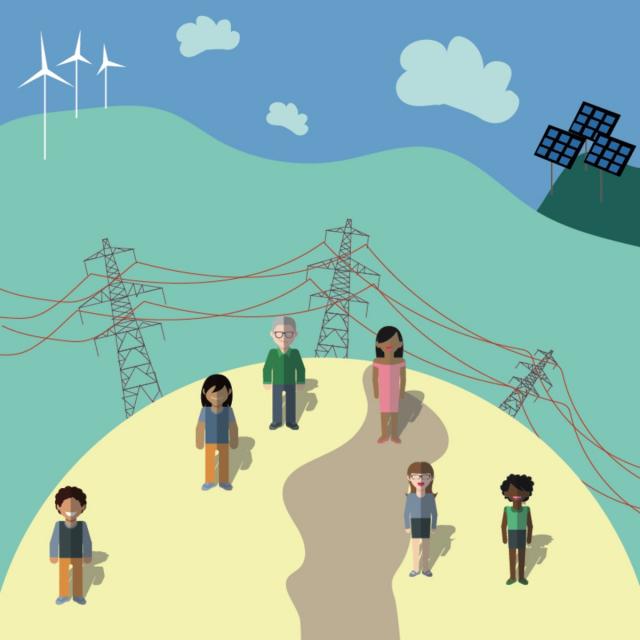
This course provides a broad view of the evolving nature of energy and the influence of cost, availability, sustainability, technical advancements, lifestyle, and concern over the environment. Learners get a peek into our energy history, recent technical and societal advancements in clean energy, and some of the more important adjustments we have seen and will continue to see.

Jun 1st 2026
4 Weeks
Electric Vehicles and Mobility (Coursera) Coursera
École des Ponts ParisTech

Electric Vehicles and Mobility (Coursera)

The purpose of Electric Vehicles and Mobility is to help you, whatever your profile, your training or your country, find your own answers to questions such as: - Will electric vehicles be the last to be allowed in megalopolises in the 21st century? - Does the environmental gain from vehicle electrification justify heavy investment in charging infrastructure? - Are electric vehicles only for wealthy people in developed countries?

Jun 1st 2026
5-12 Weeks
Measuring and Maximizing Impact of COVID-19 Contact Tracing (Coursera) Coursera
Johns Hopkins University

Measuring and Maximizing Impact of COVID-19 Contact Tracing (Coursera)

This course aims to provide managers and developers of contact tracing programs guidance on the most important indicators of performance of a contact tracing program, and a tool that can be used to project the likely impact of improvements in specific indicators. Students who complete the course will be proficient in using the Contact Tracing Evaluation and Strategic Support Application (ConTESSA) to estimate the impact of their contact tracing program on transmission and strategizing about how to increase their program’s impact.Free enrollment available until December 31, 2020. Valid for one enrollment per person.

Jun 1st 2026
1 Week
Women in environmental biology (Coursera) Coursera
Universitat Autònoma de Barcelona

Women in environmental biology (Coursera)

Have you ever wondered how humans relate to other living beings and what do you need to know to be able to understand current environmental problems? Do you know that many of these researches and knowledge have been described by women? This course gives answers to these questions and it is addressed to anyone interested in the relationship between humans and other living beings, as well as all those concerned about the global change situation that the planet is suffering.

Jun 1st 2026
4 Weeks
COVID-19 Contact Tracing (Coursera) Coursera
Johns Hopkins University

COVID-19 Contact Tracing (Coursera)

The COVID-19 crisis has created an unprecedented need for contact tracing across the country, requiring thousands of people to learn key skills quickly. The job qualifications for contact tracing positions differ throughout the country and the world, with some new positions open to individuals with a high school diploma or equivalent.

Jun 1st 2026
1 Week
Global Postharvest Loss Prevention: Fundamentals, Technologies, and Actors (Coursera) Coursera
University of Illinois at Urbana-Champaign

Global Postharvest Loss Prevention: Fundamentals, Technologies, and Actors (Coursera)

This course provides an overview of the issue of postharvest loss of grains by exploring essential physical, technical, and social dimensions of postharvest supply chains and loss prevention methods globally. Each year, estimates suggest that 1/3 of all food produced is lost or wasted, making postharvest loss a critical global food security and sustainability issue of today. Key knowledge areas are presented including: an overview of postharvest loss; supply chain activities such as harvesting, drying, and storage; economics and markets; an introduction to the network of actors working in this field.

Jun 1st 2026
4 Weeks
Media ethics & governance (Coursera) Coursera
University of Amsterdam

Media ethics & governance (Coursera)

This course explores some of the basic theories, models and concepts in the field of media ethics. We will introduce influential ethical theories and perspectives, explore changing societal demands and expectations of media creation and media use, and we will elaborate on existing ethical norms for media professionals. After following this course, you will be able to reflect on ethical dilemmas and develop a well-substantiated argumentation for ethical decision making in a variety of media-related contexts.

Jun 1st 2026
4 Weeks
Global Impact: Business Ethics (Coursera) Coursera
University of Illinois at Urbana-Champaign

Global Impact: Business Ethics (Coursera)

Global business ethics is the study and analysis of how ethics and global business are connected. How we should treat each other and our organizations in global and local contexts is the topic of this course. Business ethics and corporate responsibility are inherent in global commerce. Commerce is about markets, and markets entail exchanges between people and groups of people. So commerce is about human relationships, and indeed, it could not be otherwise.

Jun 1st 2026
4 Weeks