Getting Started With Music Theory (Coursera)

Getting Started With Music Theory (Coursera)

This course is a brief introduction to the elements of music theory for those with little or no music theory experience. We will explore pitch, rhythm, meter, notation, scales, keys, key signatures, meter signatures, triads, seventh chords, and basic harmony. If you listen to music or play music by ear, and you want to know more about how music is organized and notated, this course is for you.

Class Deals by MOOC List - Click here and see Coursera's Active Discounts, Deals, and Promo Codes.

By the end of the course, you should know all major and minor keys, how to read and write in treble and bass clef using standard meters and rhythmic values, and how to notate and harmonize a simple melody. This course can serve as a stand-alone basic music theory course, or it can be a springboard to more advanced theory and composition courses.
Your instructor is Bruce Taggart, Associate Professor of Music Theory at Michigan State University, in the College of Music, where he has taught undergraduate and graduate music theory since 1996.

Syllabus

WEEK 1
Basic Materials: Overview, Tonality, Notation
Learning Outcomes: By the end of this module, you should be able to: (1) discuss the elements of music, (2) explain the difference between tonal and atonal music, (3) sing the tonic in tonal music, (4) identify the fundamental and partials of a note, (5) explain the difference between chord and harmony, (6) explain the five-line staff, (7) read and write notes using treble and bass clefs, and (8) identify rhythmic values in notation. You should be able to (9) distinguish between pitch and pitch class, (10) describe octaves and how to label pitches based on octave placement, (11) identify and write accidentals and find them on the piano keyboard, (12) and define equal temperament (the artificial scale used on the modern piano) and tell how it differs from other tuning systems.

WEEK 2
Scales, Keys, and Intervals
Learning Outcomes: By the end of this module, you should be able to (1) describe the diatonic set and understand how it is used to create major and minor scales, (2) sing major and minor using solfeggio (solfege) syllables, (3) explain the difference between natural, harmonic, and melodic minor, (4) spell major and minor scales starting on any note using accidentals in treble and bass clef, and (5) spell parallel and relative major and minor scales. You should also be able to (6) identify and spell by size and quality diatonic intervals (within a key) and chromatic intervals (outside a key).

WEEK 3
Rhythm and Meter
Learning Outcomes: By the end of this module, you should be able to (1) read and write all possible rhythmic values, including dotted notes and ties, (2) understand how many notes fit within a measure in various meters, (3) determine meter signatures based on note grouping, and note grouping based on meter signatures, (4) define the types of musical accent and how they create a sense of meter, (5) distinguish between duple and triple meters in notation and by sound, and (6) describe and identify metrical syncopation. You should be able to (7) write melodies on the treble, bass, and grand staves using correct meter signatures, note values, rhythmic grouping, stem direction and beaming, and key signatures and accidentals,

WEEK 4
Chords, Triads, and Harmony
Learning Outcomes: By the end of this module, you should be able to (1) identify and spell major, minor, diminished, and augmented triads in root position and inversions, and (2) identify and spell major, minor, dominant, half-diminished, and fully diminished seventh chords in root position and inversions. You should also be able to (3) use Roman numeral labels to identify diatonic triads within a key, (4) write triads within a key when given Roman numerals, and (5) spell chords when given pop/jazz chord symbols.
Go to Class
MOOC List is learner-supported. When you buy through links on our site, we may earn an affiliate commission.

Related Courses

Electronic Music Performance Techniques (Coursera) Coursera
Berklee College of Music

Electronic Music Performance Techniques (Coursera)

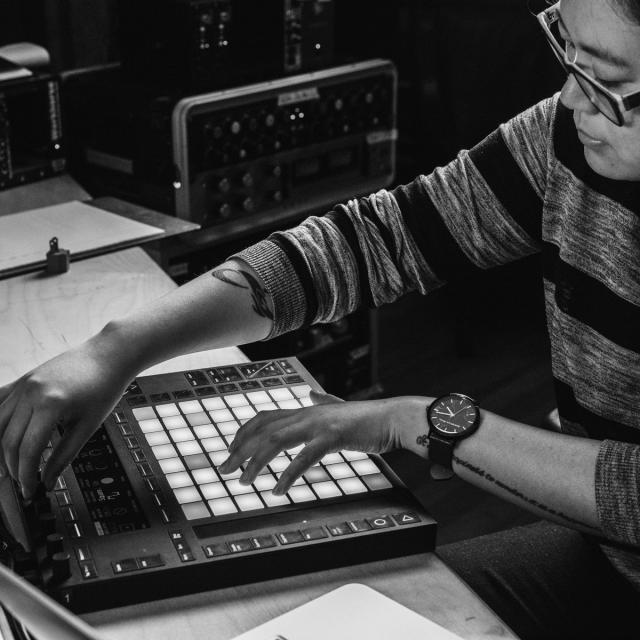
From the Moog analog synthesizers in the 1960s to the contemporary usage of computers, performance controllers, and mobile devices, Electronic Digital Instruments (EDIs) have long been capable of offering artists a new range of musical expression. In this one-of-a-kind course, you'll learn the essential skills you need to perform on an EDI.

Aug 3rd 2026
4 Weeks
Developing Your Musicianship (Coursera) Coursera
Berklee College of Music

Developing Your Musicianship (Coursera)

Learn the basic concepts and approaches needed to understand, create, and perform contemporary music. If you have a passion for music and are curious about how it works, or if you are a musician who learned to play by ear without formal study, this course will provide you with an engaging introduction to key concepts and approaches needed to understand, create, and perform contemporary music. Taught by Berklee College of Music professor George W. Russell, Jr., the course includes six lessons that delve into harmony and ear training—two areas of intensive focus for every entering Berklee student.

Aug 10th 2026
5-12 Weeks
History of Rock, Part Two (Coursera) Coursera
University of Rochester

History of Rock, Part Two (Coursera)

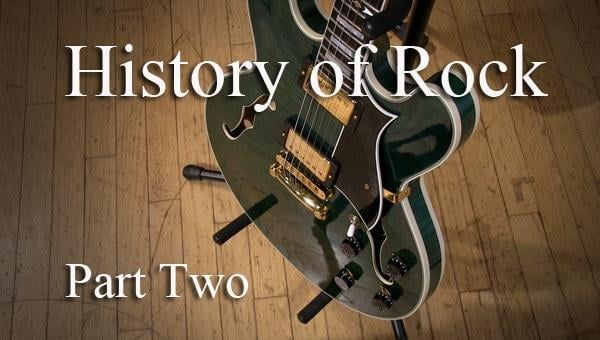
This course, part 2 of a 2-course sequence, examines the history of rock, primarily as it unfolded in the United States, from the early 1970s to the early 1990s. This course covers the music of Led Zeppelin, the Allman Brothers, Carole King, Bob Marley, the Sex Pistols, Donna Summer, Michael Jackson, Madonna, Prince, Metallica, Run-DMC, and Nirvana, and many more artists, with an emphasis both on cultural context and on the music itself. We will also explore how developments in the music business and in technology helped shape the ways in which styles developed.

Aug 3rd 2026
5-12 Weeks
Exploring Beethoven's Piano Sonatas (Coursera) Coursera
Curtis Institute of Music

Exploring Beethoven's Piano Sonatas (Coursera)

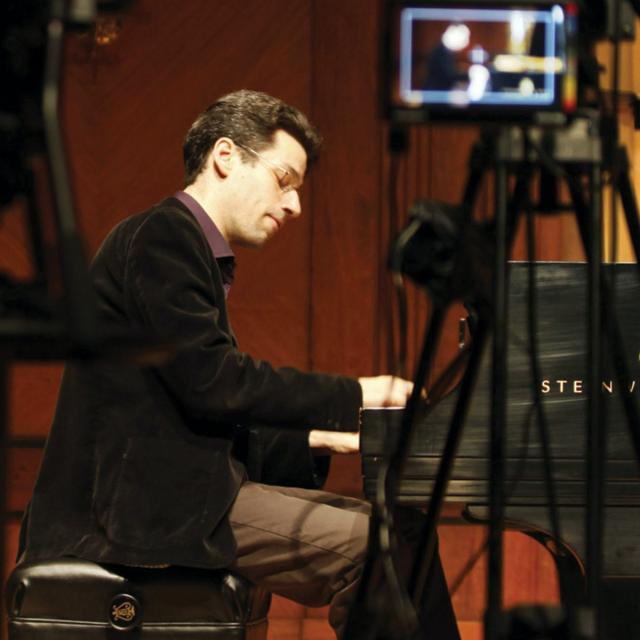
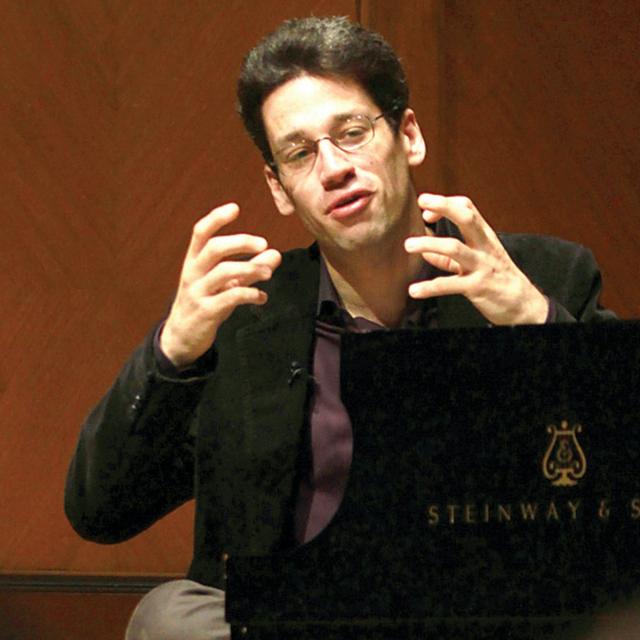
Our relationship to Beethoven is a deep and paradoxical one. For many musicians, he represents a kind of holy grail: His music has an intensity, rigor, and profundity which keep us in its thrall, and it is perhaps unequalled in the interpretive, technical, and even spiritual challenges it poses to performers. At the same time, Beethoven’s music is casually familiar to millions of people who do not attend concerts or consider themselves musically inclined. Two hundred years after his death, he is everywhere in the culture, yet still represents its summit. This course takes an inside-out look at the 32 piano sonatas from the point of view of a performer.

Aug 3rd 2026
5-12 Weeks
Desarrollando tu musicalidad (Coursera) Coursera
Berklee College of Music,Inter-American Development Bank - IDB

Desarrollando tu musicalidad (Coursera)

Aprende los conceptos básicos y enfoques necesarios para entender, crear e interpretar música contemporánea. Esta obra fue financiada con una donación del Banco Inter-Americano de Desarrollo con recursos del Fondo Coreano para la Reducción de la Pobreza. Las opiniones expresadas en esta obra son exclusivamente de los autores y no necesariamente reflejan el punto de vista del Banco Interamericano de Desarrollo, de su Directorio Ejecutivo ni de los países que representa.

Aug 3rd 2026
5-12 Weeks
Richard Schechner's Introduction to Performance Studies (Coursera) Coursera
New York University

Richard Schechner's Introduction to Performance Studies (Coursera)

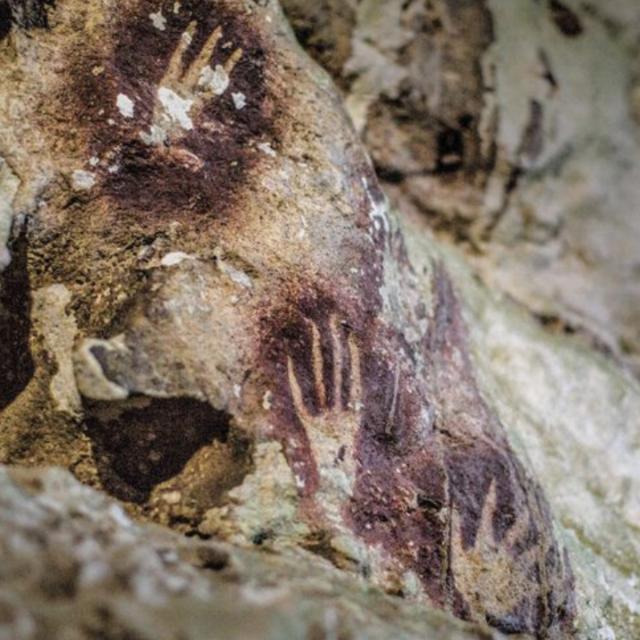
Performance Studies: An Introduction explores the wide world of performance--from theatre, dance, and music to ritual, play, political campaigns, social media, and the performances of everyday life. Performance studies also ranges across cultures--Asia, Africa, the Caribbean, Europe, the Americas. And it spans historical periods from the art of the paleolithic caves to YouTube and the avantgarde. This course is devised by Richard Schechner, one of the pioneers of performance studies, in dialogue with more than a dozen expert scholars and artists.

Aug 3rd 2026
13-24 Weeks
Exploring Beethoven’s Piano Sonatas Part 2 (Coursera) Coursera
Curtis Institute of Music

Exploring Beethoven’s Piano Sonatas Part 2 (Coursera)

Welcome to Part 2 of Exploring Beethoven's Piano Sonatas! I'm delighted to launch another set of new lectures of this course as Part 2. As before, this class is meant for people of all levels of experience with Beethoven's music (including no experience at all!). Remember that you are able to watch the lectures as many times as you like, at whatever pace is comfortable for you.

Aug 10th 2026
5-12 Weeks
Teaching the Violin and Viola: Creating a Healthy Foundation (Coursera) Coursera
Northwestern University

Teaching the Violin and Viola: Creating a Healthy Foundation (Coursera)

Join us as we explore the fundamental principles and early stages of teaching violin and viola through a series of engaging video lectures and lesson demonstrations, including: 1) Master classes with some of the world’s top string pedagogues, 2) Individual lesson demos of teaching violin/viola set up, left and right hand technique and pieces from the early violin/viola repertoire, 3) Group lesson demos of teaching music theory, ear training and fun activities that encourage good playing habits, and 4) A “field trip” to the violin shop, where we will outfit a new beginning student with a proper instrument and bow.

Aug 3rd 2026
5-12 Weeks
Music and Social Action (Coursera) Coursera
Yale University

Music and Social Action (Coursera)

What is a musician’s response to the condition of the world? Do musicians have an obligation and an opportunity to serve the needs of the world with their musicianship? At a time of crisis for the classical music profession, with a changing commercial landscape, a shrinking audience base, and a contraction in the number of professional orchestras, how does a young musician construct a career today? Are we looking at a dying art form or a moment of reinvigoration?

Aug 10th 2026
5-12 Weeks