Future Technologies Series: Demystifying Digital Twin (CanopyLAB)

Offered by CanopyLAB,
Future Technologies Series: Demystifying Digital Twin (CanopyLAB)

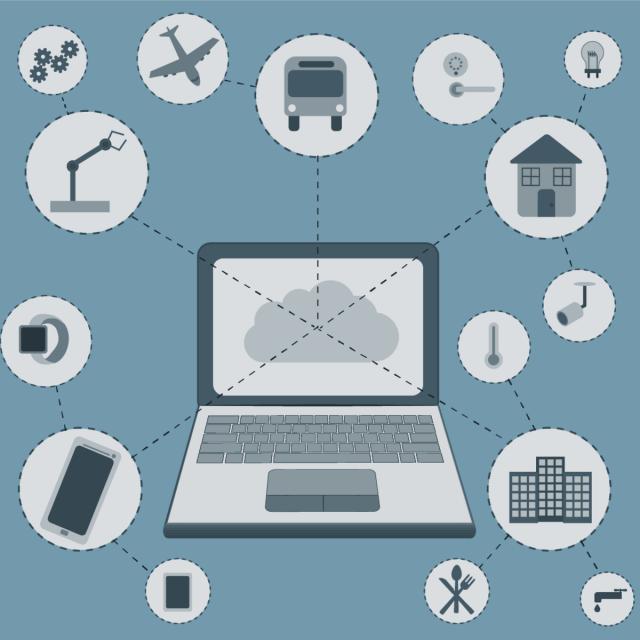
The digital twin has been touted as a top strategic technology trend. However, many are yet to embrace this game-changing innovation. So, join us to learn about this technology and its applications. Anything that generates power today will be connected to the Internet. The IoT has enhanced businesses, machines and processes. To power the IoT world, Digital Twin is a new and upcoming paradigm.

Unit 1: What Is Digital Twin?
Unit 2: How Does a Digital Twin Work?
Unit 3: Applications of Digital Twin Technology
Unit 4: The Future Opportunities of Digital Twin Technology
The concept of digital twin represents the convergence of virtual and physical world. In some cases, it is referred to as the digital reflection of the physical assets that powers next generation Artificial Intelligence. In other cases, it is a digital map that powers Augmented Reality (AR) and Virtual Reality (VR) applications. Collectively, the units in this course is a step-by-step guide to understanding Digital Twin and its applications. With the help of the syllabus, exercises and video lectures in each unit, you will be gaining a strong understanding of Digital Twin and how it’s related to your future learning.
Go to Class
MOOC List is learner-supported. When you buy through links on our site, we may earn an affiliate commission.

Related Courses

IoT Cloud (Coursera) Coursera
University of Illinois at Urbana-Champaign

IoT Cloud (Coursera)

This course is the last course in our series of four courses and builds on the previous three courses: IoT Devices, IoT Communications, and IoT Networking. After we have built and programmed a small self-driving vehicle, we then set out to enhance its connectivity and add important security infrastructure. In this course we will now look closer into various remaining types of decentralized network topography. In the lab, we will additionally cover important cloud technologies based on machine-learning. In the first two weeks' lectures, we will cover important components of networks.

Jun 1st 2026
4 Weeks
Web3 and Blockchain Transformations in Global Supply Chains (Coursera) Coursera
INSEAD

Web3 and Blockchain Transformations in Global Supply Chains (Coursera)

The global supply chain is a $50 trillion industry and is the foundation of our global economy. While information technology has improved the flow of goods globally over the last few decades, as the COVID-19 crisis revealed there is still critical work to do. Today’s supply chains are complex, with parties conducting their transactions through a Byzantine network of computer systems with disparate applications like e-mail, phone, and fax.

May 31st 2026
5-12 Weeks
Future Technologies Series: Technologies Changing the World - An Introduction (CanopyLAB) CanopyLAB
CanopyLAB

Future Technologies Series: Technologies Changing the World - An Introduction (CanopyLAB)

From a hand-written letter to the typewriter, fax machine and email all the way up to the instant messaging of today, the state of technology has always defined the conditions for human interaction. Technological advancement is not just important for computer scientists and business managers - it also radically redefines the way each one of us live and interact with each other.

Self Paced
Self-Paced
Future Technologies Series: Internet of Things (IoT) (CanopyLAB) CanopyLAB
CanopyLAB

Future Technologies Series: Internet of Things (IoT) (CanopyLAB)

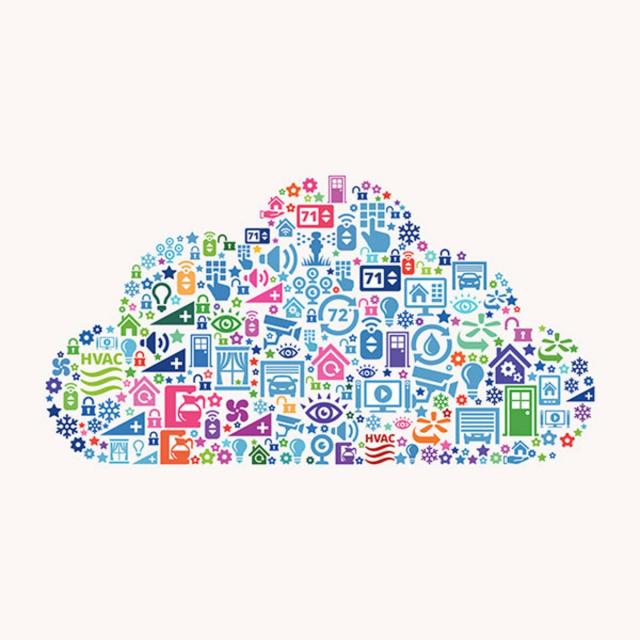
A digital refrigerator. A light bulb in the cloud. A heating system on your smartphone. Internet of Things promises to bring every item in our lives online. The advent of smartphones with a connection to the internet has led to a world of constant interaction. IoT is made up of devices – from simple sensors to wearables – that are connected together.

Self Paced
Self-Paced
Internet of Things: Sensing and Actuation From Devices (Coursera) Coursera
University of California, San Diego

Internet of Things: Sensing and Actuation From Devices (Coursera)

Have you wondered how information from physical devices in the real world gets communicated to Smartphone processors? Do you want to make informed design decisions about sampling frequencies and bit-width requirements for various kinds of sensors? Do you want to gain expertise to affect the real world with actuators such as stepper motors, LEDs and generate notifications? In this course, you will learn to interface common sensors and actuators to the DragonBoard™ 410c hardware. You will then develop software to acquire sensory data, process the data and actuate stepper motors, LEDs, etc. for use in mobile-enabled products.

Jun 1st 2026
5-12 Weeks
Digital Thread: Implementation (Coursera) Coursera
University at Buffalo,The State University of New York

Digital Thread: Implementation (Coursera)

There are opportunities throughout the design process of any product to make significant changes, and ultimately impact the future of manufacturing, by embracing the digital thread. In this course, you will dig into the transformation taking place in how products are designed and manufactured throughout the world. It is the second of two courses that focuses on the "digital thread" – the stream that starts at the creation of a product concept and continues to accumulate information and data throughout the product life cycle.

May 25th 2026
5-12 Weeks
Cybersecurity and the Internet of Things (Coursera) Coursera
University System of Georgia

Cybersecurity and the Internet of Things (Coursera)

Welcome to “Cybersecurity and the Internet of Things”! This course is for you if you are curious about the most recent trends and activities in the internet capabilities and concerns about programmed devices. There are complexities and areas of necessary awareness when the industrial sector becomes connected to your home.

May 25th 2026
4 Weeks
Programming with Cloud IoT Platforms (Coursera) Coursera
Pohang University of Science and Technology - POSTECH

Programming with Cloud IoT Platforms (Coursera)

Internet of Things (IoT) is an emerging area of information and communications technology (ICT) involving many disciplines of computer science and engineering including sensors/actuators, communications networking, server platforms, data analytics and smart applications. IoT is considered to be an essential part of the 4th Industrial Revolution along with AI and Big Data.

Jun 1st 2026
5-12 Weeks
The Raspberry Pi Platform and Python Programming for the Raspberry Pi (Coursera) Coursera
University of California, Irvine

The Raspberry Pi Platform and Python Programming for the Raspberry Pi (Coursera)

The Raspberry Pi is a small, affordable single-board computer that you will use to design and develop fun and practical IoT devices while learning programming and computer hardware. In addition, you will learn how to set up up the Raspberry Pi environment, get a Linux operating system running, and write and execute some basic Python code on the Raspberry Pi. You will also learn how to use Python-based IDE (integrated development environments) for the Raspberry Pi and how to trace and debug Python code on the device.

May 25th 2026
4 Weeks
Internet of Things: Multimedia Technologies (Coursera) Coursera
University of California, San Diego

Internet of Things: Multimedia Technologies (Coursera)

Content is an eminent example of the features that contributed to the success of wireless Internet. Mobile platforms such as the Snapdragon™ processor have special hardware and software capabilities to make acquisition, processing and rendering of multimedia content efficient and cost-effective.

May 25th 2026
3 Weeks
Architecting Smart IoT Devices (Coursera) Coursera
EIT Digital

Architecting Smart IoT Devices (Coursera)

This course will teach you how to develop an embedded systems device. In order to reduce the time to market, many pre-made hardware and software components are available today. You'll discover all the available hardware and software components, such as processor families, operating systems, boards and networks. You'll also learn how to actually use and integrate these components.

Jun 1st 2026
5-12 Weeks