Fundamentals of Software Architecture for Big Data (Coursera)

Fundamentals of Software Architecture for Big Data (Coursera)

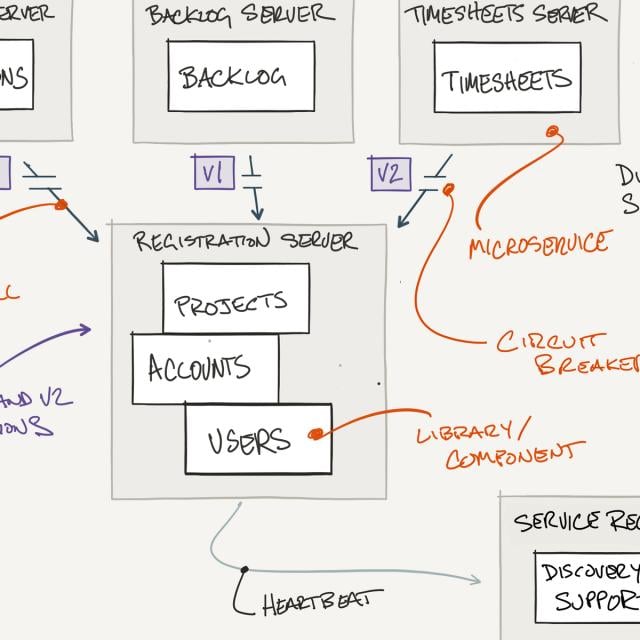
The course is intended for individuals looking to understand the basics of software engineering as they relate to building large software systems that leverage big data. You will be introduced to software engineering concepts necessary to build and scale large, data intensive, distributed systems. Starting with software engineering best practices and loosely coupled, highly cohesive data microservices, the course takes you through the evolution of a distributed system over time.

Class Deals by MOOC List - Click here and see Coursera's Active Discounts, Deals, and Promo Codes.

Fundamentals of Software Architecture for Big Data can be taken for academic credit as part of CU Boulder’s Master of Science in Data Science (MS-DS) degree offered on the Coursera platform. The MS-DS is an interdisciplinary degree that brings together faculty from CU Boulder’s departments of Applied Mathematics, Computer Science, Information Science, and others. With performance-based admissions and no application process, the MS-DS is ideal for individuals with a broad range of undergraduate education and/or professional experience in computer science, information science, mathematics, and statistics.

What You Will Learn

  • Practice software engineering fundamentals; test first development, refactoring, continuous integration, and continuous delivery.
  • Architect and create a big data or distributed system using rest collaboration, event collaboration, and batch processing.
  • Create a performant, scalable distributed system that handles big data.

Syllabus

WEEK 1
Software Engineering Overview
In this module you will learn the basics of modern software engineering. You will learn how our industry progresses over time, practice test driven development, and implement widely used data structures.

WEEK 2
Fundamentals of Software Architecture
In this module you will learn the fundamentals of software architecture. You will learn how to evolve an architecture over time, how to work within a large codebase, and a bit about blockchain.

WEEK 3
Fundamentals of Production Software
In this module you will learn the fundamentals of monitoring software in production. You will learn how to create reliable background jobs, how to calculate and communicate service availability, and how to implement production metrics and monitoring.

WEEK 4
Fundamentals of Software Architecture for Big Data
In this module you will learn the fundamentals of production quality databases and messaging systems. You will learn to understand the tradeoffs between consistency and availability, how to implement database transactions to improve consistency, and how to implement messaging systems to improve availability.


Go to Class
MOOC List is learner-supported. When you buy through links on our site, we may earn an affiliate commission.

Related Courses

Infonomics II: Business Information Management and Measurement (Coursera) Coursera
University of Illinois at Urbana-Champaign

Infonomics II: Business Information Management and Measurement (Coursera)

Even decades into the Information Age, accounting practices yet fail to recognize the financial value of information. Moreover, traditional asset management practices fail to recognize information as an asset to be managed with earnest discipline. This has led to a business culture of complacence, and the inability for most organizations to fully leverage available information assets. This second course in the two-part Infonomics series explores how and why to adapt well-honed asset management principles and practices to information, and how to apply accepted and new valuation models to gauge information’s potential and realized economic benefits.

Jun 10th 2026
4 Weeks
Applications of Software Architecture for Big Data (Coursera) Coursera
University of Colorado Boulder

Applications of Software Architecture for Big Data (Coursera)

The course is intended for individuals who want to build a production-quality software system that leverages big data. You will apply the basics of software engineering and architecture to create a production-ready distributed system that handles big data. You will build data intensive, distributed system, composed of loosely coupled, highly cohesive applications.

Jun 8th 2026
4 Weeks
Big Data Modeling and Management Systems (Coursera) Coursera
University of California, San Diego

Big Data Modeling and Management Systems (Coursera)

Once you’ve identified a big data issue to analyze, how do you collect, store and organize your data using Big Data solutions? In this course, you will experience various data genres and management tools appropriate for each. You will be able to describe the reasons behind the evolving plethora of new big data platforms from the perspective of big data management systems and analytical tools.

Jun 8th 2026
5-12 Weeks
Big Data Analysis Deep Dive (Coursera) Coursera
Alibaba Cloud Academy

Big Data Analysis Deep Dive (Coursera)

The job market for architects, engineers, and analytics professionals with Big Data expertise continues to increase. The Academy’s Big Data Career path focuses on the fundamental tools and techniques needed to pursue a career in Big Data. This course includes: data processing with python, writing and reading SQL queries, transmitting data with MaxCompute, analyzing data with Quick BI, using Hive, Hadoop, and spark on E-MapReduce, and how to visualize data with data dashboards. Work through our course material, learn different aspects of the Big Data field, and get certified as a Big Data Professional!

Jun 8th 2026
5-12 Weeks
Application Development using Microservices and Serverless (Coursera) Coursera
IBM

Application Development using Microservices and Serverless (Coursera)

Are you a developer ready to explore serverless application development? This intermediate-level course is for you! Begin with an understanding of how serverless benefits developers, learn when to use serverless programming, serverless deployment models, and discover its top use cases and design patterns. You’ll also discover how serverless supports continuous integration and continuous delivery (CI/CD) and microservices integration.

Jun 8th 2026
5-12 Weeks
Mastering the Software Engineering Interview (Coursera) Coursera
University of California, San Diego

Mastering the Software Engineering Interview (Coursera)

You’ve hit a major milestone as a computer scientist and are becoming a capable programmer. You now know how to solve problems, write algorithms, and analyze solutions; and you have a wealth of tools (like data structures) at your disposal. You may now be ready for an internship or (possibly) an entry-level software engineering job. But can you land the internship/job? It depends in part on how well you can solve new technical problems and communicate during interviews. How can you get better at this? Practice!

Jun 8th 2026
4 Weeks
Fundamentals of Big Data (Coursera) Coursera
LearnQuest

Fundamentals of Big Data (Coursera)

Welcome to Fundamentals of Big Data, the fourth course of the Key Technologies of Data Analytics specialization. By enrolling in this course, you are taking the next step in your career in data analytics. This course is the fourth of a series that aims to prepare you for a role working in data analytics. In this course, you will be introduced to many of the core concepts of big data.

Jun 8th 2026
3 Weeks
Foundations for Big Data Analysis with SQL (Coursera) Coursera
Cloudera

Foundations for Big Data Analysis with SQL (Coursera)

In this course, you'll get a big-picture view of using SQL for big data, starting with an overview of data, database systems, and the common querying language (SQL). Then you'll learn the characteristics of big data and SQL tools for working on big data platforms. You'll also install an exercise environment (virtual machine) to be used through the specialization courses, and you'll have an opportunity to do some initial exploration of databases and tables in that environment.

Jun 8th 2026
5-12 Weeks
M2M & IoT Interface Design & Protocols for Embedded Systems (Coursera) Coursera
University of Colorado Boulder

M2M & IoT Interface Design & Protocols for Embedded Systems (Coursera)

This course can also be taken for academic credit as ECEA 5348, part of CU Boulder’s Master of Science in Electrical Engineering degree. M2M and IoT Interface Design and Protocols is the third of three classes in the Embedded Interface Design (EID) specialization, an online version of the on-campus EID class taught in graduate embedded systems design. This course is focused on connecting devices to each other and to the cloud to create prototypes and actual systems that flow data from devices to consumers. The class includes an introduction to M2M (Machine-to-Machine) and IoT (Internet of Things) concepts, using the cloud to develop IoT systems (specifically AWS (Amazon Web Services) and its IoT framework), a review of common communications protocols at every level of connected devices, and other IoT design concerns such as security, message queuing approaches, and the use and design of APIs and microservices .

Jun 8th 2026
4 Weeks
Scalable Machine Learning on Big Data using Apache Spark (Coursera) Coursera
IBM

Scalable Machine Learning on Big Data using Apache Spark (Coursera)

This course will empower you with the skills to scale data science and machine learning (ML) tasks on Big Data sets using Apache Spark. Most real world machine learning work involves very large data sets that go beyond the CPU, memory and storage limitations of a single computer. Apache Spark is an open source framework that leverages cluster computing and distributed storage to process extremely large data sets in an efficient and cost effective manner. Therefore an applied knowledge of working with Apache Spark is a great asset and potential differentiator for a Machine Learning engineer.

Jun 8th 2026
4 Weeks
Engineering Practices for Building Quality Software (Coursera) Coursera
University of Minnesota

Engineering Practices for Building Quality Software (Coursera)

Agile embraces change which means that team should be able to effectively make changes to the system as team learns about users and market. To be good at effectively making changes to the system, teams need to have engineering rigor and excellence else embracing change becomes very painful and expensive. In this course, you will learn about engineering practices and processes that agile and traditional teams use to make sure the team is prepared for change. In additional, you will also learn about practices, techniques and processes that can help team build high quality software. You will also learn how to calculate a variety of quantitative metrics related to software quality.

Jun 8th 2026
4 Weeks