Service Orchestration and Choreography on Google Cloud (Coursera)

Offered by Google Cloud,
Service Orchestration and Choreography on Google Cloud (Coursera)

This course introduces you to event-based applications and teaches you how to use service orchestration and choreography to coordinate microservices. Using lectures and hands-on labs, you learn how to use Workflows, Eventarc, Cloud Tasks, and Cloud Scheduler to build microservices applications on Google Cloud.

Class Deals by MOOC List - Click here and see Coursera's Active Discounts, Deals, and Promo Codes.

What You Will Learn

  • Describe the benefits and challenges of microservices-based architectures.
  • Describe the advantages of event-driven applications.
  • Identify the strengths of orchestration and choreography.
  • Use Workflows, Eventarc, Cloud Tasks, and Cloud Scheduler to coordinate a microservices application on Google Cloud.

Syllabus

WEEK 1
Introduction
Welcome to "Service Orchestration and Choreography on Google Cloud." This course introduces you to microservices, event-driven applications, and the use of service choreography and orchestration on Google Cloud. Through a combination of lectures, hands-on labs, and supplemental materials, you will learn about Google Cloud's services that enable application integration and service communication: Workflows, Eventarc, Cloud Tasks, and Cloud Scheduler.
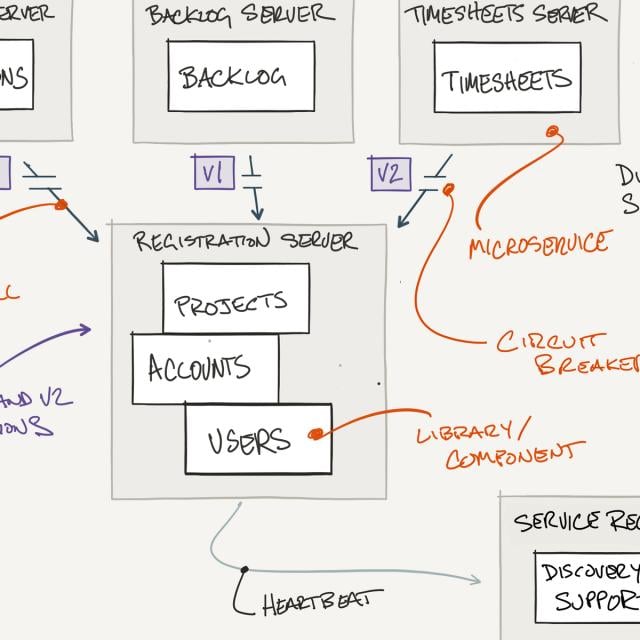
Introduction to Microservices
This module introduces you to microservices and discusses the benefits and challenges of using a microservices architecture for your applications.
Event-Driven Applications
This module introduces events and event-driven applications and discusses the benefits of choosing an event-driven architecture for your microservices applications.

WEEK 2
Choreography and Orchestration
This module introduces two effective patterns for inter-service communication: choreography and orchestration. Eventarc uses the choreography pattern, which allows independent services to perform tasks when events are received. Workflows uses orchestration, and acts as a central orchestrator of the interactions between the services. You learn how Workflows, Eventarc, Cloud Tasks, and Cloud Scheduler can be used to build powerful microservices applications on Google Cloud.

Go to Class
MOOC List is learner-supported. When you buy through links on our site, we may earn an affiliate commission.

Related Courses

Elastic Cloud Infrastructure: Scaling & Automation italiano (Coursera) Coursera
Google Cloud

Elastic Cloud Infrastructure: Scaling & Automation italiano (Coursera)

Questo corso accelerato on-demand presenta ai partecipanti l'infrastruttura e i servizi di piattaforma flessibili e completi di Google Cloud, con un'attenzione particolare a Compute Engine. Attraverso lezioni video, demo e lab pratici, i partecipanti potranno esaminare elementi delle soluzioni, tra cui componenti dell'infrastruttura come reti, macchine virtuali e servizi di applicazioni, ed eseguirne il deployment. Impareranno così a utilizzare Google Cloud tramite la console e Cloud Shell.

Sep 28th 2026
2 Weeks
Understanding Your Google Cloud Costs en Español (Coursera) Coursera
Google Cloud

Understanding Your Google Cloud Costs en Español (Coursera)

Understanding Your Google Cloud Platform (GCP) Costs es más apropiado para quienes desempeñan cargos relacionados con la tecnología o las finanzas, y son responsables de administrar los costos de GCP. Aprenderá a configurar una cuenta de facturación, organizar recursos y administrar permisos de acceso a la facturación.

Oct 12th 2026
3 Weeks
Service-Oriented Architecture (Coursera) Coursera
University of Alberta

Service-Oriented Architecture (Coursera)

Based on an understanding of architectural styles, you will review architectures for web applications, then explore the basics of Service-Oriented Architecture (SOA) in two approaches: Web Services (WS*) and Representational State Transfer (REST) architecture. In the Capstone Project you will connect a Java-based Android application with Elasticsearch, a web service with a REST application programmer interface (API).

Sep 21st 2026
4 Weeks
M2M & IoT Interface Design & Protocols for Embedded Systems (Coursera) Coursera
University of Colorado Boulder

M2M & IoT Interface Design & Protocols for Embedded Systems (Coursera)

This course can also be taken for academic credit as ECEA 5348, part of CU Boulder’s Master of Science in Electrical Engineering degree. M2M and IoT Interface Design and Protocols is the third of three classes in the Embedded Interface Design (EID) specialization, an online version of the on-campus EID class taught in graduate embedded systems design. This course is focused on connecting devices to each other and to the cloud to create prototypes and actual systems that flow data from devices to consumers. The class includes an introduction to M2M (Machine-to-Machine) and IoT (Internet of Things) concepts, using the cloud to develop IoT systems (specifically AWS (Amazon Web Services) and its IoT framework), a review of common communications protocols at every level of connected devices, and other IoT design concerns such as security, message queuing approaches, and the use and design of APIs and microservices .

Sep 28th 2026
4 Weeks
Security Best Practices in Google Cloud (Coursera) Coursera
Google Cloud

Security Best Practices in Google Cloud (Coursera)

This self-paced training course gives participants broad study of security controls and techniques on Google Cloud. Through recorded lectures, demonstrations, and hands-on labs, participants explore and deploy the components of a secure Google Cloud solution, including Cloud Storage access control technologies, Security Keys, Customer-Supplied Encryption Keys, API access controls, scoping, shielded VMs, encryption, and signed URLs. It also covers securing Kubernetes environments.

Sep 28th 2026
5-12 Weeks
BigQuery Fundamentals for Teradata Professionals (Coursera) Coursera
Google Cloud

BigQuery Fundamentals for Teradata Professionals (Coursera)

This course covers BigQuery fundamentals for professionals who are familiar with SQL-based cloud data warehouses in Teradata and want to begin working in BigQuery. Through interactive lecture content and hands-on labs, you learn how to provision resources, create and share data assets, ingest data, and optimize query performance in BigQuery. Drawing upon your knowledge of Teradata, you also learn about similarities and differences between Teradata and BigQuery to help you get started with data warehouses in BigQuery.

Oct 12th 2026
2 Weeks
Programming Reactive Systems (Scala 2 version) (Coursera) Coursera
École Polytechnique Fédérale de Lausanne

Programming Reactive Systems (Scala 2 version) (Coursera)

Reactive programming is a set of techniques for implementing scalable, resilient and responsive systems as per the Reactive Manifesto. Such systems are based on asynchronous message-passing, and their basic building-blocks are event handlers. This course teaches how to implement reactive systems in Scala and Akka by using high-level abstractions, such as actors, asynchronous computations, and reactive streams.

Oct 5th 2026
5-12 Weeks