Forensic Facial Reconstruction: Finding Mr. X (FutureLearn)

Forensic Facial Reconstruction: Finding Mr. X (FutureLearn)

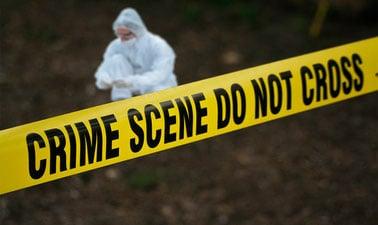
Learn about the forensic technique of facial reconstruction from the experts involved in a real crime case. On Saturday 22 January 2000, two men found a small holdall, abandoned on an industrial estate in the north of Sheffield. Upon opening the bag they made a gruesome discovery. A badly decomposed body. Who was this person? Why did they die? Where had the body been stored all of this time? On this course from The University of Sheffield, you’ll learn alongside the experts who worked to determine the identity of Mr. X. You’ll discover the forensic science techniques that were used to identify the body and understand the circumstances surrounding their death.

Class Deals by MOOC List - Click here and see FutureLearn's Active Discounts, Deals, and Promo Codes.

What topics will you cover?

  • An introduction to the study of Forensic Anatomy.
  • How to analyse a skull to determine a person’s sex and ethnicity.
  • The circumstances under which a facial reconstruction would be necessary.
  • The key muscles groups of the face and the order in which they are applied to a skull in a facial reconstruction.
  • How the facial reconstruction method relates to the broader field of forensic work.

What topics will you cover?

  • An introduction to the study of Forensic Anatomy.
  • How to analyse a skull to determine a person’s sex and ethnicity.
  • The circumstances under which a facial reconstruction would be necessary.
  • The key muscle groups of the face and the order in which they are applied to a skull in a facial -reconstruction.
  • How the facial reconstruction method relates to the broader field of forensic work.

Learning on this course
You can take this self-guided course and learn at your own pace. On every step of the course you can meet other learners, share your ideas and join in with active discussions in the comments.

What will you achieve?
By the end of the course, you'll be able to...

  • Summarise the context and applications of facial reconstruction within the study of Forensic Anatomy.
  • Identify basic information about a person from their skeleton and in particular, their skull.
  • Describe the key muscle groups of the face.

Who is the course for?
This course is suitable for anyone interested in how forensic anatomy and facial reconstruction can assist police investigations. No prior qualifications in forensic science or other disciplines are required.
Students and practitioners in the fields of archaeology, anatomy, and anthropology may gain valuable insights into the use of anatomy expertise in forensic work that they can apply to their study and work in the field.
Go to Class
MOOC List is learner-supported. When you buy through links on our site, we may earn an affiliate commission.

Related Courses

Forensic Archaeology and Anthropology (FutureLearn) FutureLearn
Durham University

Forensic Archaeology and Anthropology (FutureLearn)

Enter the fascinating world of forensics, and learn how the deceased are located, recovered and analysed using DNA and pathology. Learn the science behind the exhumation and identification of skeletal remains. The location, exhumation and identification of the dead requires highly specialised expertise. On this course, you’ll learn the latest scientific techniques for body location, recovery and analysis.

Self Paced
5-12 Weeks
Introduction to Forensic Science (FutureLearn) FutureLearn
University of Strathclyde

Introduction to Forensic Science (FutureLearn)

Explore the methods underpinning forensic science, from crime scene investigation to reporting evidential value within a case. The course addresses four major evidence types: drugs of abuse, DNA, firearms and impression evidence, and discusses these through the exploration of a case-based scenario presented across a six-week modular framework.

Self Paced
5-12 Weeks
Digital Forensics Concepts (Coursera) Coursera
Infosec

Digital Forensics Concepts (Coursera)

In the Digital Forensics Concepts course, you will learn about legal considerations applicable to computer forensics and how to identify, collect and preserve digital evidence. This course dives into the scientific principles relating to digital forensics and gives you a close look at on-scene triaging, keyword lists, grep, file hashing, report writing and the profession of digital forensic examination.

Sep 21st 2026
5-12 Weeks
Forensic Engineering: Learning from Failures (edX) EdX
Delft University of Technology,DelftX

Forensic Engineering: Learning from Failures (edX)

Don’t let good failures go to waste! Identify the causes of failure and use this knowledge to enhance safety and improve performance. What do collapsed buildings, infected hospital patients, and crashed airplanes have in common? If you know the causes of these events and conditions, they can all be prevented. In this course, you will learn how to use the TU Delft mind-set to investigate the causes of such events so you can prevent them in the future.

Self Paced
Self-Paced
Digital Health for Cancer Management: Smart Health Technologies in Complex Diseases (FutureLearn) FutureLearn
Taipei Medical University

Digital Health for Cancer Management: Smart Health Technologies in Complex Diseases (FutureLearn)

Learn how new digital health technologies are transforming cancer management with this course for healthcare professionals. Recent advances in cancer treatment and management have lead to people with cancer living longer than ever before, now healthcare must begin to consider how to help people with cancer live healthily. On this course you will explore and discuss how new digital health technologies, like wearables, social media and home sensors, are starting to transform the management of cancer.

Self Paced
4 Weeks
Introduction to Health Technology Assessment (FutureLearn) FutureLearn
University of Glasgow

Introduction to Health Technology Assessment (FutureLearn)

Learn about health technology assessment (HTA) and quality of life (QoL), and how they’re used to decide which treatments to fund. Get an introduction to health technology assessment (HTA). This online course provides a short, interactive introduction to health technology assessment (HTA), based on the University of Glasgow’s successful online distance-learning programme, the MSc in HTA.

Self Paced
3 Weeks
Causes of Human Disease: Exploring Cancer and Genetic Disease (FutureLearn) FutureLearn
University of Leeds

Causes of Human Disease: Exploring Cancer and Genetic Disease (FutureLearn)

Explore how the unravelling of genetic code has led to a deeper understanding of genetic diseases and cancer. It’s widely known that some diseases run in families. The discovery of the structure of DNA and the unravelling of the genetic code has led to a deeper understanding of such diseases. We now know more about the genetic basis of cancer and how cancer cells are formed and reproduce. On this course you’ll explore the structure of DNA, its processes and learn how genetic disease results from DNA alterations.

Self Paced
2 Weeks
Causes of Human Disease: Understanding Causes of Disease (FutureLearn) FutureLearn
University of Leeds

Causes of Human Disease: Understanding Causes of Disease (FutureLearn)

Learn the epidemiological methods used to understand the causes of diseases and how social factors influence their development. What causes human disease? Why do some people get a disease but others don’t? Through this course, you’ll learn how epidemiologists are helping to find answers to these complex questions and how the health of a population is measured and analysed.

Self Paced
2 Weeks
La science forensique au tribunal: témoin digne de foi? (Coursera) Coursera
University of Lausanne

La science forensique au tribunal: témoin digne de foi? (Coursera)

L’objectif de ce cours est d’encourager la réflexion critique en ce qui concerne la « science forensique », également appelée police technique et scientifique ou criminalistique. À l’heure actuelle, de manière générale, la plupart des gens sont fascinés par les possibilités techniques qu’offre la police scientifique. Ils sont bercés par une certaine illusion que les preuves de la science forensique sont infaillibles et fournissent des résultats factuels sûrs à 100 %. Ce cours – dispensé par des spécialistes du domaine – dépasse l’image conventionnelle véhiculée par des séries télévisées comme « Les Experts ».

Oct 5th 2026
5-12 Weeks