Ferrous Technology II (Coursera)

Ferrous Technology II (Coursera)

Steel, ever-evolving material, has been the most preeminent of all materials since it can provide wide range of properties that can meet ever-changing requirements. In this course, we explore both fundamental and technical issues related to steels, including iron and steelmaking, microstructure and phase transformation, and their properties and applications.

Class Deals by MOOC List - Click here and see Coursera's Active Discounts, Deals, and Promo Codes.

Syllabus

WEEK 1
Microstructure and phase transformation in steels I: Fundamentals
In the following 3 courses, microstructure and phase transformation in steels will be discussed in detail with specific examples. This course in particular, covers the basic terminology, general explanation on iron-carbon system and concepts you must know to understand the phase transformation of steels.

WEEK 2
Microstructure and phase transformation in steels II: Non-equilibirum microstructure in steel
This course explains the non-equilibrium microstructure, and related displacive transformation in steels. Phenomenological theory on martensite transformation will be introduced, and other concepts such as Ms temperature and bainite microstructure will be covered as well.

WEEK 3
Microstructure and phase transformation in steels III: Role of alloying elements in steels
Material design based on alloying is covered in this course. Role of alloying elements in steels with respect to the control of microstructure and mechanical properties will be discussed in detail. Influence of alloying elements on phase stability, transformation kinetics, and strengthening of steels is discussed.

WEEK 4
Properties of steels and their applications I
In the following 3 courses, different types of steels will be introduced with their properties and applications. This course typically covers some of the first generation steels containing conventional low strength steels and HSLA (high strength low alloy) steels. Detailed explanation on the microstructures and related properties will be treated.

WEEK 5
Properties of steels and their applications II
Characteristics of acicular ferrite, micro-alloyed carbon steels, and multiphase steels will be discussed with information on their production and applications. Martensitic steels and effect of various heat treatments will also be discussed.

WEEK 6
Properties of steels and their applications III
This course introduces advanced steels such as TWIP steels, and light weight steels, and explains some other steels of pearlitic steels, Si steels and tool steels. Also, property requirements for automobile parts and low temperature applications are treated.

WEEK 7
Stainless steels
This course covers from the fundamental aspects to the production, physical metallurgy, corrosion and mechanical properties of stainless steels. Detailed explanation on the microstructures, corrosion and mechanical properties of different types of stainless steels will be treated.

Go to Class
MOOC List is learner-supported. When you buy through links on our site, we may earn an affiliate commission.

Related Courses

Chemical Engineering Thermodynamics 1 (Coursera) Coursera
Korea Advanced Institute of Science and Technology - KAIST

Chemical Engineering Thermodynamics 1 (Coursera)

An appreciation of thermodynamics is required to become a chemical and biomolecular engineer. Thermodynamics can assess the viability of a process and is one of the curriculum's most essential topics. The principles are utilized in following engineering courses (kinetics, mass transfer, design, materials) and are applicable to numerous engineering disciplines. The increased emphasis on energy usage and transformation as a result of rising demand, diminishing supply, and global warming necessitates that the engineers who will tackle these issues have a firm grasp of thermodynamics.

Jun 8th 2026
5-12 Weeks
Engineering Practices for Building Quality Software (Coursera) Coursera
University of Minnesota

Engineering Practices for Building Quality Software (Coursera)

Agile embraces change which means that team should be able to effectively make changes to the system as team learns about users and market. To be good at effectively making changes to the system, teams need to have engineering rigor and excellence else embracing change becomes very painful and expensive. In this course, you will learn about engineering practices and processes that agile and traditional teams use to make sure the team is prepared for change. In additional, you will also learn about practices, techniques and processes that can help team build high quality software. You will also learn how to calculate a variety of quantitative metrics related to software quality.

Jun 8th 2026
4 Weeks
Engineering of Structures: Compression (Coursera) Coursera
Dartmouth College

Engineering of Structures: Compression (Coursera)

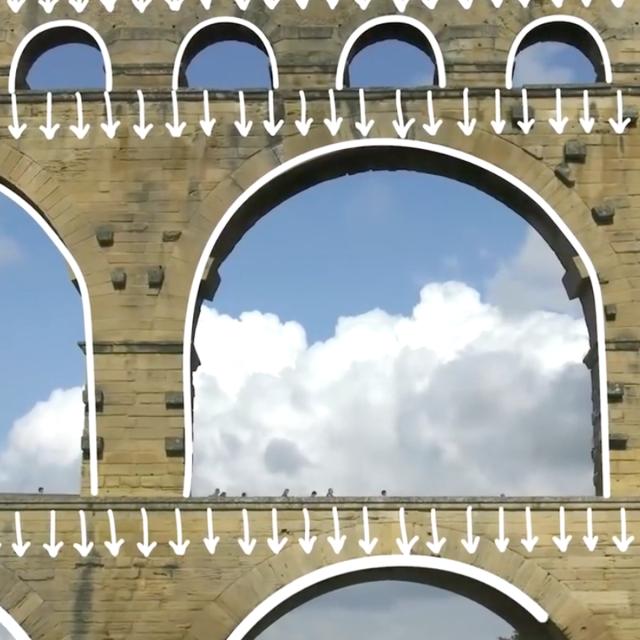
This course deals with compression. When we push an object, it compresses. Compression is what's going to hold up our building. Arches, vaults, domes, and anti-funicular forms help resist compression. In this course, you will learn about different columns and arches and their role in resisting compression. You'll also build anti-funicular forms.

Jun 8th 2026
3 Weeks
MBSE: Model-Based Systems Engineering (Coursera) Coursera
University at Buffalo,The State University of New York

MBSE: Model-Based Systems Engineering (Coursera)

This Model-Based Systems Engineering (MBSE) course and the Digital Thread courses featured earlier in this specialization bring together the concepts from across digital manufacturing and design, forming a vision in which the geometry of a product is just one way of describing it. MBSE is where the model resulting from the evolution of system requirements, design, analysis, verification and validation activities is the focus of design and manufacturing.

Jun 8th 2026
4 Weeks
Engineering of Structures: Tension and Compression (Coursera) Coursera
Dartmouth College

Engineering of Structures: Tension and Compression (Coursera)

This course deals with tension and compression. After going through this course, you will understand why tensegrity structures and sculptures are different from other structures. You will also explore tension and compression in different types of trusses. Additionally you will understand determinacy and realize how it applies to trusses.

Jun 8th 2026
3 Weeks
Controle de Sistemas no Plano-s (Coursera) Coursera
Instituto Tecnológico de Aeronáutica

Controle de Sistemas no Plano-s (Coursera)

Após esse curso você será capaz de esboçar o Lugar Geométrico das Raízes (LGR - Root Locus) do denominador da Função de Transferência em Malha Fechada a partir dos polos e zeros da Função de Transferência em Malha aberta. Você também será capaz de projetar controladores de avanço de fase para atender simultaneamente requisitos de desempenho de amortecimento e de velocidade da resposta.

Jun 8th 2026
5-12 Weeks
Phase Diagrams I & II (Coursera) Coursera
Arizona State University

Phase Diagrams I & II (Coursera)

In this course, we will look at phase diagrams and how they are used to determine the state of the material as a function of temperature and composition. We will also investigate how the microstructure and materials properties can be manipulated as a function of temperature and composition. A special focus will be on the eutectic phase diagram.

Jun 1st 2026
5-12 Weeks
Modelling, Analysis and Design of Steel Buildings (Coursera) Coursera
L&T EduTech

Modelling, Analysis and Design of Steel Buildings (Coursera)

"Modelling, Analysis & Design of Steel Buildings" is an intensive course that covers a wide range of topics essential for understanding and designing steel structures. The course begins with establishing the building information and initial model settings, followed by a detailed exploration of building geometry and member properties. Participants learn to create member groups, utilize section libraries, and assign materials.

Jun 8th 2026
4 Weeks
Engineering of Structures: Tension (Coursera) Coursera
Dartmouth College

Engineering of Structures: Tension (Coursera)

This course deals with tension. Tension is one of the easiest forces to understand. It is a pulling force. When we tend to pull an object, it is in tension. Different elements that resist tension in buildings are ropes, cables, and funicular forms. You will study different structures and identify what role tension plays in their designs. The first module explores tension and its importance in building structures.

Jun 8th 2026
3 Weeks
Ethics, Technology and Engineering (Coursera) Coursera
Eindhoven University of Technology

Ethics, Technology and Engineering (Coursera)

There is an increasing attention to ethics in engineering practice. Engineers are supposed not only to carry out their work competently and skilfully, but also to be aware of the broader ethical and social implications of engineering and to be able to reflect on these. According to the Engineering Criteria 2000 of the Accreditation Board for Engineering and Technology (ABET) in the US, engineers must have “an understanding of professional and ethical responsibility” and should "understand the impact of engineering solutions in a global and societal context.”

Jun 8th 2026
5-12 Weeks
Digitalisation in Space Research (Coursera) Coursera
Technische Universität München - TUM

Digitalisation in Space Research (Coursera)

This course provides an overview of the most important digital applications in the field of aerospace research. The course instructors discuss how digitalisation is impacting and changing both satellite-based and manned spaceflight research. One unit is specifically devoted to exploring the use of artificial intelligence in the evaluation of satellite data.

Jun 1st 2026
3 Weeks