ESG and Climate Change (Coursera)

ESG and Climate Change (Coursera)

In this course, you will focus on understanding climate change and the risks and opportunities that it creates for businesses in the 21st century. You will analyze the current impacts of climate change on a global scale, and the investment shifts that are required to achieve a net-zero economy. Next, you will analyze the role of climate disclosures and their importance in ESG. You will also review private environmental governance, the active role that private companies are playing in combating climate change, and the parallels between the public and private sectors.

Class Deals by MOOC List - Click here and see Coursera's Active Discounts, Deals, and Promo Codes.

Additionally, you will assess the insurance industry and the ways that it spreads risk, as well as creative ways that insurance as a form of private or public governance can build climate resilience. In the final module, you will review the concept of greenwashing: what is driving firms to make exaggerated environmental claims, why it is harmful, and examples of enforcement actions. Finally, you will learn about the importance of product stewardship.
By the end of this course, you will have a thorough understanding of public and private environmental governance, the financial risks that unmitigated climate change is creating, climate disclosures, and innovative ways that business leaders can view and implement climate solutions.

Course 3 of 4 in the The Materiality of ESG Factors Specialization.

Syllabus

WEEK 1
Introduction to Sustainability, Climate Risk & Opportunity
In this module, you will focus on understanding climate change and the risks and opportunities that it creates for businesses in the 21st century. You will analyze the current impacts of climate change on a global scale, and the investment shifts that are required to achieve a zero-carbon economy. Next, you will examine the stakeholders that are driving business firms to address climate change. You will learn how both the physical and financial stability risks that are imposed by more frequent natural disasters can affect business firms and the global economy. By the end of this module, you will have a detailed overview of the financial impacts of climate change, the ways that governments are addressing climate change, and the financial risks that unmitigated climate change is creating.

WEEK 2
Public and Private Governance to Address Climate Change Goals
In this module, you will take an in-depth look at public environmental law and the distinct eras that have shaped modern-day climate policy. You will also review private environmental governance, examining the active role that private companies are playing in combating climate change as well as the parallels between the public and private sectors. Next, you will analyze the role of climate disclosures: what they require and their importance in ESG. By the end of this module, you will be able to differentiate between public and private environmental governance and their objectives, identify the three eras of public environmental law, and distinguish the role and goals of climate disclosures.

WEEK 3
Building Climate Resilience through Creative Private Solutions
In this module, you will examine ecosystem services and the various methods used to promote climate resilience. You will review the ways in which public law addresses wildlife and habitat conservation and identify the limitations in meeting the demands of conservation efforts, especially when quick action is required to address disasters. Lastly, you will assess the insurance industry and the ways that it spreads risk, as well as creative ways that insurance as a form of private or public governance can build climate resilience. By the end of this module, you will have had a critical look at the different methods of building climate resilience, minimizing the impact of climate change through nature-based solutions, and two primary methods of insurance that can spread risk. You will understand the ways that private insurance can protect ecosystem services, and you will have identified innovative ways that business leaders can view climate solutions.

WEEK 4
Extended Producer Responsibility, Product Stewardship, and the Circular Economy
In this module, you will learn about the idea of promoting a circular economy through better stewardship of resources and waste management. You will analyze the waste and recycling streams in the United States and the effects that they have on the environment. You will also examine the challenges with recycling programs worldwide. Next, you will evaluate product stewardship, and the key players in that lifecycle, and will learn to differentiate between product stewardship and extended producer responsibility. Lastly, you will review the concept of greenwashing: what is driving firms to make exaggerated environmental claims, why it is harmful, and examples of enforcement actions. By the end of this module, you will have assessed the importance of product stewardship, reviewed some of the limits on green marketing, and analyzed increasing regulatory action.
Go to Class
MOOC List is learner-supported. When you buy through links on our site, we may earn an affiliate commission.

Related Courses

Becoming a changemaker: Introduction to Social Innovation (Coursera) Coursera
University of Cape Town

Becoming a changemaker: Introduction to Social Innovation (Coursera)

This free 6 week course is for anyone who wants to make a difference. Whether you are already familiar with the field of social innovation or social entrepreneurship, working for an organization that wants to increase its social impact, or just starting out, this course will take you on a journey of exploring the complex problems that surround us and how to start thinking about solutions.

Oct 5th 2026
5-12 Weeks
Discover Best Practice Farming for a Sustainable 2050 (Coursera) Coursera
University of Western Australia

Discover Best Practice Farming for a Sustainable 2050 (Coursera)

The Discover Best Practice Farming for a Sustainable 2050 Course is based on a clear vision: imagine best practice farming for 2050, start to implement these strategies now, all the while making sure it will still be profitable. At UWA we're doing just that with the Future Farm 2050 Project, set on a mixed-enterprise farm in Western Australia and we want you to learn how it can be done in your part of the world.

Oct 5th 2026
5-12 Weeks
Corporate Sustainability. Understanding and Seizing the Strategic Opportunity (Coursera) Coursera
Università Bocconi

Corporate Sustainability. Understanding and Seizing the Strategic Opportunity (Coursera)

In this course, thought leaders in a wide variety of management and economics fields illustrate how to assess and seize the opportunities offered by these global emergencies. They will offer new ways to understand the purpose and the logic of success of the business enterprise in this new context, providing ideas and examples on how to manage the transition process to realize the value creation potential from corporate sustainability for all involved stakeholders.

Oct 5th 2026
5-12 Weeks
Introduction to Complexity Science (Coursera) Coursera
National University of Singapore

Introduction to Complexity Science (Coursera)

This course explores the features of complexity science. Our world is connected by an abundance of complex systems. Across all levels of organizations from physical, biological world to the social world, we may think of the connectivity between individual elements and how they interact and influence each other. For example, how humans transmit pandemics within a group, how cars interact in the traffic system and how networks connect in governmental organizations. Although these systems are diverse and different, they have surprisingly huge features in common.

Oct 5th 2026
5-12 Weeks
Natural Attenuation of Groundwater Contaminants: New Paradigms, Technologies, and Applications (Coursera) Coursera
Rice University

Natural Attenuation of Groundwater Contaminants: New Paradigms, Technologies, and Applications (Coursera)

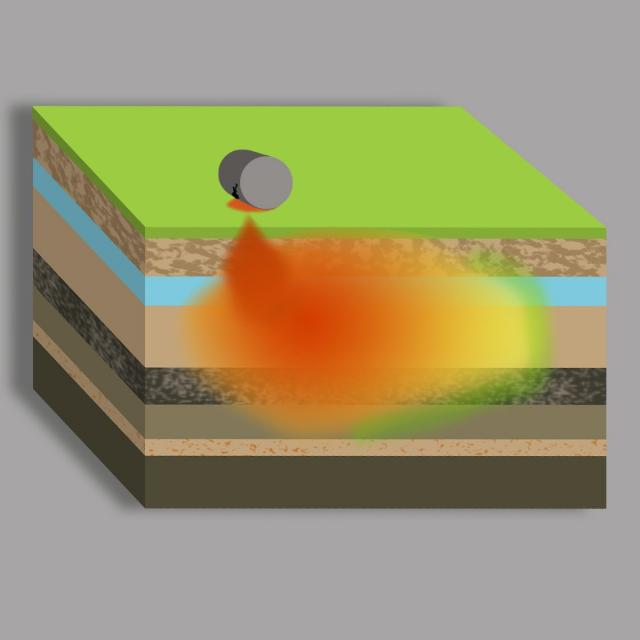
Cleaning up the large number of groundwater contamination sites is a significant and complex environmental challenge. The environmental industry is continuously looking for remediation methods that are both effective and cost-efficient. Over the past 10 years there have been amazing, important developments in our understanding of key attenuation processes and technologies for evaluating natural attenuation processes, and a changing institutional perspective on when and where Monitored Natural Attenuation (MNA) may be applied.

Sep 28th 2026
5-12 Weeks
Silicon Thin Film Solar Cells (Coursera) Coursera
École Polytechnique

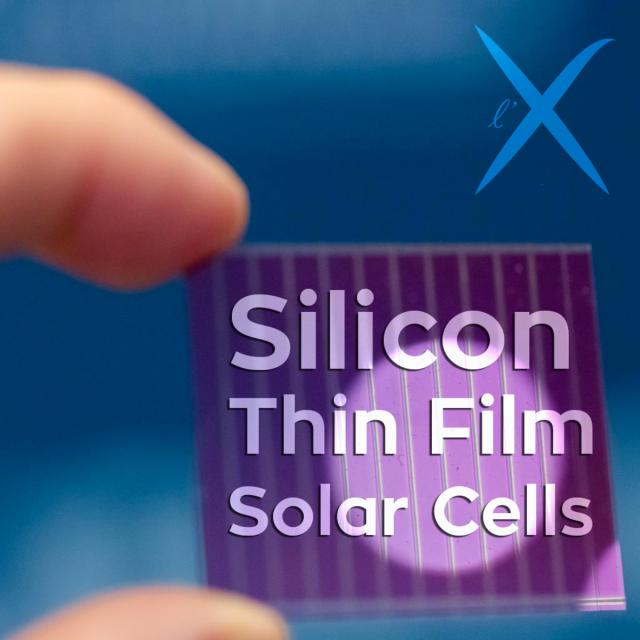
Silicon Thin Film Solar Cells (Coursera)

This course consists of a general presentation of solar cells based on silicon thin films. It is the third MOOC of the photovoltaic series of Ecole polytechnique on Coursera. The general aspects of the photovoltaic field are treated in "Photovoltaic Solar Energy". And the detailed description of the crystalline silicon solar cells can be found in "Physics of Silicon Solar Cells".

Oct 5th 2026
3 Weeks
Ecosystem Services: a Method for Sustainable Development (Coursera) Coursera
University of Geneva

Ecosystem Services: a Method for Sustainable Development (Coursera)

Ecosystem services are a way of thinking about – and evaluating – the goods and services provided by nature that contribute to the well-being of humans. This MOOC will cover scientific (technical), economic, and socio-political dimensions of the concept through a mix of theory, case-studies, interviews with specialists and a serious-game.

Oct 5th 2026
5-12 Weeks
Oceanography: a key to better understand our world (Coursera) Coursera
University of Barcelona,Barcelona Foundation for Ocean Sailing - FNOB

Oceanography: a key to better understand our world (Coursera)

The course for a round the world regatta leads the boats through the Mediterranean Sea and the Atlantic, Southern Indian and South Pacific Oceans. On their voyage, the skippers come across a large variety of oceanographic situations: strong currents, floating ice, wave formations of every kind and biological diversity. In this course the student will learn about the foundations of the science of oceanography. You'll learn about the classification and formation of the ocean floor, how current sea satellite analysis systems work, the chemistry of the oceans and the processes that led to its formation.

Sep 28th 2026
5-12 Weeks
Act on Climate: Steps to Individual, Community, and Political Action (Coursera) Coursera
University of Michigan

Act on Climate: Steps to Individual, Community, and Political Action (Coursera)

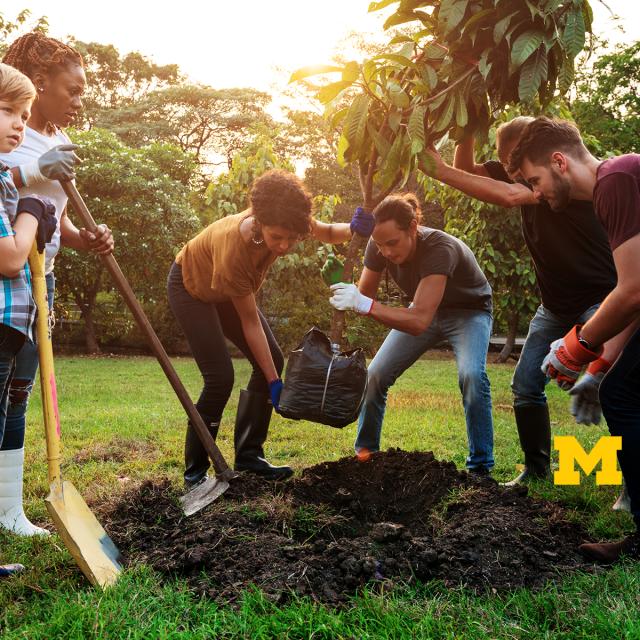
Are you concerned about climate change? Would you like to learn how to address and respond to this challenge? If so, this course is for you. Act on Climate: Steps to Individual, Community, and Political Action is intended to help learners understand, address and respond to climate change as individuals and in partnership with their communities and political leaders.

Oct 5th 2026
5-12 Weeks
Wood Science: Beyond Building (Coursera) Coursera
West Virginia University

Wood Science: Beyond Building (Coursera)

The central question of this course: “why study wood?” If “why study wood” is the question, one answer would be that it is the only raw material available to us that is truly renewable in human life span terms. Wood is as important to society today as it ever was, despite the development of many man-made substitute materials, changing resource availability, and the changing needs of society.

Oct 5th 2026
4 Weeks