Engineering of Structures: Response of Structures (Coursera)

Offered by Dartmouth College,
Engineering of Structures: Response of Structures (Coursera)

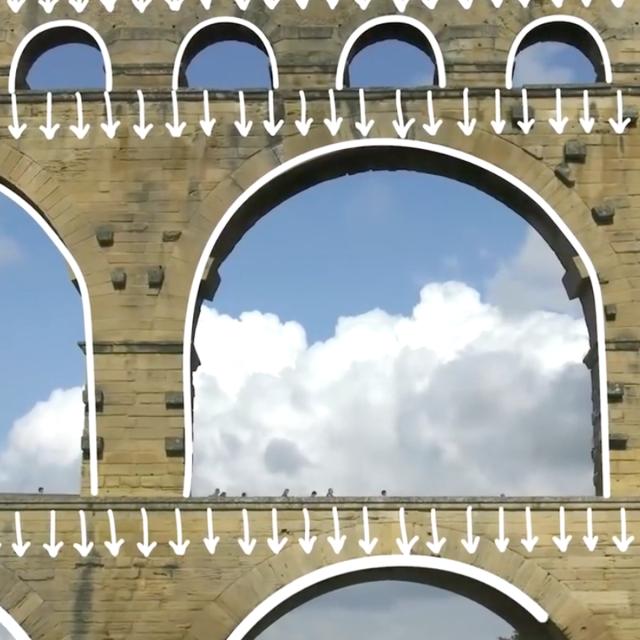
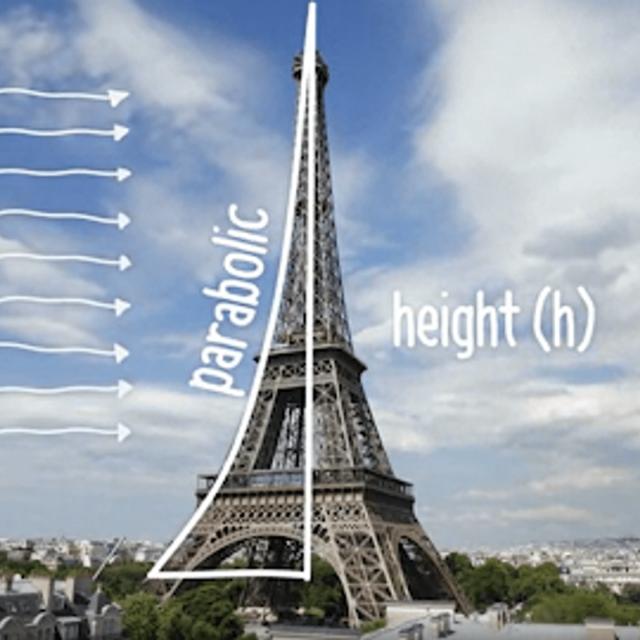
This course explores the impact of different forces on the construction of bug buildings. It provides an overall understanding of how buildings respond to different forces that impact their designs.

Class Deals by MOOC List - Click here and see Coursera's Active Discounts, Deals, and Promo Codes.

The first module introduces you to the concept of the overall response of structures. The second module explores different types of loads and their impact on the design of large structures. It also gives a detailed explanation of how buildings fall due to earthquakes. In addition, the module offers an explanation on the impact of mass and stiffness on building response. The third module explores how to build a cardboard chair. You'll also learn how to work with SketchUp Make.
Course 5 of 5 in the The Engineering of Structures Around Us Specialization.

What You Will Learn

  • Identify the definitions of the key glossary terms related to overall response of structures
  • Identify types of loads on structures
  • Recognize how do we model larger structures
  • Recognize the role of Single Degree of Freedom (SDOF) systems

Syllabus

WEEK 1
Introduction to Overall Response of Structures
This module introduces you to the concept overall response of structures.

WEEK 2
Loads, Building Response, and Resonance
This module explores different types of loads and their impact on the design of large structures. It also gives a detailed explanation of how buildings fall due to earthquake. In addition, the module offers an explanation on the impact of mass and stiffness on building response.

WEEK 3
Building a Cardboard Chair
This module explores how to build a cardboard chair. You'll also learn how to work with SketchUp Make.
Go to Class
MOOC List is learner-supported. When you buy through links on our site, we may earn an affiliate commission.

Related Courses

Introducción a la programación en C: Tipos de datos y estructuras (edX) EdX
Universidad Autonoma de Madrid

Introducción a la programación en C: Tipos de datos y estructuras (edX)

Aprende a programar en C, uno de los lenguajes de programación más usados. En este curso en línea adquirirás los conocimientos necesarios para comenzar a convertirte en un experto en C. Este curso en línea te permitirá aprender los conceptos básicos que te ayudarán a desarrollar las habilidades de programación necesarias para iniciarte en el lenguaje C.

Self Paced
Self-Paced
Health and healthcare in transition: dilemmas of governance (Coursera) Coursera
National Research Tomsk State University

Health and healthcare in transition: dilemmas of governance (Coursera)

Our societies are changing. On one hand, unprecedented socio-demographic changes are underway: albeit unevenly across various settings, life expectancy continues to rise globally, facilitating the rise of numbers of people living with one or more chronic diseases. On the other hand, societies are undergoing major political transformations as well. Examples include the massive transition away from communism resulting from the dissolution of USSR and rise of participation societies in the EU, to name just a few.

Jul 18th 2022
5-12 Weeks
Evaluación de peligros y riesgos por fenómenos naturales (Coursera) Coursera
Universidad Nacional Autónoma de México

Evaluación de peligros y riesgos por fenómenos naturales (Coursera)

Reconocer el conocimiento básico sobre los factores físicos y sociales que condicionan el riesgo de una sociedad por fenómenos extremos de origen natural (sismos, huracanes, etc.) y promover las acciones necesarias para reducir el impacto de los desastres en una comunidad.

Aug 3rd 2026
4 Weeks
Tsunamis and Storm Surges: Introduction to Coastal Disasters (edX) EdX
Waseda University,WasedaX

Tsunamis and Storm Surges: Introduction to Coastal Disasters (edX)

Learn about natural coastal disasters and how you can help improve global disaster management. In 2011, a magnitude 9.0 earthquake triggered a major tsunami that devastated northeast Japan, killing more than 15,000 people and crippling a nuclear power plant. Natural disasters like this one can be seen throughout our Earth’s history. They will continue to prey on all regions, bringing devastation when they strike. But are we so powerless? What if we could improve preparedness over the world and limit the devastation caused by coastal disasters?

Self Paced
Self-Paced
Understanding Superstructures (FutureLearn) FutureLearn
University of Liverpool

Understanding Superstructures (FutureLearn)

Discover the mechanics behind the natural and man-made structures that make up our world with this free online course. Despite being surrounded by both man-made and natural structures, we don’t often think about what it takes to keep them standing. This course will introduce the mechanics of solids and structures that govern the performance of these essential structures.

No sessions available
5-12 Weeks
Be Ready: Staying Safe During Disasters (FutureLearn) FutureLearn
International Federation of Red Cross and Red Crescent Societies

Be Ready: Staying Safe During Disasters (FutureLearn)

Learn about the key preparedness actions you can take to stay safe during various disasters and extreme weather events. Discover what to do when disaster strikes. As extreme weather events continue to affect the lives of millions of people across the globe, it’s never been more important to know how to stay safe when disaster strikes. On this course, you’ll find out about the key actions you can take to reduce the risks associated with disasters and extreme weather events.

No sessions available
2 Weeks
Structures en architecture (FUN) FUN
Ecole Nationale Supérieure d’Architecture de Montpellier

Structures en architecture (FUN)

Ce MOOC est une introduction aux notions de base de mécanique des structures en architecture. L’équipe pédagogique a souhaité renouveler l’approche de l’enseignement des structures en tenant compte des profonds changements en matière d’apprentissage des étudiants, mais elle n’en a pas pour autant abandonné les exigences de rigueur indispensables aux notions abordées. Cette approche est sensible et progressive, et partira des propres intuitions de chacun pour aller étape par étape vers la compréhension des phénomènes physiques en jeu.

Nov 14th 2022
5-12 Weeks
Converter Control (Coursera) Coursera
University of Colorado Boulder

Converter Control (Coursera)

This course teaches how to design a feedback system to control a switching converter. The equivalent circuit models derived in the previous courses are extended to model small-signal ac variations. These models are then solved, to find the important transfer functions of the converter and its regulator system. Finally, the feedback loop is modeled, analyzed, and designed to meet requirements such as output regulation, bandwidth and transient response, and rejection of disturbances.

Aug 17th 2026
4 Weeks
Planet Earth ... and You! (Coursera) Coursera
University of Illinois at Urbana-Champaign

Planet Earth ... and You! (Coursera)

Earthquakes, volcanoes, mountain building, ice ages, landslides, floods, life evolution, plate motions—all of these phenomena have interacted over the vast expanses of deep time to sculpt the dynamic planet that we live on today. Planet Earth presents an overview of several aspects of our home, from a geological perspective. We begin with earthquakes—what they are, what causes them, what effects they have, and what we can do about them. We will emphasize that plate tectonics—the grand unifying theory of geology—explains how the map of our planet's surface has changed radically over geologic time, and why present-day geologic activity—including a variety of devastating natural disasters such as earthquakes—occur where they do. We consider volcanoes, types of eruptions, and typical rocks found there.

Jul 27th 2026
5-12 Weeks
Structure of Materials (edX) EdX
MIT,MITx

Structure of Materials (edX)

Discover the structure of the materials that make up our modern world and learn how this underlying structure influences the properties and performance of these materials. Structure determines so much about a material: its properties, its potential applications, and its performance within those applications. This course from MIT’s Department of Materials Science and Engineering explores the structure of a wide variety of materials with current-day engineering applications.

No sessions available
13-24 Weeks
The Engineering of Structures Around Us (edX) EdX
DartmouthX,Dartmouth College

The Engineering of Structures Around Us (edX)

Explore how engineers design bridges and buildings in our communities and iconic structures around the world. In this introductory course, you’ll learn some engineering principles that can be applied to structural systems everywhere: in nature, in furniture, in mechanical and aerospace systems, and in any solid object that resists a load. Together we’ll explore how structures work, why they were designed the way they were designed, how they support loads, and where forces flow through them.

Self Paced
Self-Paced