ECG Assessment: an Introduction for Healthcare Providers (FutureLearn)

ECG Assessment: an Introduction for Healthcare Providers (FutureLearn)

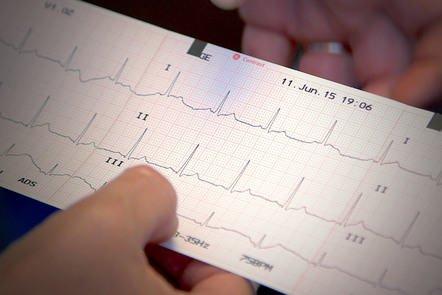
Understand the principles of electrocardiography and learn a step-by-step approach to the ECG test, with this free online course. The electrocardiograph (also known as electrocardiogram) or ECG is a non-invasive diagnostic procedure, commonly used to assess people with known or suspected heart disease, in a variety of healthcare settings. Competent recording, reading and interpretation is vital to ensure safe and effective care, yet ECGs are commonly undertaken by unqualified and junior staff, who have received little training.

Class Deals by MOOC List - Click here and see FutureLearn's Active Discounts, Deals, and Promo Codes.

Gain an introduction to ECG assessment and interpretation
This free online course will equip you with an introductory understanding of ECG assessment and interpretation, which will support the further hands-on training that is needed to competently perform the ECG test in clinical practice.
Over two weeks, you will be guided through a step-by-step approach to undertaking the procedure, including ECG lead placement, and how to deal with common challenges you may face in obtaining a high quality ECG reading. You will also explore the principles of electrophysiology, and how to recognise a normal heart rhythm, as well as signs of arrhythmia.
You will learn through demonstrations and interactive animations, and be able to check your knowledge and deepen your understanding through a variety of quizzes and peer discussion.

What topics will you cover?

  • What are ECGs and why are they useful?
  • How to record an ECG
  • Troubleshooting and challenges in obtaining a high quality ECG
  • Recognising normal sinus rhythm
  • Introduction to arrhythmias

Learning on this course
You can take this self-guided course and learn at your own pace. On every step of the course you can meet other learners, share your ideas and join in with active discussions in the comments.

What will you achieve?
By the end of the course, you'll be able to...

  • Explain the heart’s normal electrical activity and the meaning of the term ‘sinus rhythm’
  • Describe an ECG and what it measures
  • Discuss the reasons for recording an ECG
  • Identify the steps involved in recording a standard 12 lead ECG, including electrode placement and the pre and post-procedure considerations
  • Identify problems in obtaining a good quality ECG and suggest solutions to these
  • Explain the relationship between the heart’s electrical activity and ECG waveforms
  • Summarise the parameters for normal sinus rhythm
  • Describe some key features of arrhythmias and their potential impact

Who is the course for?
This course is suitable for a range of existing healthcare providers, including qualified and student nurses, paramedics and support workers. It’s designed to give an introduction to ECG assessments and the process behind it. Anyone interested in ECG interpretation can benefit from this online course.
Go to Class
MOOC List is learner-supported. When you buy through links on our site, we may earn an affiliate commission.

Related Courses

Introduction to Health Technology Assessment (FutureLearn) FutureLearn
University of Glasgow

Introduction to Health Technology Assessment (FutureLearn)

Learn about health technology assessment (HTA) and quality of life (QoL), and how they’re used to decide which treatments to fund. Get an introduction to health technology assessment (HTA). This online course provides a short, interactive introduction to health technology assessment (HTA), based on the University of Glasgow’s successful online distance-learning programme, the MSc in HTA.

Self Paced
3 Weeks
Using Infection Control to Combat Antimicrobial Resistance (FutureLearn) FutureLearn
University of East Anglia

Using Infection Control to Combat Antimicrobial Resistance (FutureLearn)

Find out how effective infection control in health and social care can tackle the global risk of antimicrobial resistance. Get practical guidance on infection control in health and social care settings. This online course will explore the growing problem of antimicrobial-resistant infections in health and social care settings. You’ll find out how infectious diseases are acquired and spread, and how this contributes to the global risk of antimicrobial resistance.

Self Paced
3 Weeks
Creative Problem Solving: Design Thinking in Health and Social Care (FutureLearn) FutureLearn
St George's, University of London

Creative Problem Solving: Design Thinking in Health and Social Care (FutureLearn)

Learn how design thinking can be applied in health and social care settings to drive innovation and approach challenges. Explore how design thinking can be applied in health and social care. Healthcare systems face many issues: increasing demand, limited budgets, and major health challenges like ageing populations. New approaches are needed to ensure healthcare systems are working as well as they can.

Self Paced
2 Weeks
Improving Health Assessments for People with an Intellectual Disability (FutureLearn) FutureLearn
Trinity College Dublin,EIT Health

Improving Health Assessments for People with an Intellectual Disability (FutureLearn)

Learn how to improve healthcare for people with intellectual disabilities with this course for healthcare professionals. Detecting poor health and supporting people with an intellectual disability in managing their health can be challenging for healthcare professionals. During this course, you will gain valuable knowledge that you can transfer into your daily practice on how to include people with an intellectual disability in health assessments.

Self Paced
3 Weeks
Clinical Supervision with Confidence (FutureLearn) FutureLearn
University of East Anglia

Clinical Supervision with Confidence (FutureLearn)

Supervise undergraduate and postgraduate learners effectively with this online course for clinical and educational supervisors. This online course will help you become a more effective clinical supervisor or educator. It is mapped to competences within the Academy of Medical Educators’ framework for professional development, as used by the General Medical Council and Health Education England.

Self Paced
2 Weeks
Quality Improvement in Healthcare: the Case for Change (FutureLearn) FutureLearn
University of Bath

Quality Improvement in Healthcare: the Case for Change (FutureLearn)

Explore new and better ways of organising health and social care services, to improve quality, with this free online course. Why is quality improvement in health and social care systems so difficult? Why is it so challenging to bring in new and better ways of organising health and social care services? Many reasons have been put forward: lack of money; lack of knowledge about either the actual quality of care delivered, or resistance to making changes to long-established ways of working; excessive and sometimes misunderstood regulations; and professional opinions and interests that are hard to influence when systems are working at or beyond capacity.

Self Paced
5-12 Weeks
Become a Pharmacy Preceptor (FutureLearn) FutureLearn
Taipei Medical University

Become a Pharmacy Preceptor (FutureLearn)

Learn how to become an effective pharmacy preceptor, exploring the qualities a great preceptor needs. Good internship programs are vital for training healthcare providers well - that’s why effective pharmacy preceptors, the teachers who guide students through their pharmacy training, are so important. This course will provide those looking to to be internship preceptors, in the context of pharmacy education, with basic knowledge about pharmacy precepting.

Self Paced
4 Weeks
Dysphagia: Swallowing Difficulties and Medicines (FutureLearn) FutureLearn
University of East Anglia

Dysphagia: Swallowing Difficulties and Medicines (FutureLearn)

This course will enhance the knowledge of any person involved in the administration of medicines to patients with dysphagia. The course offers an opportunity to network with other learners and with the creators of the course through discussions, graphs and social networking features and to share knowledge with other learners and professionals.

Self Paced
5-12 Weeks
Managing Change in a Healthcare Environment (FutureLearn) FutureLearn
University of East Anglia

Managing Change in a Healthcare Environment (FutureLearn)

Understand why change happens in healthcare environments and learn how to improve your response. In rapidly changing world, with new healthcare roles emerging and the complexity of care increasing, being able to respond to change is vital. On this course for healthcare professionals, you will explore the issue of change in healthcare environments, and learn how to improve your response to change.

Self Paced
3 Weeks
Global Health, Conflict and Violence (FutureLearn) FutureLearn
University of Bergen

Global Health, Conflict and Violence (FutureLearn)

Understand the role of medical peace work, and consider the role of healthcare workers in times of conflict and violence. Explore the role of medics and healthcare workers in promoting peace. On this course you will learn about the key principles and different forms of medical peace work in the context of global health, conflict and violence.

Self Paced
3 Weeks