Dentistry 101 (Coursera)

Dentistry 101 (Coursera)

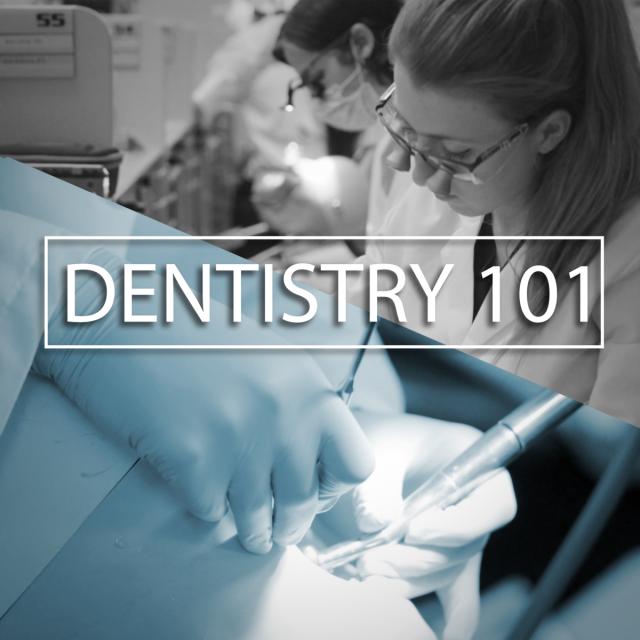
Dentistry 101 is an introduction to the exciting and diverse field of dentistry through the lens of its many practitioners. If you’re interested in exploring dentistry as a profession, or if you’re ready to pursue a career in it and want to prepare yourself for dental school and the profession that lies ahead, Dentistry 101 will help you better envision the paths you can take.

Class Deals by MOOC List - Click here and see Coursera's Active Discounts, Deals, and Promo Codes.

If you complete Dentistry 101, you'll have a well-rounded introductory understanding of the field of dentistry, and you'll get glimpses of the profession that aren't always easily available. You'll also be better informed about, and more prepared for, the dental school admissions process if you choose to pursue it.

Syllabus

WEEK 1: Introduction & Choosing a Career Path in Dentistry
WEEK 2: Further Specialty Areas of Dentistry
WEEK 3: Areas of Enhancement in Dentistry
WEEK 4: Dental Schools & Conclusion

Go to Class
MOOC List is learner-supported. When you buy through links on our site, we may earn an affiliate commission.

Related Courses

Genomics: Decoding the Universal Language of Life (Coursera) Coursera
University of Illinois at Urbana-Champaign

Genomics: Decoding the Universal Language of Life (Coursera)

What is a genome? A genome contains all of the information that a cell needs to develop, function, and reproduce itself, and all the information needed for those cells to come together to form a person, plant, or animal. Genomes contain an organism’s complete set of genes, and also the even tinier genetic structures that help regulate when and how those genes are used. The ability to regrow a torn ligament, the clues that might predict the onset of mental illness, the nutritional potential of crops, and even the history of life itself, are all encoded in genomes. By taking this course, you will discover how scientists are deciphering the language of genomes to learn how to develop sustainable food and fuel supplies, improve disease treatment and prevention, and protect our environment.

Sep 28th 2026
5-12 Weeks
Biohacking Your Brain's Health (Coursera) Coursera
Emory University

Biohacking Your Brain's Health (Coursera)

With deteriorating health, particularly brain health, occurring at a global level, this course introduces you to methods for maximizing your brain's fitness through nutrition, exercise, meditation, and sleep. We'll debunk popular myths about prescribed practices for overall health and then uncover studies from the last few decades revealing practical routines and interventions that are proven to help improve the brain.

Sep 28th 2026
4 Weeks
Toxicology 21: Scientific Applications (Coursera) Coursera
Johns Hopkins University

Toxicology 21: Scientific Applications (Coursera)

This course familiarizes students with the novel concepts being used to revamp regulatory toxicology in response to a breakthrough National Research Council Report “Toxicity Testing in the 21st Century: A Vision and a Strategy.” We present the latest developments in the field of toxicology—the shift from animal testing toward human relevant, high content, high-throughput integrative testing strategies. Active programs from EPA, NIH, and the global scientific community illustrate the dynamics of safety sciences.

Sep 28th 2026
5-12 Weeks
Population Health: Predictive Analytics (Coursera) Coursera
Leiden University

Population Health: Predictive Analytics (Coursera)

Predictive analytics has a longstanding tradition in medicine. Developing better prediction models is a critical step in the pursuit of improved health care: we need these tools to guide our decision-making on preventive measures, and individualized treatments. In order to effectively use and develop these models, we must understand them better. In this course, you will learn how to make accurate prediction tools, and how to assess their validity. First, we will discuss the role of predictive analytics for prevention, diagnosis, and effectiveness. Then, we look at key concepts such as study design, sample size and overfitting.

Sep 28th 2026
4 Weeks
TECH MeD: Transdisciplinary Education for Critical Hacks of Medical Devices (Coursera) Coursera
University of Florida

TECH MeD: Transdisciplinary Education for Critical Hacks of Medical Devices (Coursera)

This course seeks to create an informed public, aware of the technical, medical, legal, and ethical issues associated with implantable medical devices. The course features conversations with experts from a variety of relevant fields to discuss the present and future technological, ethical, legal, and social challenges associated with implantable medical devices.

Sep 28th 2026
5-12 Weeks
The New Nordic Diet - from Gastronomy to Health (Coursera) Coursera
University of Copenhagen

The New Nordic Diet - from Gastronomy to Health (Coursera)

The New Nordic Diet is a new food culture developed in 2009-13 with key emphasis on gastronomy, health, and environment. Major research in its effect on acceptability, behaviour and learning skills, and disease prevention have been conducted by the OPUS centre at the University of Copenhagen and the people behind the award-winning restaurant Noma in Copenhagen. This course will give the participants the opportunity to experience a healthy and palatable new food and eating concept diet “The New Nordic Diet” and an understanding of how food and diets can affect mental and physical health and ensure the foundation for a healthier life style for future generations with a regional based diet and food culture.

Sep 28th 2026
5-12 Weeks
Soul Beliefs: Causes and Consequences - Unit 3: How Does It All End? (Coursera) Coursera
Rutgers University

Soul Beliefs: Causes and Consequences - Unit 3: How Does It All End? (Coursera)

Throughout history, the vast majority of people around the globe have believed they have, however defined, a “soul.” While the question of whether the soul exists cannot be answered by science, what we can study are the causes and consequences of various beliefs about the soul and its prospects of surviving the death of the body. Why are soul and afterlife beliefs so common in human history? Are there adaptive advantages to assuming souls exist?

Sep 28th 2026
5-12 Weeks
Severe to Profound Intellectual Disability: Circles of Care and Education (Coursera) Coursera
University of Cape Town

Severe to Profound Intellectual Disability: Circles of Care and Education (Coursera)

This course is about caring for and educating children (and youth) with severe to profound intellectual disability. We use the idea of 'circles' to position the child at the center of the many levels of support needed. Around the child are circles of care and education - such as the parents, family, friends, caregivers, educators, health care workers and others such as neighbors, business owners and community members.

Sep 28th 2026
4 Weeks
HI-FIVE: Health Informatics For Innovation, Value & Enrichment (Social/Peer Perspective) (Coursera) Coursera
Columbia University

HI-FIVE: Health Informatics For Innovation, Value & Enrichment (Social/Peer Perspective) (Coursera)

HI-FIVE (Health Informatics For Innovation, Value & Enrichment) Training is an approximately 10-hour online course designed by Columbia University in 2016, with sponsorship from the Office of the National Coordinator for Health Information Technology (ONC). The training is role-based and uses case scenarios. Our nation’s healthcare system is changing at a rapid pace. Transformative health care delivery programs depend heavily on health information technology to improve and coordinate care, maintain patient registries, support patient engagement, develop and sustain data infrastructure necessary for multi-payer value-based payment, and enable analytical capacities to inform decision making and streamline reporting.

Sep 28th 2026
4 Weeks
Application of Health Equity Research Methods for Practice and Policy (Coursera) Coursera
Johns Hopkins University

Application of Health Equity Research Methods for Practice and Policy (Coursera)

Intended for students who have completed the introduction to health equity research course and/or have previous experience working in this area. This course will cover innovative methods, practical tools, and skills required to conduct rigorous health equity research and translate evidence-based strategies into practice and policy.

Sep 28th 2026
5-12 Weeks
HI-FIVE: Health Informatics For Innovation, Value & Enrichment (Clinical Perspective) (Coursera) Coursera
Columbia University

HI-FIVE: Health Informatics For Innovation, Value & Enrichment (Clinical Perspective) (Coursera)

HI-FIVE (Health Informatics For Innovation, Value & Enrichment) Training is a 12-hour online course designed by Columbia University in 2016, with sponsorship from the Office of the National Coordinator for Health Information Technology (ONC). The training is role-based and uses case scenarios. Also, it has additional, optional modules on other topics of interest or relevance. Although we suggest to complete the course within a month's timeframe, the course is self-paced and so you can start and finish the course at anytime during a month's time period. No additional hardware or software are required for this course.

Sep 28th 2026
4 Weeks
Take the Lead on Healthcare Quality Improvement (Coursera) Coursera
Case Western Reserve University

Take the Lead on Healthcare Quality Improvement (Coursera)

In this course you will learn about the importance of quality in healthcare and how you can contribute by implementing a quality improvement (QI) project to improve processes of care and patient outcomes. You will learn about powerful tools to add to your QI ‘toolbox’ during short lectures and reflective exercises. You will apply these tools to the implementation of a QI project in your own practice setting or an area of personal improvement. At the completion of the course, you will have a storyboard that captures your QI project success to share with others.

Sep 28th 2026
5-12 Weeks