Cuidando a la persona en situación crítica de salud en UCI (Coursera)

Cuidando a la persona en situación crítica de salud en UCI (Coursera)

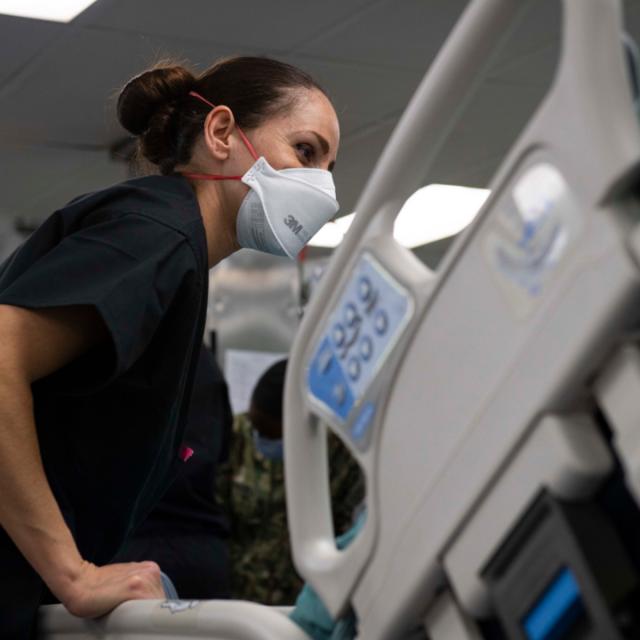
Esta aula es un espacio de formación y actualización para los profesionales del área de la salud, en particular el talento humano de Enfermería. Es un aporte desde la Universidad Nacional de Colombia, a través de la Facultad de Enfermería, acorde con los lineamientos internacionales y locales frente a la posible atención de nuestros pacientes en Unidades de Cuidado Intensivo.

Class Deals by MOOC List - Click here and see Coursera's Active Discounts, Deals, and Promo Codes.

Syllabus

WEEK 1
Presentación del curso
Este módulo presenta la organización del curso y la estrategia seleccionada para capacitar a enfermeros (as) en el cuidado de enfermería a personas en situación crítica de salud que se encuentran hospitalizados en la UCI.

WEEK 2
Generalidades para el cuidado de enfermería del paciente crítico en la UCI

WEEK 3
Proceso de atención de enfermería para el cuidado del paciente crítico en la UCI

Go to Class
MOOC List is learner-supported. When you buy through links on our site, we may earn an affiliate commission.

Related Courses

Understanding Clinical Research: Behind the Statistics (Coursera) Coursera
University of Cape Town

Understanding Clinical Research: Behind the Statistics (Coursera)

If you’ve ever skipped over`the results section of a medical paper because terms like “confidence interval” or “p-value” go over your head, then you’re in the right place. You may be a clinical practitioner reading research articles to keep up-to-date with developments in your field or a medical student wondering how to approach your own research. Greater confidence in understanding statistical analysis and the results can benefit both working professionals and those undertaking research themselves.

Jun 8th 2026
5-12 Weeks
Design and Interpretation of Clinical Trials (Coursera) Coursera
Johns Hopkins University

Design and Interpretation of Clinical Trials (Coursera)

Clinical trials are experiments designed to evaluate new interventions to prevent or treat disease in humans. The interventions evaluated can be drugs, devices (e.g., hearing aid), surgeries, behavioral interventions (e.g., smoking cessation program), community health programs (e.g. cancer screening programs) or health delivery systems (e.g., special care units for hospital admissions). We consider clinical trials experiments because the investigators rather the patients or their doctors select the treatment the patients receive.

Jun 8th 2026
5-12 Weeks
HI-FIVE: Health Informatics For Innovation, Value & Enrichment (Clinical Perspective) (Coursera) Coursera
Columbia University

HI-FIVE: Health Informatics For Innovation, Value & Enrichment (Clinical Perspective) (Coursera)

HI-FIVE (Health Informatics For Innovation, Value & Enrichment) Training is a 12-hour online course designed by Columbia University in 2016, with sponsorship from the Office of the National Coordinator for Health Information Technology (ONC). The training is role-based and uses case scenarios. Also, it has additional, optional modules on other topics of interest or relevance. Although we suggest to complete the course within a month's timeframe, the course is self-paced and so you can start and finish the course at anytime during a month's time period. No additional hardware or software are required for this course.

Jun 8th 2026
4 Weeks
Diagnosing Health Behaviors for Global Health Programs (Coursera) Coursera
Johns Hopkins University

Diagnosing Health Behaviors for Global Health Programs (Coursera)

Health behavior lies at the core of any successful public health intervention. While we will examine the behavior of individual in depth in this course, we also recognize by way of the Ecological Model that individual behavior is encouraged or constrained by the behavior of families, social groups, communities, organizations and policy makers. We recognize that behavior change is not a simplistic process but requires an understanding of dimensions like frequency, complexity and cultural congruity. Such behavioral analysis is strengthened through the use of a toolkit of theoretical models and practical frameworks.

Jun 8th 2026
4 Weeks
Easing the burden of obesity, diabetes and cardiovascular disease (Coursera) Coursera
The University of Sydney

Easing the burden of obesity, diabetes and cardiovascular disease (Coursera)

This course is multidisciplinary in nature, and aims to equip the global audience of interested lay people, people with chronic disease, public health researchers, health clinicians, students, administrators, and researchers to reflect on the overall impact of the burden of chronic disease. It shows how all chronic diseases (obesity, diabetes, cardiovascular disease, chronic obstructive pulmonary disease, and cancer) are related by a set of common causes, and that such diseases should be tackled, not individually, but as part of a complex system, with interrelated contributing factors. These factors are genetic, environmental, psychological, economic, social, developmental, and media related.

Jun 8th 2026
5-12 Weeks
Positive Psychology Specialization Project: Design Your Life for Well-hebeing (Coursera) Coursera
University of Pennsylvania

Positive Psychology Specialization Project: Design Your Life for Well-hebeing (Coursera)

You are encouraged to take the first four courses of the Foundations of Positive Psychology Specialization before starting this course and completing the Specialization Project. This course, taught by Dr. Martin E.P. Seligman brings all the key concepts from the first four courses to practice as you develop and test a new positive intervention for an audience of your choice.

Jun 8th 2026
4 Weeks
Doping : Sports, Organizations and Sciences (Coursera) Coursera
University of Lausanne

Doping : Sports, Organizations and Sciences (Coursera)

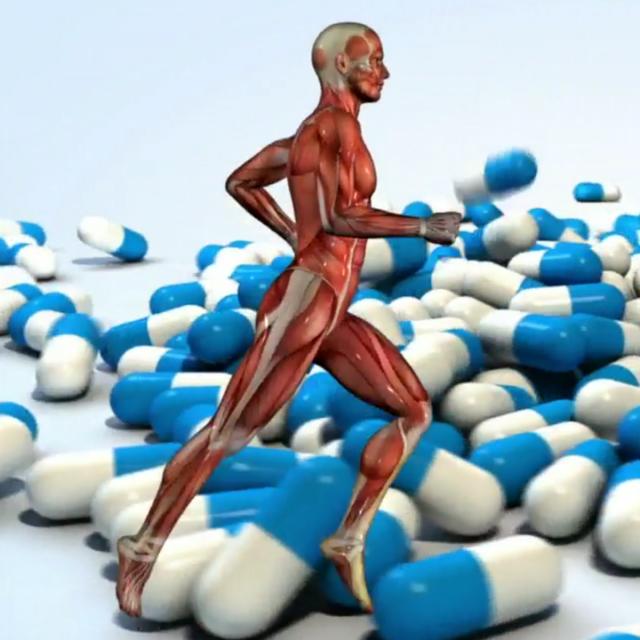
The objective of this course is to encourage a critical understanding of doping. To achieve this goal, this course will rely on a multidisciplinary approach that allow you to see how different disciplines get into a single object, in different perspectives and in often complementary ways. This approach will also allow us to appreciate the complexity of a subject like doping. Doping in sports is a complex practice whose definition and identification is the result of socially and historically constructed norms. This course offers to shed light on the processes that led to the use and prohibition of doping substances.

Jun 8th 2026
4 Weeks
Primeros Auxilios Psicológicos (PAP) (Coursera) Coursera
Universitat Autònoma de Barcelona

Primeros Auxilios Psicológicos (PAP) (Coursera)

Este curso on-demand (ABIERTO, se puede cursar en cualquier momento), impartido en castellano por la Universidad Autónoma de Barcelona y el Centro de Crisis de Barcelona, está destinado a entrenar en la aplicación de primeros auxilios psicológicos (PAP) a personas afectadas por situaciones altamente estresantes, abarcando tanto emergencias cotidianas (incidentes críticos estadísticamente frecuentes que afectan de manera muy intensa: un accidente de tráfico, una hospitalización, una agresión o la muerte traumática o repentina de una persona, etc.) como emergencias comunitarias y/o masivas (sucesos infrecuentes, que afectan a muchas personas o a una comunidad entera y que sobrepasan con mucho lo que sucede habitualmente en ella: una catástrofe natural, un accidente ferroviario o aéreo o un atentado).

Jun 8th 2026
5-12 Weeks
HI-FIVE: Health Informatics For Innovation, Value & Enrichment (Social/Peer Perspective) (Coursera) Coursera
Columbia University

HI-FIVE: Health Informatics For Innovation, Value & Enrichment (Social/Peer Perspective) (Coursera)

HI-FIVE (Health Informatics For Innovation, Value & Enrichment) Training is an approximately 10-hour online course designed by Columbia University in 2016, with sponsorship from the Office of the National Coordinator for Health Information Technology (ONC). The training is role-based and uses case scenarios. Our nation’s healthcare system is changing at a rapid pace. Transformative health care delivery programs depend heavily on health information technology to improve and coordinate care, maintain patient registries, support patient engagement, develop and sustain data infrastructure necessary for multi-payer value-based payment, and enable analytical capacities to inform decision making and streamline reporting.

Jun 8th 2026
4 Weeks
PrEParing: PrEP for Providers and Patients (Coursera) Coursera
Johns Hopkins University

PrEParing: PrEP for Providers and Patients (Coursera)

Pre-Exposure Prophylaxis (PrEP) using the antiretroviral medication emtricitibine/tenofovir approved in countries around the world is a highly effective means of reducing transmission of HIV through sexual encounters and needle sharing. This Johns Hopkins University course PrEPares you with essential information, concepts and practical advice regarding PrEP from leaders in the field. A first of its kind learning opportunity, both providers and patients learn from the same experts through content that meets the needs of both audiences, while facilitating the opportunity for a shared community space.

Jun 8th 2026
5-12 Weeks
Take the Lead on Healthcare Quality Improvement (Coursera) Coursera
Case Western Reserve University

Take the Lead on Healthcare Quality Improvement (Coursera)

In this course you will learn about the importance of quality in healthcare and how you can contribute by implementing a quality improvement (QI) project to improve processes of care and patient outcomes. You will learn about powerful tools to add to your QI ‘toolbox’ during short lectures and reflective exercises. You will apply these tools to the implementation of a QI project in your own practice setting or an area of personal improvement. At the completion of the course, you will have a storyboard that captures your QI project success to share with others.

Jun 8th 2026
5-12 Weeks
Understanding Cancer Metastasis (Coursera) Coursera
Johns Hopkins University

Understanding Cancer Metastasis (Coursera)

Over 500,000 people in the United States and over 8 million people worldwide are dying from cancer every year. As people live longer, the incidence of cancer is rising worldwide, and the disease is expected to strike over 20 million people annually by 2030. Everyone has been, or will be touched by cancer in some way during their lifetime. Thanks to years of dedication and commitment to research we’ve made enormous advances in the prevention and treatment of cancer, But there is still a lot of work to be done. In this course, physicians and scientists at the Johns Hopkins School of Medicine explain how cancer spreads or metastasizes.

Jun 8th 2026
3 Weeks