Conspiracy Planet (Coursera)

Conspiracy Planet (Coursera)

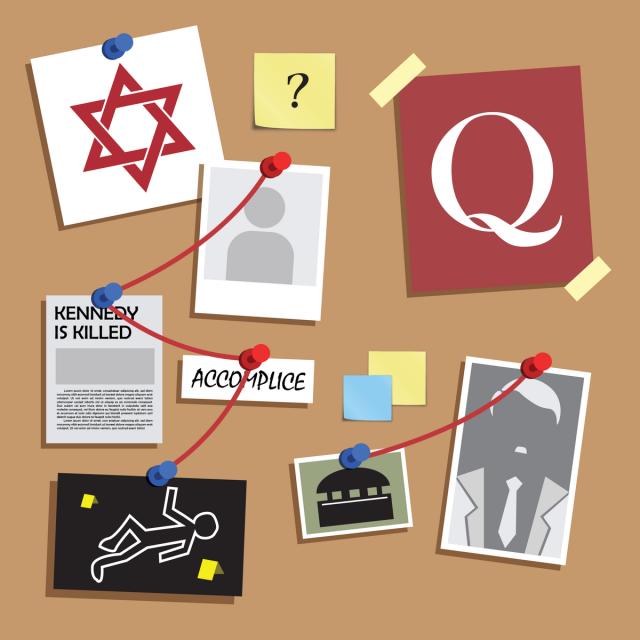
This course is for anyone interested in conspiracy theories. Millions of people around the world believe in conspiracy theories like The Protocols of the Elders of Zion, or that AIDS was deliberately created by governments and pharmaceutical companies, or that on September 11, 2001, the World Trade Center complex was downed not by airplanes, but by a “controlled demolition” masterminded by the United States national security state.

Class Deals by MOOC List - Click here and see Coursera's Active Discounts, Deals, and Promo Codes.

What are we to make of these claims? What do they say about our societies? How do they impact history, or reflect larger historical trends? How do we understand the context of these ideas? And how do we understand them in relation to objectively confirmed conspiracies, of which there are at least as many? How do we know when a conspiracy has really happened, and cannot simply be dismissed as a ‘theory’? We will grapple with these questions together through short videos, quizzes that will help you check your understanding of the material, discussion, and a final project in which you will create your own conspiracy theory.

What You Will Learn

  • Learners will be able to identify conspiracy theories.
  • Learners will be able to evaluate and critique conspiracy theories.
  • Learners will be able to create their own conspiracy theories.

Syllabus

WEEK 1
Introduction
This module is an introduction to the basics of conspiracy theory.

WEEK 2
Richard Hofstadter and the "Paranoid Style"
This module focuses on American historian Richard Hofstadter's book "The Paranoid Style in American Politics."

WEEK 3
Protocols of the Elders of Zion
This module covers the antisemitic conspiracy theories that grew from the fabricated text "The Protocols of the Elders of Zion."

WEEK 4
World War I
This module focuses on conspiracy theories invented to explain Word War I.

WEEK 5
JFK Assassination
This module covers some of the countless theories of the assassination of American President John F. Kennedy.

WEEK 6
Marilyn Monroe & Princess Diana Conspiracies
This module is an exploration of the relationship between grief and conspiracy theories.

WEEK 7
Conclusion
This is it. This is the last module, in which you will create your own (original) conspiracy theory and evaluate the conspiracy theories of your fellow learners.
Go to Class
MOOC List is learner-supported. When you buy through links on our site, we may earn an affiliate commission.

Related Courses

Poetry and the Holocaust (FutureLearn) FutureLearn
Yad Vashem

Poetry and the Holocaust (FutureLearn)

Explore personal accounts of the Holocaust through poetry and discover how poems can help you understand events of the past. Study Holocaust poetry to better comprehend this dark period in history. On this course, you’ll understand the events of the Holocaust and World War II through poetry which underlines the individual experience.

Available Now
3 Weeks
Introduction to American History: From Reconstruction to World War, 1865-1919 (FutureLearn) FutureLearn
The University of Newcastle, Australia

Introduction to American History: From Reconstruction to World War, 1865-1919 (FutureLearn)

Explore American history since 1865. Learn about the Civil War, Reconstruction, segregation and US foreign policy. Discover key moments in American history after the Civil War. American history is vast and complex. Through this course you will explore some of its key moments - examining domestic history and foreign relations.

No sessions available
3 Weeks
Patrick Henry: Forgotten Founder (Coursera) Coursera
University of Virginia,UVA Lifetime Learning, Patrick Henry Memorial Foundation

Patrick Henry: Forgotten Founder (Coursera)

“Give me liberty, or give me death:” Remembering Patrick Henry, the Forgotten Founder. Patrick Henry was enormously popular during the American Revolution. Even Thomas Jefferson, who over time developed a deep loathing of Henry (some would say jealousy), had to admit that “it is not now easy to say what we should have done without Patrick Henry.” Edmund Randolph, a patriot leader in his own right, explained that “It was Patrick Henry … awakening the genius of his country, and binding a band of patriots together to hurl defiance at the tyranny of so formidable a nation as Great Britain.”

Sep 21st 2026
5-12 Weeks
The Holocaust: The Destruction of European Jewry (Coursera) Coursera
University of California, Santa Cruz

The Holocaust: The Destruction of European Jewry (Coursera)

The Holocaust: The Destruction of European Jewry is an adaptation of an on-campus course that has been co-taught by Murray Baumgarten, Distinguished Professor of English and Comparative Literature (Literature Department), and Peter Kenez, Professor Emeritus (History Department), for over 20 years at UC Santa Cruz. In this course, you will explore the Holocaust from the overlapping perspectives of literature and history—through memoirs, historical documents, poetry, documentary footage, filmic representations, and novels.

Sep 21st 2026
5-12 Weeks
Introduction to Who Wrote Shakespeare (Coursera) Coursera
University of London,Goldsmiths, University of London

Introduction to Who Wrote Shakespeare (Coursera)

This free course from the University of London explores critical thinking, and the interpretation of texts, through the Shakespeare authorship question. Using doubt about Shakespeare’s authorship as our playground, we will explore the key concept of authorship attribution, while developing skills in literary analysis, interpretation, and argument. Through forensic exploration of key texts, you will learn why Shakespeare’s authorship is questioned, and what evidence is cited on both sides of the debate.

Sep 21st 2026
4 Weeks
The History of Modern Israel – Part I: From an Idea to a State (Coursera) Coursera
Tel Aviv University

The History of Modern Israel – Part I: From an Idea to a State (Coursera)

How did the State of Israel come to be? How is it that an idea, introduced in 19th century Europe, became a reality? And how does that reality prevail in the harsh complexities of the Middle East? Presented by Professor Eyal Naveh, with additional units from Professor Asher Sussers' "The Emergence of the Modern Middle East" course, This course will take you on a journey through the history of Modern Israel. In this 1st part of the course we will explore: How did the 19th century idea of a Jewish state become a reality? So the next time you hear about Israel in the news, you will be informed enough about the history of this area to comprehend the many sides and narratives that interact to shape the complex reality of Israel today.

Sep 21st 2026
3 Weeks
Roman Art and Archaeology (Coursera) Coursera
University of Arizona

Roman Art and Archaeology (Coursera)

The objective of this course is to provide an overview of the culture of ancient Rome beginning about 1000 BCE and ending with the so-called "Fall of Rome". We will look at some of the key people who played a role in Rome, from the time of the kings through the Roman Republic and the Roman Empire. We will also focus on the city of Rome itself, as well as Rome's expansion through Italy, the Mediterranean, and beyond.

Sep 21st 2026
5-12 Weeks
Sustainable Development - Ideas and Imaginaries (Coursera) Coursera
University of Copenhagen

Sustainable Development - Ideas and Imaginaries (Coursera)

Ideas and imaginaries inspire human capacity for great endeavours, but ‘conventional wisdom’ frequently prevents necessary change. Achievement of global sustainable development is, therefore, dependent on a profound comprehension of the preunderstandings and implicit imaginaries that form both our perception of reality and our basic confidence in the viability of transgressive action.

Sep 21st 2026
4 Weeks
Historia de las reglas del fútbol en Inglaterra y en Argentina (Coursera) Coursera
Universidad Austral

Historia de las reglas del fútbol en Inglaterra y en Argentina (Coursera)

El curso es accesible para todos los aficionados al fútbol ya sean del nivel de un principiante como el de un profesional dado que describe de una manera clara y sencilla cómo se originó el fútbol en Inglaterra en el Siglo XIV y el modo en que se fueron desarrollando las reglas de juego, que comprenden la forma en que los futbolistas lo practicaban (con los pies, con las manos, con o sin arcos, el tamaño de la pelota, del campo de juego, cantidad de jugadores por lado, etc.) y las reglas de competición, que ordenan cómo se organiza una federación nacional, el formato de los campeonatos, los requisitos que deben cumplir los clubes afiliados, la fiscalización de los resultados, etc.

Sep 14th 2026
5-12 Weeks