FUN

Comprendre l’économie collaborative (FUN)

Comprendre l’économie collaborative (FUN)

L'objectif du MOOC "Comprendre l'économie collaborative" est de permettre d' appréhender les grands principes de la transition numérique de l'économie et d'en décoder les principaux mécanismes sociaux-économiques.

Tout au long de ce cours, vous décrypterez l'économie collaborative à travers des clés de lecture.

  • Le consom'acteur exprime les nouvelles relations de pair à pair entre les personnes.
  • Les plateformes connectent des millions d'individus en quelques clics.
  • Le numérique porte des transformations sociales profondes.
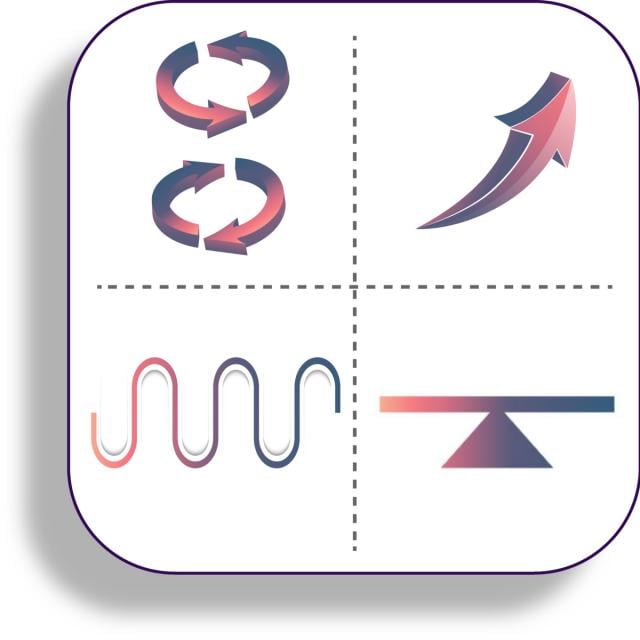
  • Le numérique est à la fois un remède et un poison, il comporte des opportunités et des risques.
  • La multitude d'acteur est source d'innovation.

Plan du cours

  • Séquence 0 : Présentation du MOOC et prise en main de la plateforme
  • Séquence 1 : Présentation générale de l'économie collaborative

Partie 1 : Caractériser le pair à pair
Partie 2 : Le pair à pair collaboratif
Partie 3 : Le pair à pair marchand
Partie 4 : Les effets de réseau

  • Séquence 2 : Les motivations et attitudes du consomm'acteur

Partie 1 : Le consomm'acteur en réseau
Partie 2 : Les réseaux sociaux pair à pair
Partie 3 : La structuration en réseaux sociaux
Partie 4 : Réseau pair à pair et community management

  • Séquence 3 : Conquérir le monde avec une plateforme collaborative

Partie 1 : Splendeur et misères du néo-entrepreneur
Partie 2 : Trouver la bonne formule
Partie 3 : Le "juste" prix
Partie 4 : Modèles d'affaires

  • Séquence 4 : Les opportunités et les risques de l'économie collaborative

Partie 1 : Les opportunités sociales, économiques et environnementales de l'économie collaborative
Partie 2 : Les risques de l'économie collaborative
Partie 3 : Construire un cadre sûr, équitable et stimulant
Partie 4 : Les alternatives et les perspectives de l'économie collaborative

  • Séquence 5 : Numérique et transformations sociales

Partie 1 : Le retour du solidaire ?
Partie 2 : Hybridation du pair à pair marchand et du pair à pair collaboratif
Partie 3 : Transition numérique : les défis aux entreprises
Partie 4 : Réponse des entreprises : une nouvelle identité ?
Go to Class
MOOC List is learner-supported. When you buy through links on our site, we may earn an affiliate commission.

Related Courses

Understanding the Australian economy: An introduction to macroeconomic and financial policies (Coursera) Coursera
The University of Sydney

Understanding the Australian economy: An introduction to macroeconomic and financial policies (Coursera)

This four-week, four-module course explores selective aspects of the Australian economy, with emphasis on macroeconomic and financial policies. The course introduces participants to several key attributes of the Australian economy and discusses how they are influenced by both domestic and international forces. We will examine some of the key issues and dilemmas facing the Australian economy and how policymakers can deal with them using monetary and fiscal policies.

Jun 8th 2026
4 Weeks
Model Thinking (Coursera) Coursera
University of Michigan

Model Thinking (Coursera)

We live in a complex world with diverse people, firms, and governments whose behaviors aggregate to produce novel, unexpected phenomena. We see political uprisings, market crashes, and a never ending array of social trends. How do we make sense of it? Models. Evidence shows that people who think with models consistently outperform those who don't. And, moreover people who think with lots of models outperform people who use only one. Why do models make us better thinkers? Models help us to better organize information - to make sense of that fire hose or hairball of data (choose your metaphor) available on the Internet.

Jun 1st 2026
5-12 Weeks
C'est quoi l'éco ? (FUN) FUN
ENS de Lyon

C'est quoi l'éco ? (FUN)

Chômage, mondialisation, dettes, crise, ubérisation : l’économie est partout dans les médias, mais les explications proposées ne sont pas toujours facilement compréhensibles. Pourtant, nous sommes tous des acteurs de l’économie : nous consommons, nous cherchons un emploi, nous épargnons (quand nous le pouvons). L’objectif de ce cours est de vous aider à dépasser le cadre d’analyse de simples expériences personnelles et acquérir des clés nécessaires à la compréhension du mode de raisonnement des économistes.

No sessions available
5-12 Weeks
TVA et collectivités territoriales : ayez les bons réflexes (FUN) FUN
Centre National de la Fonction Publique Territoriale - CNFPT

TVA et collectivités territoriales : ayez les bons réflexes (FUN)

Toutes les collectivités locales sont concernées par la TVA en qualité de consommateur final mais elles sont aussi, parfois, tenues de collecter la TVA pour le compte de l’Etat. Ce MOOC s’adresse à l’ensemble des acteurs en charge de la gestion et du contrôle des finances locales. Il vous apportera les bases indispensables pour comprendre les mécanismes de la TVA et les activités potentiellement concernées dans les collectivités territoriales.

No sessions available
4 Weeks
Microeconomics: When Markets Fail (Coursera) Coursera
University of Pennsylvania

Microeconomics: When Markets Fail (Coursera)

Perfect markets achieve efficiency: maximizing total surplus generated. But real markets are imperfect. In this course we will explore a set of market imperfections to understand why they fail and to explore possible remedies including as antitrust policy, regulation, government intervention. Examples are taken from everyday life, from goods and services that we all purchase and use. We will apply the theory to current events and policy debates through weekly exercises. These will empower you to be an educated, critical thinker who can understand, analyze and evaluate market outcomes.

Jun 2nd 2026
5-12 Weeks
實驗經濟學 (Experimental Economics: Behavioral Game Theory) (Coursera) Coursera
National Taiwan University

實驗經濟學 (Experimental Economics: Behavioral Game Theory) (Coursera)

人是否會如同理論經濟學的預測進行決策?這門課將透過每週的課程影片以及課後作業帶你了解實驗經濟學的基本概念。每週將會有習題練習以及指定閱讀的期刊論文。你將會參與一些線上的實驗、報告論文並且互評其他同學的報告。

Jun 10th 2026
5-12 Weeks
Firm Level Economics: Consumer and Producer Behavior (Coursera) Coursera
University of Illinois at Urbana-Champaign

Firm Level Economics: Consumer and Producer Behavior (Coursera)

All goods and services are subject to scarcity at some level. Scarcity means that society must develop some allocation mechanism – rules to determine who gets what. Over recorded history, these allocation rules were usually command based – the king or the emperor would decide. In contemporary times, most countries have turned to market based allocation systems. In markets, prices act as rationing devices, encouraging or discouraging production and encouraging or discouraging consumption in such a way as to find an equilibrium allocation of resources.

Jun 1st 2026
4 Weeks
Inequality and Democracy (Coursera) Coursera
Universiteit Utrecht

Inequality and Democracy (Coursera)

Most countries are getting more and more unequal. But the core of democracy is political equality: that everyone should have an equal say in how their country is run. Can we really expect these things to go together? Can people have equal political power while economic inequality grows and grows? Take this course and decide for yourself.

Jun 8th 2026
5-12 Weeks
Global Strategy II: Doing Business in The Global Economy (Coursera) Coursera
University of Illinois at Urbana-Champaign

Global Strategy II: Doing Business in The Global Economy (Coursera)

This course explores the ways firms overcome challenges when operating globally. The global economy is characterized for its high complexity and uncertainty. Corporations trying to succeed in the global economy need to develop different types of strategies depending on where they are conducting business or what type business they are in.

Jun 8th 2026
4 Weeks
Greening the Economy: Sustainable Cities (Coursera) Coursera
Lund University

Greening the Economy: Sustainable Cities (Coursera)

How can we shape urban development towards sustainable and prosperous futures? This course will explore sustainable cities as engines for greening the economy. We place cities in the context of sustainable urban transformation and climate change. Sustainable urban transformation refers to structural transformation processes – multi-dimensional and radical change – that can effectively direct urban development towards ambitious sustainability and climate goals. We will connect the key trends of urbanization, decarbonisation and sustainability.

Jun 8th 2026
5-12 Weeks
The Economics of AI (Coursera) Coursera
University of Virginia

The Economics of AI (Coursera)

The course introduces you to cutting-edge research in the economics of AI and the implications for economic growth and labor markets. We start by analyzing the nature of intelligence and information theory. Then we connect our analysis to modeling production and technological change in economics, and how these processes are affected by AI. Next we turn to how technological change drives aggregate economic growth, covering a range of scenarios including a potential growth singularity.

Jun 2nd 2026
5-12 Weeks
Game Theory (Coursera) Coursera
Stanford University,The University of British Columbia

Game Theory (Coursera)

Popularized by movies such as "A Beautiful Mind," game theory is the mathematical modeling of strategic interaction among rational (and irrational) agents. Beyond what we call `games' in common language, such as chess, poker, soccer, etc., it includes the modeling of conflict among nations, political campaigns, competition among firms, and trading behavior in markets such as the NYSE.

Jun 8th 2026
5-12 Weeks