Building Services with ASP.NET Web API (Coursera)

Offered by Board Infinity,
Building Services with ASP.NET Web API (Coursera)

Dive into the intricate world of building services using the ASP.NET Web API with this meticulously crafted course. Designed to cater to individuals ranging from beginners to those with a foundational understanding, this course aims to elucidate the concepts of creating RESTful services using ASP.NET Web API.

Class Deals by MOOC List - Click here and see Coursera's Active Discounts, Deals, and Promo Codes.

In the first module, C# Programming Fundamentals, you'll begin your expedition by exploring the captivating realm of C#. With an introduction to its unparalleled significance in today's software landscape, you'll progressively delve into its foundational concepts. From understanding various data types and variables to mastering the art of conditional statements and control structures, this module paves the way for what's ahead.
Progressing to the second module, Advanced C# Programming, your perspective will broaden with an intensive dive into the deeper territories of C#. Venturing into advanced topics like delegates, events, and evolved Object-Oriented Programming principles, you'll garner hands-on expertise, equipping you to handle intricate programming challenges.
Dive into the third module, SQL Server for Backend Development, to turn your focus towards the pivotal backend. Unveil the capabilities and nuances of SQL Server, familiarize yourself with the crux of relational databases, and comprehend the architecture intricacies. By the end, designing and managing robust databases tailored for web applications will be second nature.
Finally, in the fourth module, ASP.NET Web API, the core essence of this course unfolds. Here, you'll be introduced to the foundational principles of RESTful web services. By mastering the art of defining API endpoints and acquiring adeptness in data serialization techniques, you'll be poised to craft and deploy powerful web APIs with finesse.
Upon concluding this course, you'll not only possess an in-depth understanding of building services with ASP.NET Web API but also be geared up with the proficiency to design, implement, and launch scalable and efficient web services.

What you'll learn

  • Dive deep into C# programming, from foundational basics to advanced OOP principles, equipping you with robust software development skills.
  • Grasp SQL Server intricacies, from understanding relational database structures to optimizing performance through normalization techniques.
  • Master ASP.NET Web API, from comprehending RESTful service principles to serializing data in JSON and XML for versatile client consumption.
  • Learn to design scalable and maintainable APIs with ASP.NET Web API, understanding routing configurations, resource management, and error handling.

Syllabus

C# Programming Fundamentals
Module 1
The C# Programming Fundamentals module is designed to equip learners with a solid foundation in the syntax, concepts, and principles of C# programming language. The module covers various topics, starting with an introduction to the C# programming language, including its history and significance in modern software development. It then progresses to cover essential aspects of programming in C# such as data types and variables, including integer, floating-point, Boolean, and string types. The module also covers the use of arithmetic, logical, and comparison operators in C#, as well as expressions and their evaluation. Learners will also explore conditional statements, loops, and branching statements in C# to control program flow, as well as the basics of creating and calling methods and functions, including passing arguments and returning values.

Advanced C# Programming
Module 2
The Advanced C# Programming Fundamentals module is designed to provide learners with an in-depth understanding of advanced C# programming concepts and techniques. The module covers various topics, starting with an overview of advanced programming concepts such as LINQ, delegates, and events. It then progresses to cover advanced object-oriented programming principles such as inheritance, polymorphism, and encapsulation, as well as advanced techniques for working with classes and objects, such as extension methods, interfaces, and abstract classes. The module also covers advanced topics in exception handling, threading, and asynchronous programming, including how to create and work with asynchronous and parallel code.

SQL Server for Backend Development
Module 3
SQL Server is a popular relational database management system used in many backend development projects. In the SQL Server for Backend Development module, Learners will learn how to design, implement, and maintain SQL Server databases for their applications. You will also gain an understanding of the underlying principles of database management and how to optimize performance. This module covers the basics of SQL Server, including database architecture, data types, normalization, and indexing. Students learn how to write SQL queries to retrieve and manipulate data, and they gain an understanding of how to use stored procedures, triggers, and functions to improve performance and maintain data integrity.

ASP.NET Web API
Module 4
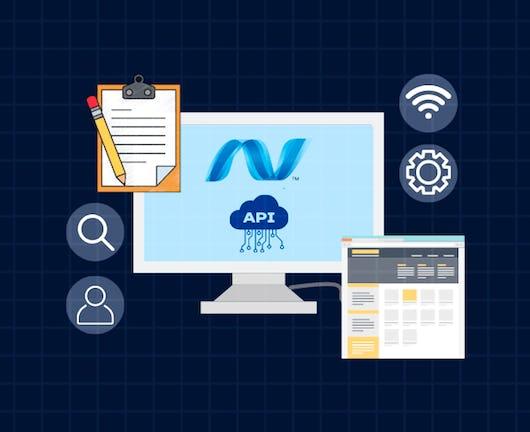
ASP.NET Web API is a framework for building RESTful web services that can be consumed by a variety of clients, including web applications, mobile apps, and other services. In the ASP.NET Web API module, developers learn how to design, implement, and deploy web APIs using the ASP.NET framework. This module covers the basics of RESTful web services and HTTP protocol, and how they can be implemented in ASP.NET Web API. Students learn how to use attributes to define API endpoints and map HTTP requests to controller methods. They also gain an understanding of how to serialize and deserialize data using JSON and XML formats.

Go to Class
MOOC List is learner-supported. When you buy through links on our site, we may earn an affiliate commission.

Related Courses

Introduction to Programming with MATLAB (Coursera) Coursera
Vanderbilt University

Introduction to Programming with MATLAB (Coursera)

This course teaches computer programming to those with little to no previous experience. It uses the programming system and language called MATLAB to do so because it is easy to learn, versatile and very useful for engineers and other professionals. MATLAB is a special-purpose language that is an excellent choice for writing moderate-size programs that solve problems involving the manipulation of numbers.

Jun 8th 2026
5-12 Weeks
How To Create a Website in a Weekend! (Project-Centered Course) (Coursera) Coursera
The State University of New York

How To Create a Website in a Weekend! (Project-Centered Course) (Coursera)

In this project-centered course*, you’ll design, build, and publish a basic website that incorporates text, sound, images, hyperlinks, plug-ins, and social media interactivity. We’ll provide you with step-by-step instructions, exercises, tips, and tools that enable you to set up a domain name, create an attractive layout for your pages, organize your content properly, ensure that your site functions well across different operating systems and on mobile devices, keep your site safe, and finally, let people know your site is online. We’ll even show you how to track your visitors.

Jun 8th 2026
3 Weeks
Basic Cryptography and Programming with Crypto API (Coursera) Coursera
University of Colorado System

Basic Cryptography and Programming with Crypto API (Coursera)

In this MOOC, we will learn the basic concepts and principles of crytography, apply basic cryptoanalysis to decrypt messages encrypted with mono-alphabetic substitution cipher, and discuss the strongest encryption technique of the one-time-pad and related quantum key distribution systems. We will also learn the efficient symmetric key cryptography algorithms for encrypting data, discuss the DES and AES standards, study the criteria for selecting AES standard, present the block cipher operating modes and discuss how they can prevent and detect the block swapping attacks, and examine how to defend against replay attacks.

Jun 8th 2026
4 Weeks
Data Structures and Performance (Coursera) Coursera
University of California, San Diego

Data Structures and Performance (Coursera)

How do Java programs deal with vast quantities of data? Many of the data structures and algorithms that work with introductory toy examples break when applications process real, large data sets. Efficiency is critical, but how do we achieve it, and how do we even measure it? This is an intermediate Java course. We recommend this course to learners who have previous experience in software development or a background in computer science, and in particular, we recommend that you have taken the first course in this specialization (which also requires some previous experience with Java).

Jun 8th 2026
5-12 Weeks
JavaScript, jQuery, and JSON (Coursera) Coursera
University of Michigan

JavaScript, jQuery, and JSON (Coursera)

In this course, we'll look at the JavaScript language, and how it supports the Object-Oriented pattern, with a focus on the unique aspect of how JavaScript approaches OO. We'll explore a brief introduction to the jQuery library, which is widely used to do in-browser manipulation of the Document Object Model (DOM) and event handling. You'll also learn more about JavaScript Object Notation (JSON), which is commonly used as a syntax to exchange data between code running on the server (i.e. in PHP) and code running in the browser (JavaScript/jQuery). It is assumed that learners have already taken the Building Web Applications and Building Database Applications in PHP courses in this specialization.

Jun 8th 2026
4 Weeks
Interfacing with the Arduino (Coursera) Coursera
University of California, Irvine

Interfacing with the Arduino (Coursera)

Arduino senses the environment by receiving inputs from add-on devices such as sensors, and can control the world around it by adjusting lights, motors, and other actuators. In this class you will learn how and when to use the different types of sensors and how to connect them to the Arduino. Since the external world uses continuous or analog signals and the hardware is digital you will learn how these signals are converted back-and-forth and how this must be considered as you program your device. You'll also learn about the use of Arduino-specific shields and the shields software libraries to interface with the real world.

Jun 8th 2026
4 Weeks
Learn to code with AI (Coursera) Coursera
Scrimba

Learn to code with AI (Coursera)

Imagine waking up tomorrow as a web developer. What would you want to build? With AI tools like ChatGPT, you're already a developer, regardless of your experience, if you know how to work with them. So in this course, you'll build functional, interactive front-end projects while learning how to write effective prompts and debug and refine your code with the help of AI.

Jun 10th 2026
2 Weeks
Parallel Programming in Java (Coursera) Coursera
Rice University

Parallel Programming in Java (Coursera)

This course teaches learners (industry professionals and students) the fundamental concepts of parallel programming in the context of Java 8. Parallel programming enables developers to use multicore computers to make their applications run faster by using multiple processors at the same time. By the end of this course, you will learn how to use popular parallel Java frameworks (such as ForkJoin, Stream, and Phaser) to write parallel programs for a wide range of multicore platforms including servers, desktops, or mobile devices, while also learning about their theoretical foundations including computation graphs, ideal parallelism, parallel speedup, Amdahl's Law, data races, and determinism.

Jun 8th 2026
4 Weeks
Introduction to CSS3 (Coursera) Coursera
University of Michigan

Introduction to CSS3 (Coursera)

The web today is almost unrecognizable from the early days of white pages with lists of blue links. Now, sites are designed with complex layouts, unique fonts, and customized color schemes. This course will show you the basics of Cascading Style Sheets (CSS3). The emphasis will be on learning how to write CSS rules, how to test code, and how to establish good programming habits.

Jun 8th 2026
4 Weeks
Using Python to Interact with the Operating System (Coursera) Coursera
Google

Using Python to Interact with the Operating System (Coursera)

By the end of this course, you’ll be able to manipulate files and processes on your computer’s operating system. You’ll also have learned about regular expressions -- a very powerful tool for processing text files -- and you’ll get practice using the Linux command line on a virtual machine. And, this might feel like a stretch right now, but you’ll also write a program that processes a bunch of errors in an actual log file and then generates a summary file. That’s a super useful skill for IT Specialists to know.

Jun 9th 2026
5-12 Weeks
The Arduino Platform and C Programming (Coursera) Coursera
University of California, Irvine

The Arduino Platform and C Programming (Coursera)

The Arduino is an open-source computer hardware/software platform for building digital devices and interactive objects that can sense and control the physical world around them. In this class you will learn how the Arduino platform works in terms of the physical board and libraries and the IDE (integrated development environment). You will also learn about shields, which are smaller boards that plug into the main Arduino board to perform other functions such as sensing light, heat, GPS tracking, or providing a user interface display. The course will also cover programming the Arduino using C code and accessing the pins on the board via the software to control external devices.

Jun 8th 2026
4 Weeks
The Raspberry Pi Platform and Python Programming for the Raspberry Pi (Coursera) Coursera
University of California, Irvine

The Raspberry Pi Platform and Python Programming for the Raspberry Pi (Coursera)

The Raspberry Pi is a small, affordable single-board computer that you will use to design and develop fun and practical IoT devices while learning programming and computer hardware. In addition, you will learn how to set up up the Raspberry Pi environment, get a Linux operating system running, and write and execute some basic Python code on the Raspberry Pi. You will also learn how to use Python-based IDE (integrated development environments) for the Raspberry Pi and how to trace and debug Python code on the device.

Jun 8th 2026
4 Weeks