In biblioteca con un click (POK)

Offered by Politecnico di Milano,
In biblioteca con un click (POK)

Strumenti a supporto della ricerca bibliografica. Spesso quando si ha un bisogno informativo, anche complesso, si tende a rivolgersi a Internet per l'apparente facilità della ricerca, ma sovrastimando la capacità della Rete di fornire risultati pertinenti ed affidabili. Per contro, la stessa ricerca di informazioni bibliografiche attraverso gli strumenti messi a disposizione dalla propria Università può sembrare complessa e laboriosa.

Il corso dà indicazioni sulla metodologia della ricerca bibliografica e documentale (come impostare correttamente una ricerca, come focalizzare e formulare la domanda di ricerca, come valutare le fonti a disposizione) e individua gli strumenti più appropriati per effettuarla tra quelli più frequentemente disponibili presso le biblioteche universitarie. Verrà inoltre sottolineata l’importanza del rispetto del diritto d’autore e dell’uso della citazione per favorire il corretto trattamento delle informazioni e non incorrere nel plagio.

Il corso è pensato come uno strumento agile, calato nella realtà e ricco di esempi, rivolto agli studenti universitari, ma potrà risultare utile a chiunque voglia migliorare le proprie capacità nell’acquisire informazioni, utilizzando le strategie apprese, oltre che nei tradizionali cataloghi di biblioteca online, anche nei più diffusi motori di ricerca.
Il corso è strutturato in 3 week.
Week 1 – Come iniziare una ricerca bibliografica?
Week 2 – Quali strumenti utilizzare?
Week 3 – Come gestire i risultati?
Ciascuna week ha al suo interno diverse lezioni, composte da video e testi scritti. Alla fine di ogni week sono presenti quiz di autovalutazione.
Se parteciperai attivamente a questo corso, raggiungerai diversi Risultati di Apprendimento Attesi.
Week 1
Identificare le strategie più efficaci per impostare una ricerca bibliografia
Utilizzare gli operatori booleani per ampliare o restringere la propria ricerca bibliografica
Utilizzare la ricerca per citazioni per ampliare e approfondire la propria ricerca bibliografica
Selezionare i risultati della ricerca bibliografica valutando l’autorevolezza delle fonti
Week 2
Individuare lo strumento più adatto (Catalogo, Banche Dati e Discovery Tool) per le proprie esigenze
Utilizzare le funzioni presenti nei vari strumenti (Catalogo, Banche Dati e Discovery Tool) per allargare o affinare la propria ricerca bibliografica
Individuare strumenti Open Access utilizzabili a supporto della propria ricerca bibliografica
Week 3
Individuare quando si rischia di incorrere nel reato di plagio durante la stesura della tesi o di un articolo
Saper citare correttamente le fonti utilizzate per la stesura della tesi o di un articolo
Applicare correttamente uno stile citazionale
Facilitare la raccolta delle fonti bibliografiche utilizzando software per la gestione bibliografica
Go to Class
MOOC List is learner-supported. When you buy through links on our site, we may earn an affiliate commission.

Related Courses

Essentials of Global Health (Coursera) Coursera
Yale University

Essentials of Global Health (Coursera)

Essentials of Global Health is a comprehensive introduction to global health. It is meant to introduce you to this topic in well-structured, clear and easy to understand ways. Much of the course will focus on five questions: What do people get sick, disabled and die from; Why do they suffer from these conditions? Which people are most affected? Why should we care about such concerns? What can be done to address key health issues, hopefully at least cost, as fast as possible, and in sustainable ways?

Aug 10th 2026
5-12 Weeks
Introduction to Systems Biology (Coursera) Coursera
Icahn School of Medicine at Mount Sinai

Introduction to Systems Biology (Coursera)

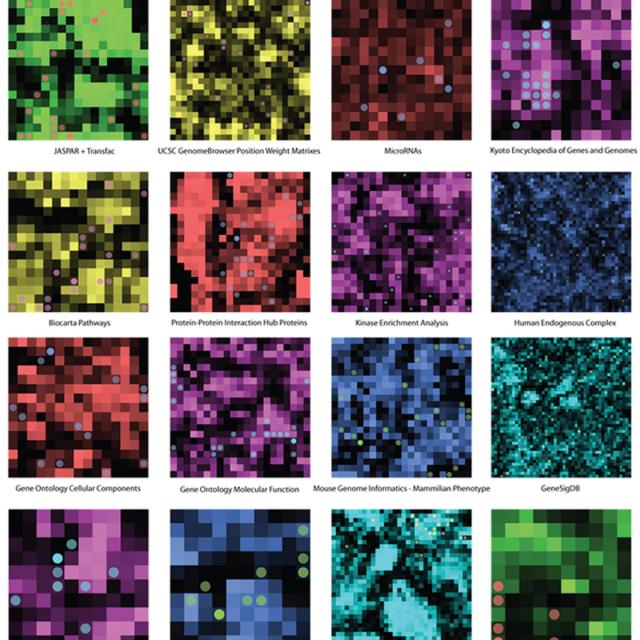
This course will introduce the student to contemporary Systems Biology focused on mammalian cells, their constituents and their functions. Biology is moving from molecular to modular. As our knowledge of our genome and gene expression deepens and we develop lists of molecules (proteins, lipids, ions) involved in cellular processes, we need to understand how these molecules interact with each other to form modules that act as discrete functional systems.

Aug 10th 2026
5-12 Weeks
Global Health Policy (Coursera) Coursera
The University of Tokyo

Global Health Policy (Coursera)

In this course, learners will become familiar with principles and theories of global health problems, and major challenges and controversies in improving global population health as well as practical applications of quantitative methods to analyze and interpret issues and challenges for policy. Topics will include health and foreign policy, health governance, acute disease surveillance, non-communicable diseases, burden of disease, universal health coverage, health systems strengthening, health financing, and human resources for health and ageing.

Aug 10th 2026
4 Weeks
Introduction to Breast Cancer (Coursera) Coursera
Yale University

Introduction to Breast Cancer (Coursera)

Welcome to an Introduction to Breast Cancer! In this course, we’ll learn a bit about the leading cause of cancer in women worldwide – from the basic biology of the disease, to risk factors and prevention, to treatment modalities to survivorship. We’ll talk to leading experts, explore some of the milestone studies that have pushed this field forward, and have interactive discussions on discussion boards and social media. You’ll even have an opportunity to let us know what topics you want to cover on tweetchats, so we can try to make the content fit your interests.

Aug 10th 2026
5-12 Weeks
The Art and Science of Searching in Systematic Reviews (edX) Coursera
National University of Singapore,NUS

The Art and Science of Searching in Systematic Reviews (edX)

This course is useful for anyone responsible for searching literature systematically either for a systematic review or a comprehensive literature review. Learn the fundamentals of systematic review searching, including strategies, information sources and methods to manage & report search methods across disciplines.

Self Paced
Self-Paced
Input and Interaction (Coursera) Coursera
University of California, San Diego

Input and Interaction (Coursera)

In this course, you will learn relevant fundamentals of human motor performance, perception, and cognition that inform effective interaction design. You will use these models of how people work to design more effective input and interaction techniques. You’ll apply these to both traditional graphic and gestural interfaces.

Jul 27th 2026
3 Weeks