Basic Life Support and Automated External Defibrillation (Stepik)

Basic Life Support and Automated External Defibrillation (Stepik)

This open course gives clear understanding of basic initial care in case of cardiac and respiratory arrest – cardiopulmonary resuscitation with automated external defibrillation (CPR with AED). The course is developed by emergency medicine specialists in accordance with current international guidelines, and targeted primarily at those interested who have no medical background. Anyone can learn CPR, and the learning must be simple and entertaining!

Being one of the commonest causes of death worldwide, sudden cariac arrest is currently recognized as a global health problem. Without immediate help (cardiopulmonary resuscitation [CPR], also known as basic life support), the chances for survival of cardiac arrest victim fall with each second. At the same time, early start of CPR by those who witness cardiac arrest improves the probability of a successful outcome by a factor of 2–4.
Unfortunately, today in most communities bystanders deliver CPR in less than 20% of cardiac arrests, even when the victim is their close friend or relative. The main reason of resuscitations not attempted is lack of CPR knowledge and skills.
Being developed by experienced emergency medicine and critical care physicians of the Crimean Simulation Center for Emergency Medicine in accordance with present-day international guidelines in resuscitation, this course is intended to provide free, convenient and clearly understandable theoretical training in CPR for anyone interested therein, as well as to resolve doubts and reduce fears related with real-life CPR provision.

By completing this course you will learn:
• how to recognize cardiac and respiratory arrest
• what exactly to do before arrival of emergency medical services
• how to perform CPR in cardiac arrest and respiratory arrest victim
• how to perform CPR in children
• how to use an automated external defibrillator (AED)
Reviewers of the course:
• Dezhurny L.I., Doctor of Medical Sciences, Senior Staff Scientist of the Federal Research Institute for Health Organization and Informatics of Ministry of Health of the Russian Federation (Moscow)
• Kuzovlev A.N., Doctor of Medical Sciences, Deputy Director for Science of the V.A. Negovsky Scientific Research Institute of General Reanimatology, Course Director for the European Resuscitation Council CPR courses in Russia
The course is the Winner of the Fourth International Open Online Courses Contest EdCrunch Award OOC - 2018


Go to Class
MOOC List is learner-supported. When you buy through links on our site, we may earn an affiliate commission.

Related Courses

Science of Exercise (Coursera) Coursera
University of Colorado Boulder

Science of Exercise (Coursera)

Learners who complete Science of Exercise will have an improved physiological understanding of how your body responds to exercise, and will be able to identify behaviors, choices, and environments that impact your health and training. You will explore a number of significant adjustments required by your body in order to properly respond to the physical stress of exercise, including changes in carbohydrate, fat and protein metabolism, nutritional considerations, causes of muscle soreness & fatigue, and the effectiveness and dangers of performance enhancing drugs.

Jun 1st 2026
4 Weeks
Public Involvement in Research (Coursera) Coursera
Imperial College London

Public Involvement in Research (Coursera)

This course focuses on participatory approaches in research, known as 'public involvement' in the UK. You'll specifically, consider why citizens and patients would be involved in research and explore participatory approaches across and within the research cycle in more detail, diving into questions such as: What kinds of participation can be undertaken at each of the 7 stages of the cycle? How can you utilise participation in research? What examples of using participatory approaches exist in research?

Jun 3rd 2026
4 Weeks
Positive Psychology: Martin E. P. Seligman’s Visionary Science (Coursera) Coursera
University of Pennsylvania

Positive Psychology: Martin E. P. Seligman’s Visionary Science (Coursera)

Dr. Martin E.P. Seligman—renowned worldwide as the “father of Positive Psychology”—has led visionary leaps in the scientific research, empirical data and personal understandings of human flourishing. This course explores the past, present and future of positive psychology as a journey through the key scientific leaps led by Dr. Seligman and his colleagues at the University of Pennsylvania's Positive Psychology Center and Master of Applied Positive Psychology program.

Jun 1st 2026
4 Weeks
Understanding Obesity (Coursera) Coursera
University of Edinburgh

Understanding Obesity (Coursera)

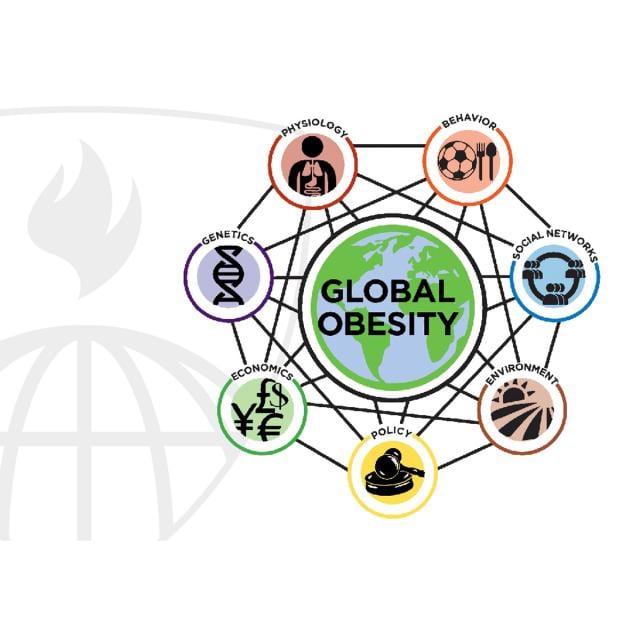
In this course, we’ll look at the facts and misconceptions around obesity and discuss key physiological and psychological concepts around the brain’s control of appetite and body weight. We’ll consider the biological and environmental pressures that make it easy to gain weight (and hard to lose it!). Most importantly, we'll give you the opportunity to reflect on your own knowledge and assumptions around the subject.

Jun 1st 2026
4 Weeks
Nutrition and Lifestyle in Pregnancy (Coursera) Coursera
Ludwig-Maximilians-Universität München

Nutrition and Lifestyle in Pregnancy (Coursera)

Nutrition and Lifestyle in Pregnancy offers an overview of the latest research findings and international recommendations on a variety of nutrition-related aspects and outcomes of pregnancy. Ensuring a healthy nutritional status and lifestyle prior to and during pregnancy is one of the best ways to help support the healthy growth and development of the unborn child. We will look at how a healthy diet and lifestyle should ideally be achieved prior to conception and provide recommendations for pre-conception counselling of women.

Jun 1st 2026
4 Weeks
Community Change in Public Health (Coursera) Coursera
Johns Hopkins University

Community Change in Public Health (Coursera)

In bringing about behavior change in public health, we often focus on the individual mother, student, or farmer. We should not forget the community structure and norms constrain for encouraging individual health behaviors. This course examines the community context of the changes needed to promote the public’s health. We begin by examining the various definitions of ‘community’ and the processes by which we ‘diagnose’ or seek to understand the structure and characteristics of different types of communities.

Jun 1st 2026
5-12 Weeks
Health Coaching Conversations (Coursera) Coursera
Imperial College London

Health Coaching Conversations (Coursera)

Are you a healthcare practitioner or student in a healthcare field? Do you want to learn how to have more empowering conversations with your patients and support them to take control of their own health and wellbeing? Are you looking for a course to start learning these skills that also fits with your busy life? If so, this is the course for you!

Jun 3rd 2026
4 Weeks
Global Health at the Human-Animal-Ecosystem Interface (Coursera) Coursera
University of Geneva

Global Health at the Human-Animal-Ecosystem Interface (Coursera)

The University of Geneva, Institute Pasteur, University of Montreal and Centre Virchow-Villermé/University Paris Descartes welcome you to this new MOOC on "Global Health at the Human-Animal-Ecosystem Interface"! Over the next 5 weeks, you will explore and learn about some of the major and current Global Health Challenges at the Human-Animal-Ecosystem Interface: zoonotic emerging infections (e.g. Ebola, Nipah, MERS, Avian Influenza), antimicrobial resistance, neglected tropical diseases (e.g. rabies, leishmaniasis, zoonotic TB), snakebite and other human-animal conflicts etc.

Jun 1st 2026
5-12 Weeks