Explore and discover how art changes technology and how technology changes art. We tend to think of art and technology as two separate, almost opposite things. But what if we showed you that the development of technology owes its debt to artists? And that art would not be what it is, without technology? "The digital age", born out of the scientific and technological revolutions of the last 500 years, exposes the artificial divergence of disciplinary categories.
Class Deals by MOOC List - Click here and see EdX's Active Discounts, Deals, and Promo Codes.
It is an exciting moment in art and design history. On the one hand, technological tools change what we are capable of doing – and contemporary artists/designers indeed use those technologies with much imagination: from image processing to immersive virtual environments; from social networks to flash mobs and cyber-attacks; from fake news to surveillance systems - art had never had so many tools to play while directly interacting with us within our social realities. On the other hand, art does so while examining, distorting, criticizing and inventing new technologies as it allows us to imagine the furthest frontiers of what technology may be able to do.
This course aims to look at these inter-disciplinary cross-overs between art, design and technology while asking: how does this new technological age is changing our culture, society and life? What do these teach us about ourselves? How can we reflect through it about our pasts, presents and futures?
The course is aimed at anyone who is curious about what it means to be born and to live in "the digital age". The course combines lectures, interviews with theoreticians and artists, artwork analysis, case studies and stimulating discussions. The course also offers some practical exercises that will introduce you to basics in programming, digital image processing and 3D printing.
You would not need preliminary knowledge of art history, but such knowledge may be helpful.
What you'll learn
- Provide a comprehensive review of the history and theory of art as it is seen in the digital age, informing them of the reciprocal relationship between art, design and technology
- Engage students in active discussions and provide them tools to critically think of art and technology
- Provide students with a set of terms and a language that will enable them to assess and analyse contemporary art and design
- Provide students with knowledge of digital tools that are used in today’s developing industry
- Introduce students to some of the leading thinkers in the field
Syllabus
Week 1: Historical & Theoretical Tangents between Art and Technology
- Definitions of art and technology & how they could be the same?
- Art & Technologies interlinked: from cave paintings to the modern age
- Setting the fence between art and technology: a conceptual ridge
- Art and technology in the Renaissance
- Photography's early histories
Week 2: Art as Media as Language
- Art as media: How are can be defined a communication media? Or a language?
- Nelson Goodman's theory of Digital and Analogue
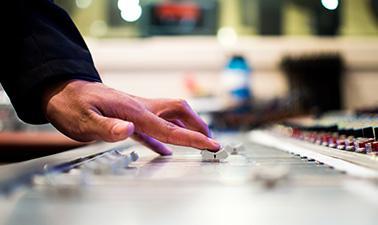
- The Technology of Notation and Music
- The History of Music Technology and its Implications in the Digital Age
Week 3: Art at the Turn of The Mechanical Age
- The meaning of images post WWW2
- The contemporary meaning of images in relation to technological development
- Revising Walter Benjamin's and John Berger's Ways of Seeing
- The work of Culture in the age of Cybernetic Systems
- The evolution of the moving image
- Avant Garde movements and the moving image
- Old cinema and new media art: video installations and new media technologies in the gallery space.
Week 4: After Photography
- Learn about the 4 industrial and technological evolutions
- Agency, The emancipation of the spectator and free will in a world governed by machines
- From mechanisms of chance in art to mass customisation in design
- Critical encounters between art and technology: early experiments with computers
Week 5: How to think about Technology & Mid Course Assessment
- Self-Assessment mid-course
- 6 approaches towards the critique of media and technology in the digital age
Week 6: Art and the Internet
Net.Art
- Tactical Media and subversion
- Google: technological and informational biases
- The conundrum of privacy in the digital age: We live in Public
- Strategies to cope with surveillance capitalism: how not to be seen and obfuscation
Week 7: Digital Aesthetics
- The Cut & Paste aesthetics and the remix culture
- Time and space in the digital age: how to re-read spatio-temporal perceptions. After Paul Virillio and Katherine Hayles
- The selfie and the narcissistic and exhibtitionary complexes of social media
Week 8: Digital Futures
- Truth, Fiction and Virtual Realities
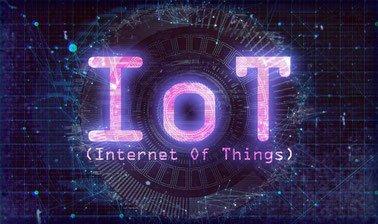
- The Internet of Things
- Object/subject relationship in virtual realities
- Performance and virtual reality
- Posthumanism and the anteoposcene
- The myth of immateriality
- Ability, disability, super ability