EdX

Antarctic Futures: What Does Climate Change Mean for the Antarctic? (edX)

Antarctic Futures: What Does Climate Change Mean for the Antarctic? (edX)

Explores the exceptional aspects of the Antarctic climate and its ecosystems, looking at the current and future impacts of environmental change, including climate change. This course introduces participants to the ecological and physical characteristics of the Antarctic environment and Antarctic governance.

Class Deals by MOOC List - Click here and see EdX's Active Discounts, Deals, and Promo Codes.

It has a particular focus on current environmental policies in place to protect Antarctica and future policy and governance needs. The exceptional nature of the Antarctic climate and ecosystems will be explored, along with the current state and predictions based on further human-induced climate change. A suite of potential future implications of environmental change for Antarctic governance will also be examined.

What you'll learn
Learners will gain

  • An understanding of the peculiar governance regime for the Antarctic
  • Knowledge about the global climate system, with a focus on the role played by Antarctica
  • An appreciation for the impacts of climate change on Antarctic ecosystems
  • The ability to think creatively about possible climate futures and explore their implications for Antarctic governance and ecosystems.
Go to Class
MOOC List is learner-supported. When you buy through links on our site, we may earn an affiliate commission.

Related Courses

Salmon, People, and Place (edX) EdX
University of Alaska Fairbanks,AlaskaX

Salmon, People, and Place (edX)

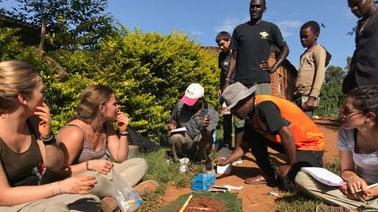
This course explores the relationships between salmon and people with an emphasis on the special ties of salmon to Indigenous peoples and to Alaska Natives in particular. No wild animal has more profoundly influenced the cultures and well-being of societies in North America than salmon. Salmon and people have been entwined in a relationship for millennia. This six-week course is an exploration and celebration of this relationship, as well as an examination of the current major issues, including habitat alterations, climate change, and management actions currently straining the relationship between salmon and salmon-dependent people.

Self Paced
Self-Paced
Innovative Environmental Management Models: Case Studies and Applications (edX) EdX
University System of Maryland - USM,USMx,University of Maryland Center for Environmental Science - UMCES,UMCES

Innovative Environmental Management Models: Case Studies and Applications (edX)

Utilizing extensive case studies of various ecosystems, you will learn how to effectively utilize science-based management to mitigate anthropogenic impacts and ensure resiliency and sustainability in your community. Case studies are the best means to analyze real world problems and assess viability of proposed solutions. We will explore a variety of ecosystems and determine how effectively they are managed given the specific challenges of each locale.

Self Paced
Self-Paced
One Planet, One Ocean (edX) EdX
SDGAcademyX,SDG Academy

One Planet, One Ocean (edX)

A holistic view of how the ocean functions, how human interactions with the ocean can be understood, and what solutions are available to support both sustainable use and stewardship of our blue planet. Is the ocean the real final frontier? Humans have a greater understanding of the surface of the moon than they do of the depths of these waters.

Self Paced
Self-Paced
Climate Change: Financial Risks and Opportunities (edX) EdX
Imperial College Business School,Imperial College London

Climate Change: Financial Risks and Opportunities (edX)

Explore the risks and opportunities that climate change presents to financial markets, hearing from a range of investment industry leaders and scientific researchers. Do you want to know more about how a warming planet is changing the landscape for investing? Geared towards professionals working in financial markets, this course provides a solid introduction to the financial risks and opportunities arising from man-made climate change.

Self Paced
Self-Paced
Antarctica in a Changing Climate (edX) EdX
University of Canterbury,UCx

Antarctica in a Changing Climate (edX)

Explores the exceptional aspects of the Antarctic climate and its ecosystems, looking at the current and future impacts of environmental change, including climate change. This course introduces participants to the ecological and physical characteristics of the Antarctic environment and Antarctic governance.

Self Paced
Self-Paced
Climate Action: Solutions for a Changing Planet (edX) EdX
SDGAcademyX,SDG Academy

Climate Action: Solutions for a Changing Planet (edX)

How do we turn commitments to reducing the effects of climate change into action? Harmful emissions, the degradation of the earth’s resources and global warming have loomed large for decades. With the negotiation and ongoing ratification of the sweeping Paris Agreement, commitments to reducing the effects of climate change abound.

Self Paced
Self-Paced
Why Move Towards Cleaner Power (edX) EdX
Imperial College London,ImperialX

Why Move Towards Cleaner Power (edX)

Learn why we need to clean up our power supply, and why is it urgent that we take action now. Gain the tools you need to present arguments in favour of a cleaner power sector in your part of the world. This course looks at how increasing greenhouse gases are warming the climate and what it means to decarbonise - reduce the greenhouse gas intensity of - the power sector. It will also provide a range of arguments in favour of decarbonisation, including consideration of ease of access to a secure and affordable energy supply and improvements to health and the environment.

Self Paced
Self-Paced
Climate Change: The Science and Global Impact (edX) EdX
SDGAcademyX,SDG Academy

Climate Change: The Science and Global Impact (edX)

We need to understand the science behind global warming to avoid the most damaging and irreversible climate change impacts on people and planet. Climate change is arguably the greatest challenge of our time. Human activity has already warmed the planet by one degree Celsius relative to pre-industrial times, and we are feeling the effects through record heat waves, droughts, wildfires and flooding.

Self Paced
Self-Paced