EdX

Western Civilization: Ancient and Medieval Europe (edX)

Western Civilization: Ancient and Medieval Europe (edX)

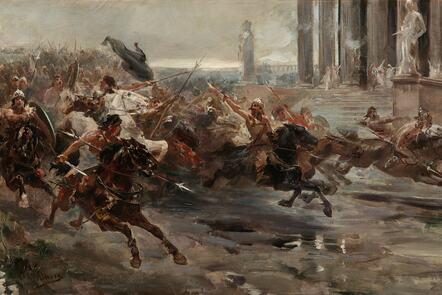
Learn about the origins and development of Western societies and institutions from the ancient world through the Middle Ages in this credit-eligible course. This course will provide a general outline of European history from Ancient times through 1500 AD, covering a variety of European historical periods and cultures, including Greek, Roman, Byzantine, Celtic, Frankish and others.

Class Deals by MOOC List - Click here and see EdX's Active Discounts, Deals, and Promo Codes.

This course satisfies the Social-Behavioral Sciences (SB) and Historical Awareness (H) general studies requirements at Arizona State University. This course may satisfy a general education requirement at other institutions; however, it is strongly encouraged that you consult with your institution of choice to determine how these credits will be applied to their degree requirements prior to transferring the credit.

What you'll learn:

  • Think critically about the development of people politically, socially, and economically
  • Evaluate evolution of political systems and their contribution to western society
  • Understand the changing social role of religion in European society
  • Explore the changing relations between Ancient and Medieval Europe and the world beyond
Go to Class
MOOC List is learner-supported. When you buy through links on our site, we may earn an affiliate commission.

Related Courses

Histoire des sciences : une introduction (FUN) FUN
Université de Montpellier

Histoire des sciences : une introduction (FUN)

L'histoire des sciences, qu'est-ce que c'est et à quoi ça sert ? Comprendre les dynamiques qui ont permis aux sciences de se constituer, explorer ses évolutions, son organisation et ses démarches, telle est l'ambition de ce MOOC qui propose une initiation à une histoire critique des sciences. Se repérer dans l'histoire des sciences en abordant les grandes étapes de la science. Comparer les méthodes développées. La place de la mathématisation, le statut de l'observation et de l'expérience seront particulièrement examinés. Aborder à l'aide d'études de cas la question de la construction sociale des sciences et celle des communautés scientifiques (statut, institution, etc.)

No sessions available
5-12 Weeks
Modern China’s Foundations: The Manchus and the Qing (edX) EdX
HarvardX,Harvard University

Modern China’s Foundations: The Manchus and the Qing (edX)

Learn how the Manchus conquered the Qing and established the last of the imperial dynasties. This course, part of a comprehensive series on China, looks at the Qing state in the early 1600s and the challenges that the Manchus faced as minority rulers. While living in Chinese cities and surrounded by Chinese culture — a culture that was far more sophisticated than their own — the Manchus struggled to hold onto their identity as a conquesting people.

Self Paced
Self-Paced
Enlightening the Dark Ages: Early Medieval Archaeology in Italy (FutureLearn) FutureLearn
University of Padova

Enlightening the Dark Ages: Early Medieval Archaeology in Italy (FutureLearn)

Learn what innovative methods and tools applied to the material culture of the past can tell us about the Early Middle Ages. Discovering the cultural heritage of Medieval Europe through archaeology On this archaeology course, you will explore what we can learn about the past through material culture. It focuses on the history of Medieval Europe, from the end of the Roman Empire in the West.

Nov 1st 2021
4 Weeks
Deciphering Secrets: The Illuminated Manuscripts of Medieval Europe (Coursera) Coursera
University of Colorado System

Deciphering Secrets: The Illuminated Manuscripts of Medieval Europe (Coursera)

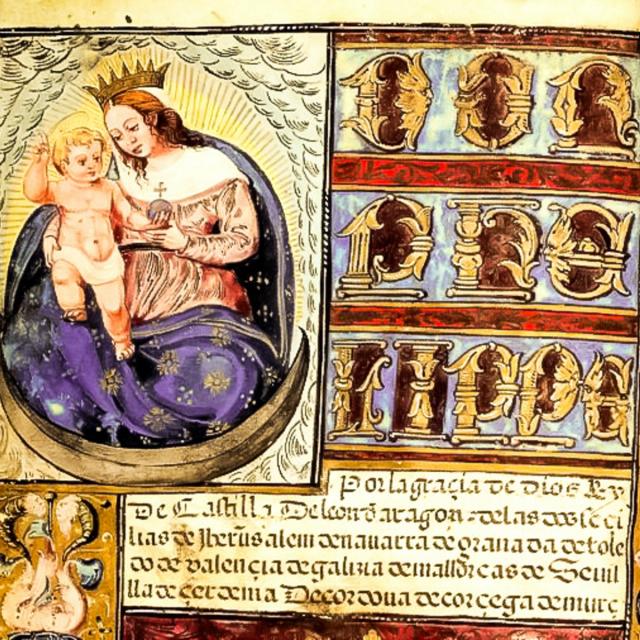
Perhaps no other relic of the European Middle Ages captures our imagination more than illuminated medieval manuscripts, or those documents decorated with images and colored pigments. Serving as windows unto a lost world of kings, ladies, faith, war, and culture, they communicate complex visual and textual narratives of Europe’s collective cultural heritage and patrimony. In this fashion, illuminated manuscripts are dynamic messages from our communal past that are still relevant today in fields like graphic design and typography.

Jul 8th 2024
5-12 Weeks
Magic in the Middle Ages (Coursera) Coursera
University of Barcelona

Magic in the Middle Ages (Coursera)

Magical thought has always attracted human imagination. In this course we will introduce you to the Middle Ages through a wide conception of magic. Students will have an approach to medieval culture, beliefs and practices from the perspective of History and History of Science. Popular magic, as well as learned magic (alchemy, geomancy and necromancy) will be addressed. Moreover, we will also deal with how eastern practices and texts influenced western culture. In July 2016, the course will contain a brand-new module devoted to astrology. Magic in the Middle Ages offers a captivating overview of medieval society and promotes reflection about certain stereotypes associated with this period.

Jun 22nd 2026
5-12 Weeks
Medieval Women Writers (saylor.org) Saylor Academy
Saylor.org

Medieval Women Writers (saylor.org)

Scholarship on medieval women writers is a somewhat recent phenomenon, in part because we know relatively little about men of the Middle Ages—and what we know about women from the period is even more limited. In this course, we will engage this new frontier in literary studies by examining the writings of a diverse group of medieval women—from reclusive anchoresses to aristocratic women of the court—and analyzing the perceptions of reality, both secular and religious, that they present.

Legacy Course
Self-Paced
Cosmopolitan Tang: Aristocratic Culture in China (edX) EdX
HarvardX,Harvard University

Cosmopolitan Tang: Aristocratic Culture in China (edX)

Explore the reunification of China under the Tang with a focus on aristocratic culture — from poetry to calligraphy to literature. By the Tang period, China was divided into northern and southern dynasties with different rulers and political systems. The north was conquered by relatively unsophisticated barbarians, but in the south, the aristocratic families established a refined appreciation of writing and literature.

Self Paced
Self-Paced
Early Christianity: The Letters of Paul (edX) EdX
HarvardX,Harvard University

Early Christianity: The Letters of Paul (edX)

The course “Early Christianity: The Letters of Paul” explores the context of these letters in the Roman Empire and the impact of these powerful texts today. The letters of Paul are the earliest texts in the Christian scriptures, written by a Jew at a time when the word “Christian” hadn’t yet been coined. What is the religious and political context into which they emerged? How were they first interpreted? How and why do they make such an enormous impact in Christian communities and in politics today?

No sessions available
5-12 Weeks
Shakespeare: On the Page and in Performance (edX) EdX
Wellesley College,WellesleyX

Shakespeare: On the Page and in Performance (edX)

An introduction to Shakespeare that combines literary study with theatrical analysis to understand both Shakespeare’s continuing popularity and his greatness. Shakespeare wrote for a popular audience and was immensely successful. Shakespeare is also rightly regarded as one of the greatest playwrights the world has known. This course will try to understand both Shakespeare’s popularity and his greatness by starting from a simple premise: that the fullest appreciation of Shakespeare can be achieved only when literary study is combined with analysis of the plays as theatre.

No sessions available
4 Weeks
Globalization's Winners and Losers: Challenges for Developed and Developing Countries (edX) EdX
Georgetown University,GeorgetownX

Globalization's Winners and Losers: Challenges for Developed and Developing Countries (edX)

Build your “global acumen” and engage with business and policy experts to better lead and manage through the challenges of globalization. Who are the winners and losers of globalization? What should be done to improve outcomes for all? This course will examine how the spread of trade, investment, and technology across borders affects firms, workers, and communities in developed and developing countries.

No sessions available
5-12 Weeks
Literati China: Examinations, Neo-Confucianism, and Later Imperial China (edX) EdX
HarvardX,Harvard University

Literati China: Examinations, Neo-Confucianism, and Later Imperial China (edX)

Explore China’s imperial period, with a focus on the Song dynasty and the role of the exam system in government. Fundamental changes in government, the economy, and broader society took place between the 8th and 11th centuries in China. The state aristocracy gave way to new literati elite: educated men who sought to enter government through competitive examinations. A new kind of Confucianism also took shape, which prized the moral autonomy of individuals. With this, the later imperial period of China’s history begins.

Self Paced
Self-Paced