EdX

Wells Hydraulics (edX)

Offered by Purdue University, PurdueX,
Wells Hydraulics (edX)

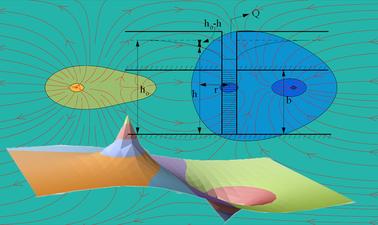
The Earth is blue for its oceans but green for its groundwater. We use wells to extract water from the ground. In this course we address questions such as: how well tests tell us if an aquifer can provide enough water? how can we use wells to dewater construction sites?

Class Deals by MOOC List - Click here and see EdX's Active Discounts, Deals, and Promo Codes.

Groundwater is the water beneath the ground surface. It is a vast freshwater reservoir often overlooked because invisible, yet 1000 times greater than all lakes and rivers.

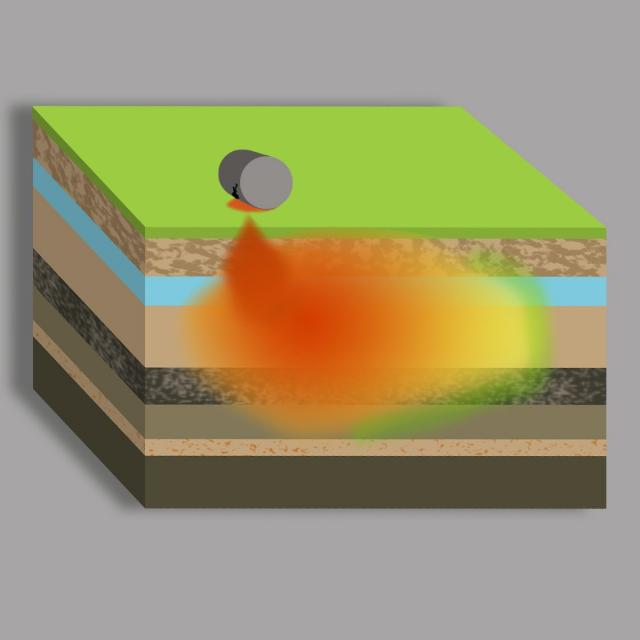
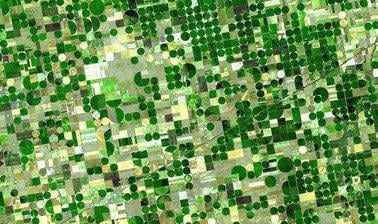
The Earth is blue for its oceans, but green for the freshwater under our feet. Half of the world’s population rely on groundwater for drinking and almost half of the irrigated land now depends on groundwater, a ten-fold increase in the past 50 years. In order to use the water from the ground, we first have to extract it! This course introduces wells hydraulics. Wells are used to provide groundwater for domestic, agricultural or industrial uses. Wells are also used in applications to control groundwater flow and contamination. Pump and treat systems are designed to extract contaminated water before it can be treated. The treated water is released to the environment, sometimes using recharge wells that can replenish aquifers. Wells can also control salt intrusions in coastal environments or the water table level at a construction site.
This course addresses questions such as:

  • How exactly do we extract groundwater?
  • How do we know if an aquifer can provide enough water?
  • How do we model underground flow to wells?
  • How can we use wells to remove water from construction sites or water-logged fields?

This wells hydraulics course starts with a description of steady flow to wells. We introduce the notion of radial coordinates and steady flow to wells in confined and unconfined aquifers. We also introduce finite difference methods to model flow to wells. We introduce transient flows in confined, semiconfined and unconfined aquifers. We use graphic methods and semi-automated methods to calculate aquifer properties from well tests. We also introduce slug tests and their analysis.
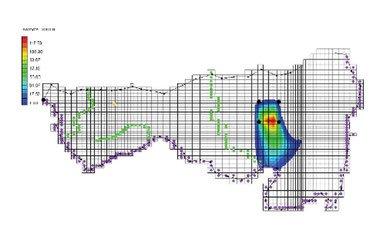
After the well and slug tests, we introduce well fields and issues of dewatering. We review the superposition principle and problems of domain boundaries before focusing on dewatering examples. We continue to explore the topic of well fields in the context of extraction and injection wells, with an example of pump and treat design and an in-situ remediation design. We also show an example of a well model in MODFLOW.

What you'll learn

  • Describe the steady-state flow to wells in confined and unconfined aquifers
  • Explain the correspondence between linear and radial coordinates
  • Derive the flow equations for steady flow to wells
  • Build simple aquifer models
  • Apply the flow equations to estimate aquifer parameters
  • Design wells for steady water supply
  • Describe the unsteady flow to wells in confined, semi-confined and unconfined aquifers
  • Explain what well functions are
  • Use graphical methods to calculate transmissivity
  • Compare the (transient) flow behavior in (semi)confined and unconfined aquifers
  • Explain slug tests
  • Contrast slug tests and well tests
  • Choose the appropriate analysis to calculate aquifer properties from slug tests
  • Model aquifers and wells
  • Apply analytical methods to steady state flows
  • Use finite difference methods to model aquifers and wells
  • Use computer models to automate calculations
  • Relate mathematical models to numerical models such as MODFLOW
  • Explain how well fields work
  • Apply flow equations for multiple wells
  • Explain how boundaries can be modeled with multiple (imaginary) wells
  • Plan dewatering systems
  • Interpret pump and treat systems from a hydraulics perspective

Syllabus

Week 1: Steady Flow to well
We start with the description of radial coordinates and steady flow to wellsin confined and unconfined aquifers. We also introduce finite difference methods.
Steady Flow to Well
Radial Coordinates
Steady Flow to Confined Well
Finite Difference
Week 2: Transient Confined and Semi-Confined Flows
We describe transient flows in confined and semiconfined aquifers. We use graphic methods and semi-automated methods to calculate aquifer properties from well tests.
Transient Confined Flow
Transient Confined
Transient Confined: Graphic Method
Transient Confined: Straight Line
Transient Leaky Confined
Week 3: Transient Unconfined Flows
We continue to describe well tests in unconfined aquifers to calculate unconfined aquifer properties. We also introduce slug tests and their analysis.
Transient Unconfined
Slug Tests:
Cooper Method
Hvorslev Method
Bouwer and Rice
Week 4: Well Fields and Dewatering
We start by reviewing the superposition principle and review the problem of domain boundaries. We then focus on dewatering examples.
Wells Fields
Superposition Principle
Boundaries
Dewatering
Week 5: Pump and treat / Capture Zones and MODFLOW models
We continue to explore the topic of well fields in the context of extraction and injection wells. We show an example of pump and treat design and an in-situ remediation design. We also show an example of a well model in MODFLOW.
Pump and Treat/ Capture Zones
MODFLOW
Go to Class
MOOC List is learner-supported. When you buy through links on our site, we may earn an affiliate commission.

Related Courses

Quantum Detectors and Sensors (edX) EdX
Purdue University,PurdueX

Quantum Detectors and Sensors (edX)

Learn how to analyze and design quantum sensors and devices that extract maximal information from the world around us. Classical detectors and sensors are ubiquitous around us from heat sensors in cars to light detectors in a camera cell phone. Leveraging advances in the theory of noise and measurement, an important paradigm of quantum metrology has emerged. Here, ultra-precision measurement devices collect maximal information from the world around us at the quantum limit.

Aug 24th 2026
13-24 Weeks
Geology and Engineering Geology | 工程地质学 (edX) EdX
Tsinghua University,TsinghuaX

Geology and Engineering Geology | 工程地质学 (edX)

Learn the basics of geology and geological engineering as we explore ways to both protect and properly utilize the earth’s resources today and in the future. The earth is our home. The development of human civilization as we know it goes hand in hand with how we have used and continue to reshape the planet. This course will introduce the basic knowledge of geology and methods of engineering geology to help people protect and utilize our earth more effectively.

Self Paced
Self-Paced
Fundamentals of Fluid Power (Coursera) Coursera
University of Minnesota

Fundamentals of Fluid Power (Coursera)

In this course, you will be introduced to the fundamental principles and analytical modeling of fluid power components, circuits, and systems. You will learn the benefits and limitations of fluid power compared with other power transmission technologies; the operation, use, and symbols of common hydraulic components; how to formulate and analyze models of hydraulic components and circuits; and how to design and predict the performance of fluid power circuits.

Jul 6th 2026
5-12 Weeks
Natural Attenuation of Groundwater Contaminants: New Paradigms, Technologies, and Applications (Coursera) Coursera
Rice University

Natural Attenuation of Groundwater Contaminants: New Paradigms, Technologies, and Applications (Coursera)

Cleaning up the large number of groundwater contamination sites is a significant and complex environmental challenge. The environmental industry is continuously looking for remediation methods that are both effective and cost-efficient. Over the past 10 years there have been amazing, important developments in our understanding of key attenuation processes and technologies for evaluating natural attenuation processes, and a changing institutional perspective on when and where Monitored Natural Attenuation (MNA) may be applied.

Aug 3rd 2026
5-12 Weeks
Climate Change Science and Negotiations (edX) EdX
SDGAcademyX,SDG Academy

Climate Change Science and Negotiations (edX)

Humanity is up against a tight timeline to address climate change. Learn how we can deeply decarbonize the global energy systems, and put the world on a 2°C pathway. In this course, learn solutions to mitigate the effects of the global greenhouse gas emissions causing temperature rise, and how to apply these solutions in different national contexts improvements.

Self Paced
Self-Paced
The Engineering of Structures Around Us (edX) EdX
DartmouthX,Dartmouth College

The Engineering of Structures Around Us (edX)

Explore how engineers design bridges and buildings in our communities and iconic structures around the world. In this introductory course, you’ll learn some engineering principles that can be applied to structural systems everywhere: in nature, in furniture, in mechanical and aerospace systems, and in any solid object that resists a load. Together we’ll explore how structures work, why they were designed the way they were designed, how they support loads, and where forces flow through them.

Self Paced
Self-Paced
Manufacturing Process Control I (edX) EdX
MIT,MITx

Manufacturing Process Control I (edX)

Learn how to model variations in manufacturing processes and develop methods to reduce and control deterministic variations to achieve consistent process quality. Randomness is inherent in all processes including manufacturing. The fundamental concepts taught in this course will help learners develop powerful statistical process control methods that are the foundation of world-class manufacturing quality.

Aug 18th 2026
5-12 Weeks
Planetary Boundaries (edX) EdX
SDGAcademyX,SDG Academy

Planetary Boundaries (edX)

Can our planet continue to support the current scope of human activity? A thriving global society relies on the stability of the Earth and its resilience across oceans, forests, waterways, biodiversity, the atmosphere and more. So how do we shape sustainability at a global scale? The boundaries set by the planet’s natural resources, the resilience of those resources, and the human activities that impact sustainability all come into play.

Self Paced
Self-Paced
Tropical Coastal Ecosystems (edX) EdX
University of Queensland,UQx

Tropical Coastal Ecosystems (edX)

Take the challenge and understand problems and solutions to managing tropical coastal ecosystems. Do you want to develop the skills and knowledge needed to help preserve tropical coastal ecosystems? These habitats provide goods and services for hundreds of millions of people but human activities have led to their global decline.

Self Paced
Self-Paced