EdX

Viruses & How to Beat Them I: Introduction to Cell Biology & Viruses (edX)

Viruses & How to Beat Them I: Introduction to Cell Biology & Viruses (edX)

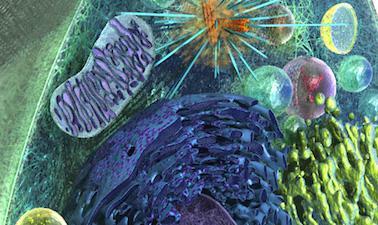
Whereas cells are alive, viruses are not. Discover how living cells translate information coded in our genes into proteins and what happens when viruses hijack our cells and cause life threatening diseases. Have you ever wondered what viruses actually are? Have you been curious about the ways they invade our bodies, attack our cells and make us sick? Come and learn what viruses are made of and understand the mechanisms of how they hijack and take over our cells.

Class Deals by MOOC List - Click here and see EdX's Active Discounts, Deals, and Promo Codes.

Our bodies are made of cells, which are amazing molecular machines. So long as everything is in working order, we feel great. But surprisingly, these unbelievably tiny parasites, made of protein and genes - viruses - can take control, causing serious damage to our bodies.
Step by step, this course - the first part of the Viruses & How to Beat Them program - will teach you how the cells of our bodies work to keep us healthy. We will then explore the vast kingdom of viruses; especially those that have caused epidemics like the flu, AIDS and Ebola. In the second part of the program, we will learn how our body defends itself against these viruses, with special attention to the latest threat: SARS CoV2 and the disease it causes - COVID-19.
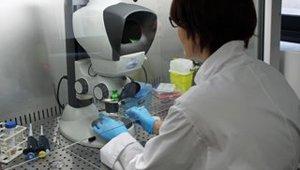
The lectures have been carefully planned to clearly describe basic Cell Biology and Virology in terms that everyone can understand, without compromising scientific correctness. You'll participate in a detailed exploration of the structures of our cells and how they function. You'll learn how viruses replicate as well as how scientists investigate these topics. You'll view laboratory demonstrations that illustrate how cells and viruses are grown and studied. Throughout the course, you will meet leading experts and scientists - some of whom have received the Nobel Prize in recognition of their discoveries and contributions to Chemistry and Medicine.
This course was produced at Tel Aviv University - Innovation in Teaching and Learning.
This course is part of the Viruses & How to Beat Them: From Cells to Pandemics Professional Certificate.

What you'll learn

  • The fundamental principles of living organisms
  • Why cells are considered the units of life
  • How information flows from our genes to produce proteins
  • Why viruses are not alive
  • How viruses infect our bodies
  • The way viruses have changed the course of history
  • To better understand the process of scientific investigation
  • To develop critical thinking skills and apply them to problem solving
Go to Class
MOOC List is learner-supported. When you buy through links on our site, we may earn an affiliate commission.

Related Courses

What Do Viruses Do And How Do We Control Them (Coursera) Coursera
Imperial College London

What Do Viruses Do And How Do We Control Them (Coursera)

This course describes how viruses interact with their hosts to infect, replicate, spread and cause disease. It looks at what controls the specificity of viruses for different host species and for different tissues within a host, also how this can lead to outbreaks and pandemics. It seeks to show how virus evolution is driven by the pressures to replicate and spread. Finally, it looks at how we can find antivirals and use them to control infections, distinguishing therapeutic approaches to prophylaxis by vaccination.

Jun 1st 2026
5-12 Weeks
Cell Biology: Signaling (edX) EdX
MIT,MITx

Cell Biology: Signaling (edX)

How do we know what we know about cells? Enhance your scientific thinking and data analysis skills with this in-depth adventure through cell biology. Professors Iain Cheeseman and Frank Solomon guide you through a learning experience where you will discover experiments that answered big questions and find out what is still on the horizon. You will embark on a lively journey through cellular signaling mechanisms, regulation, and specific examples and learn how to apply key concepts and themes of this dynamic experimental science to understand the fundamental workings of cells.

No sessions available
5-12 Weeks
Diagnóstico de Hepatites Virais (TELELAB) TELELAB
Universidade Federal de Santa Catarina - UFSC

Diagnóstico de Hepatites Virais (TELELAB)

O Curso descreve os vírus causadores de Hepatites e desenvolve conteúdo sobre as infecções causadas pelos vírus dos tipos B e C. Aborda os princípios metodológicos dos testes para o diagnóstico da infecção, os marcadores sorológicos, a realização, leitura e interpretação dos resultados dos testes.

Self Paced
Self-Paced
The Power of Genomics to Understand the COVID-19 Pandemic (FutureLearn) FutureLearn
Wellcome Connecting Science,COG-Train

The Power of Genomics to Understand the COVID-19 Pandemic (FutureLearn)

Gain insights into tracking, treating, preventing, and preparing for pandemics through genome sequencing and data sharing. See how viral genomics can improve the response to COVID-19 and future pandemics. Genomics is crucial in understanding and responding to pandemics, including COVID-19. On this three-week course, you’ll learn key concepts in viral genomics, how they can be applied to the COVID-19 pandemic, and how they can help us prepare for future pandemics.

Jul 4th 2022
3 Weeks
Emerging respiratory viruses, including COVID-19 (OpenWHO) OpenWHO
World Health Organization

Emerging respiratory viruses, including COVID-19 (OpenWHO)

Coronaviruses are a large family of viruses that are known to cause illness ranging from the common cold to more severe diseases such as Middle East Respiratory Syndrome (MERS) and Severe Acute Respiratory Syndrome (SARS). A novel coronavirus (COVID-19) was identified in 2019 in Wuhan, China. This is a new coronavirus that has not been previously identified in humans. This course provides a general introduction to COVID-19 and emerging respiratory viruses and is intended for public health professionals, incident managers and personnel working for the United Nations, international organizations and NGOs. As the official disease name was established after material creation, any mention of nCoV refers to COVID-19, the infectious disease caused by the most recently discovered coronavirus.

Self Paced
Self-Paced
Infection Prevention and Control for Novel Coronavirus (OpenWHO) OpenWHO
World Health Organization

Infection Prevention and Control for Novel Coronavirus (OpenWHO)

This course provides information on what facilities should be doing to be prepared to respond to a case of an emerging respiratory virus such as the novel coronavirus, how to identify a case once it occurs, and how to properly implement IPC measures to ensure there is no further transmission to HCW or to other patients and others in the healthcare facility.

Self Paced
Self-Paced
Ouvrez les portes du laboratoire: cellules et cellules souches (FUN) FUN
Université de Nantes

Ouvrez les portes du laboratoire: cellules et cellules souches (FUN)

Comment cultiver des cellules humaines ? Comment les reprogrammer en cellules souches ? A la suite des travaux du prix Nobel Shinya Yamanaka, découvrez les principales étapes de la reprogrammation des cellules humaines en cellules souches, et abordons ensemble les connaissances de base de la biologie cellulaire, ses méthodes expérimentales et la publication scientifique.

No sessions available
5-12 Weeks
Antimicrobial Stewardship in Wound Management (FutureLearn) FutureLearn
British Society for Antimicrobial Chemotherapy - BSAC,European Wound Management Association

Antimicrobial Stewardship in Wound Management (FutureLearn)

Gain insight into antimicrobial resistance, learn about the threats it poses to wound care, and explore preventative measures. Learn how to manage wound infection as a healthcare professional. It’s common to control wound infections with antibiotics. Understanding antimicrobial stewardship is key to preventing antimicrobial resistance and treating a range of infections caused by bacteria, parasites, viruses, and fungi.

Jun 3rd 2024
3 Weeks