Typology of countries and European economies (Coursera)

Typology of countries and European economies (Coursera)

The course topology of countries and European economies actually contains three modules. The first one will explain how the different countries of the world are divided into several groups of different economic organizations of the world, like, for example, the World Bank or United Nations.

Class Deals by MOOC List - Click here and see Coursera's Active Discounts, Deals, and Promo Codes.

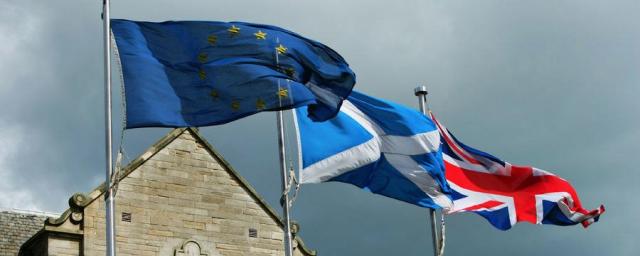
Then I will try to provide information for you about the leaders of European integration, those are France and Germany. And how actually they interact with themselves to have that integration happen. And the third module is devoted to different countries of Europe, like Scandinavian countries like the United Kingdom economy, which is very special because of the Brexit you remember that, about Italy and about non-European Union countries that also exist there. So join!
Course 1 of 3 in the Economic systems in different countries of the world Specialization.

What You Will Learn

  • Evaluate the political, economic, and cultural systems in which international businesses operate.
  • Interpret the achievements of developed economic systems for the international business.
  • Critique the pros and cons of the European economic systems.

Syllabus

WEEK 1
General Information
Welcome to the first course of the specialty «Economic systems and doing business in different countries of the world». We are all understand that our world is moving toward becoming a multipolar space, where several countries and even integration associations will lead the way both politically and socio-economically.
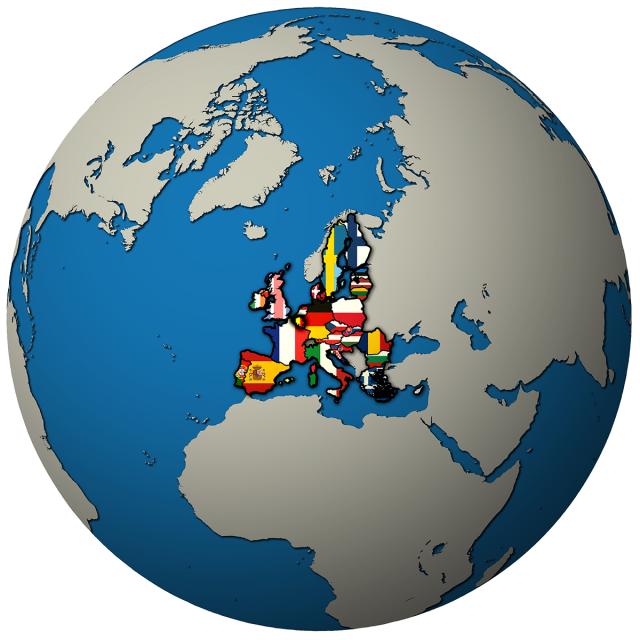
The course topology of countries and European economies actually contains three modules. Thanks to it you will learn how the different countries of the world are divided into several groups of different economic organizations of the world. You will also receive information about the leaders of European integration (France and Germany). The last part of the course we will study economies of other European countries, like United Kingdom, Italy, countries Central and Eastern Europe, Scandinavian economies and also non-EU countries of European region. At the end of each module topic, you will have the opportunity to test your knowledge by answering test questions. And after each module your knowledge will be assessed by a test on all materials of the studied module. You will also need to complete practical assignments, which will allow you to apply in practice all that you have learned in our course. So join!

WEEK 2
Module 1. National economies in the world economy
In this module we will explain how the different countries of the world are divided into several groups of different economic organizations of the world, like, for example, the World Bank or United Nations. Let's examine the origins of inequality between countries and look at indicators of country's participation in the world economy. In the end we will speak about of economic growth, development of economies and the cases explaining that same approaches reflect differently in different countries.

WEEK 3
Module 2. The economies of the leaders of European Union
In this module we will speak in detail about geoeconomics aspects of the European region. You will explore leaders of European integration, those are France and Germany. And how actually they interact with themselves to have that integration happen.

WEEK 4
Module 3. Economies of other European countries
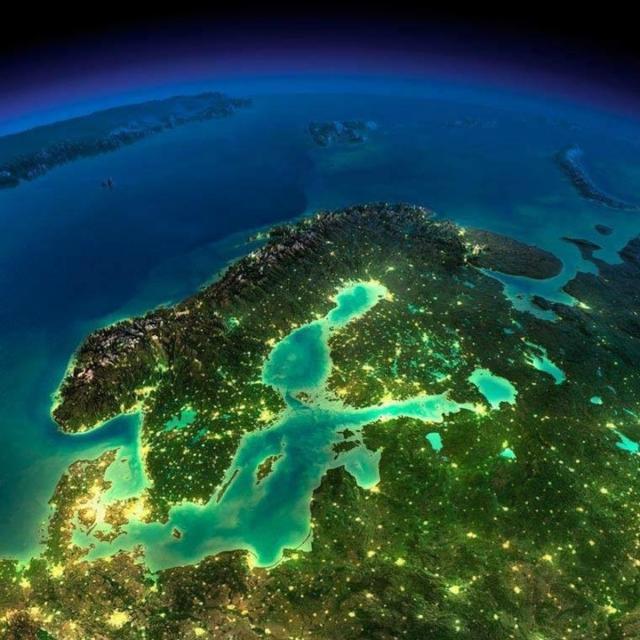
Third module is devoted to different countries of Europe, like Scandinavian countries like the United Kingdom economy, which is very special because of the Brexit, about Italy and about non-European Union countries that also exist there.

WEEK 5
Final control of the course 1 of specialization

Go to Class
MOOC List is learner-supported. When you buy through links on our site, we may earn an affiliate commission.

Related Courses

Comprendre l'écologie, pour une économie innovante (Coursera) Coursera
ESCP Europe

Comprendre l'écologie, pour une économie innovante (Coursera)

Conçu conjointement par le think-tank Ecolo-Ethik et ESCP Europe, ce MOOC se propose de vous aider à dépasser les idées reçues sur l’écologie, dans le souci d’une démarche ouverte et multiple. A ce titre, de grands experts reconnus interviendront pour illustrer, approfondir et enrichir les différentes thématiques.

Aug 3rd 2026
5-12 Weeks
Surviving Disruptive Technologies (On Demand) (Coursera) Coursera
University of Maryland, College Park

Surviving Disruptive Technologies (On Demand) (Coursera)

The purpose of this course is to help individuals and organizations survive when confronted with disruptive technologies that threaten their current way of life. We will look at a general model of survival and use it to analyze companies and industries that have failed or are close to failing. Examples of companies that have not survived include Kodak, a firm over 100 years old, Blockbuster and Borders.

Jul 27th 2026
4 Weeks
Municipal Solid Waste Management in Developing Countries (Coursera) Coursera
École Polytechnique Fédérale de Lausanne

Municipal Solid Waste Management in Developing Countries (Coursera)

Have you come across large piles of garbage in neighborhoods and streets, or smelly waste disposal sites polluting the environment of low and middle income countries? Are you also convinced that improvements are necessary and do you want to know what kind of sustainable solutions are appropriate to better manage waste and enhance recycling and recovery? If yes, this course is for you!

Aug 10th 2026
5-12 Weeks
Analizando las Políticas Económicas (Coursera) Coursera
IE Business School

Analizando las Políticas Económicas (Coursera)

Este curso utiliza un enfoque no técnico para analizar la forma en la que los gobiernos utilizan políticas económicas para influenciar la economía de sus países. Al finalizar el curso el participante hablará con propiedad sobre temas tan importantes como la deuda y el déficit de los países, podrá examinar las políticas fiscales y monetarias así como las reformas estructurales de los países.

Aug 17th 2026
5-12 Weeks
African development – from the past to the present (Coursera) Coursera
Lund University

African development – from the past to the present (Coursera)

African development – from the past to the present -- offers a unique economic history perspective on Africa's development. Over a period of five weeks, the course covers a logical account of historical events and decisions that have shaped the current political-economical landscape of Sub-Saharan Africa - from the pre-colonial and the colonial era, to the era of liberalisation, modern day Africa and the future prospects of the continent.

Jul 27th 2026
5-12 Weeks
The Changing Global Order (Coursera) Coursera
Leiden University

The Changing Global Order (Coursera)

How are international power relations changing and how can global peace and stability be maintained? This course familiarizes you with some main theories of international relations, shows how the global order is gradually changing and discusses how selected international and regional organizations contribute to the maintenance of global peace and security. You learn what research findings tell us in terms of the capacity of international organizations and actors to help prevent or stop violent conflict, what tools are used to negotiate agreements and how foundations for sustainable peace are best created.

May 29th 2023
5-12 Weeks
Global Strategy II: Doing Business in The Global Economy (Coursera) Coursera
University of Illinois at Urbana-Champaign

Global Strategy II: Doing Business in The Global Economy (Coursera)

This course explores the ways firms overcome challenges when operating globally. The global economy is characterized for its high complexity and uncertainty. Corporations trying to succeed in the global economy need to develop different types of strategies depending on where they are conducting business or what type business they are in.

Aug 3rd 2026
4 Weeks
European Business Law: Competing in Europe (Coursera) Coursera
Lund University

European Business Law: Competing in Europe (Coursera)

This six-week course titled Competing in Europe is the third in a series of three exploring some of the main business aspects of European Union law. Besides providing learners with a sound knowledge base of European laws and regulations, the series explores business considerations within a broader perspective by including inputs from leading law practitioners in the field. More specifically, the third course discusses how to compete on the internal market and protect your brand, product or invention.

Aug 10th 2026
5-12 Weeks
Understanding the Australian economy: An introduction to macroeconomic and financial policies (Coursera) Coursera
The University of Sydney

Understanding the Australian economy: An introduction to macroeconomic and financial policies (Coursera)

This four-week, four-module course explores selective aspects of the Australian economy, with emphasis on macroeconomic and financial policies. The course introduces participants to several key attributes of the Australian economy and discusses how they are influenced by both domestic and international forces. We will examine some of the key issues and dilemmas facing the Australian economy and how policymakers can deal with them using monetary and fiscal policies.

Aug 3rd 2026
4 Weeks
Macroeconomic Financial Accounts (Coursera) Coursera
Sapienza University of Rome

Macroeconomic Financial Accounts (Coursera)

This course is primarily aimed at undergraduates attending their final year or Master’s students in monetary and financial economics, international macroeconomics and data mining. Professionals in Government institutions, Central Banks, business and the financial industry, along with other professionals interested in finance and macroeconomics, may also benefit from this course.

Jul 27th 2026
5-12 Weeks
Developing economies of Latin America, Eurasia and Africa (Coursera) Coursera
National Research Tomsk State University,Financial University

Developing economies of Latin America, Eurasia and Africa (Coursera)

This course concerns mainly not developed countries of the world but still very promising. And we will start in the first module with studying the Latin American economies. And those are the biggest and the most promising Brazil or Argentina. We will try to understand why Brazil or Mexico or Argentina or Chile can catch up with other developed economies, and if they have any progress in doing so.

May 9th 2022
5-12 Weeks