The Making of Modern Ukraine (Coursera)

Offered by Yale University,
The Making of Modern Ukraine (Coursera)

Ukraine must have existed as a society and polity on 23 February 2022, else Ukrainians would not have collectively resisted Russian invasion the next day. What does it mean for a nation to exist? Is this a matter of structures, actions, or both? Why has the existence of Ukraine occasioned such controversy? In what ways are Polish, Russian, and Jewish self-understanding dependent upon experiences in Ukraine? Just how and when did a modern Ukrainian nation emerge?

Class Deals by MOOC List - Click here and see Coursera's Active Discounts, Deals, and Promo Codes.

For that matter, how does any modern nation emerge? Why some and not others? Can nations be chosen, and can choices be decisive? If so, whose, and how? Ukraine was the country most touched by Soviet and Nazi terror: what can we learn about those systems, then, from Ukraine? Is the post-colonial, multilingual Ukrainian nation a holdover from the past, or does it hold some promise for the future?

Syllabus

WEEK 1
The Making of Modern Ukraine
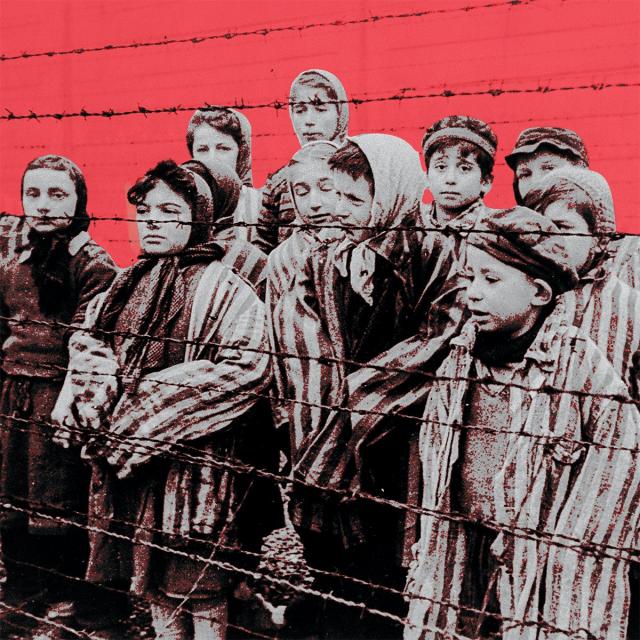
Often the most important historical experiences are difficult to see. Ukraine tends to exemplify the major trends in European and world history, but sometimes in forms so intense or radical that they escape notice and classification. Ukraine provides an early example of European state formation and an early example of anti-colonial rebellion. We will thus begin with brief reflections on ancient history and geography and cover the middle ages and the early modern period, but will concentrate upon the nineteenth and the twentieth centuries, and will conclude with the current war. Topics therefore include the Kyiv state as well early modern Lithuania and Poland during the age of discovery. Ukraine also provides an intense example of the confrontation between modern national politics and extreme colonial alternatives from the far right and far left. Modern topics therefore include Russian and Austrian empires; Jewish and Polish urban society; Romanticism and modern nationalism; the Bolshevik Revolution and its Ukrainian counterparts; Soviet modernization and terror; Nazi occupation, the Holocaust, ethnic cleansing. Finally, contemporary Ukrainian history poses in striking form the question of the functionality and durability of the post-imperial state. The last few topics include: the late Soviet Union; problems of post-Soviet rule, the Orange Revolution and Maidan and the war of 2014; and the present war.
Go to Class
MOOC List is learner-supported. When you buy through links on our site, we may earn an affiliate commission.

Related Courses

Doing Business in Europe (Coursera) Coursera
ESCP Europe

Doing Business in Europe (Coursera)

Europe is a major world trade partner as well as a place where to acquire significant business experience. This is the reason why this MOOC has been designed with the view to explaining and guiding you in doing business in Europe. Do you really know Europe? How should you consider and approach the European continent? What business lessons can be drawn in a European perspective?

Aug 24th 2026
5-12 Weeks
Russia and Nuclear Arms Control (Coursera) Coursera
Saint Petersburg State University

Russia and Nuclear Arms Control (Coursera)

As a state with one of the largest arsenals of nuclear weapons Russia is a key participant of nuclear non-proliferation regime and defines nuclear arms control as a priority of its foreign policy. This course will discover the logic and the frames of Russian nuclear arms control policies. You will learn the historical background and the modern context of bilateral US-Russian relations in nuclear arms control and understand how these relations influence the global nuclear non-proliferation regime. You will get the basic tools for analyzing Russian defence and security policy in regards to nuclear non-proliferation and disarmament.

May 16th 2022
5-12 Weeks
Europe and the World, ca. 1500 to 1914 (Coursera) Coursera
Higher School of Economics - HSE University

Europe and the World, ca. 1500 to 1914 (Coursera)

The course aims to introduce the audience to global history from the European discovery of the Americas to the coming of the First World War. These transformative four centuries of the human experience traditionally called Modern history saw the growing economic, military, and political ascendancy of the European states which. thus, lie at the heart of this course.

Jul 18th 2022
5-12 Weeks
Contemporary Russian Literature (Coursera) Coursera
Saint Petersburg State University

Contemporary Russian Literature (Coursera)

We are going to talk about Contemporary literature specifically, but it doesn’t include only the literature of the most recent years. It is technically a course on the history of literature, but the history starting from the late Soviet period up until today. The goal is to show you the best writers’ names, so that you may remember them and read their works after the end of this course.

Aug 8th 2022
5-12 Weeks
Russian for beginners 1. Русский язык: A1 (Coursera) Coursera
Saint Petersburg State University

Russian for beginners 1. Русский язык: A1 (Coursera)

Russian is considered to be one of the world's most difficult languages. This course is aimed at helping those who are interested in understanding the basics of Russian language. Every unit of the course consists of several parts explaining vocabulary, phonetics (pronunciation), grammar, and provides examples of simple dialogues in Russian.

Jul 18th 2022
4 Weeks
Russian for beginners 2. Русский язык A1 (Coursera) Coursera
Saint Petersburg State University

Russian for beginners 2. Русский язык A1 (Coursera)

Russian is considered to be one of the world's most difficult languages. This course aimed at helping those who are interested in understanding the Russian language. Every unit of the course consists of several parts explaining vocabulary, phonetics (pronunciation), grammar, and provides examples of simple dialogues in Russian. Russian for Beginners 2 continues to explain the basics of Russian to those who have already completed the first part of the course (Russian for Beginners 1).

Jul 25th 2022
4 Weeks
International migrations: a global issue (Coursera) Coursera
Sciences Po

International migrations: a global issue (Coursera)

The world is moving, but not all opinions and governments are willing to accept this poorly understood reality. The issue affects both states and the planet, in a process of globalization and of regionalization of migrations, and raises new questions for international relations, now including the South. This course aims at improving knowledge of the subject, addressing the key issues raised by international migration, and assessing the trends of tomorrow.

Sep 21st 2026
5-12 Weeks
Legal aspects of conducting business in Russia (Coursera) Coursera
Saint Petersburg State University

Legal aspects of conducting business in Russia (Coursera)

This course is designed for people who intend to perform business in Russia. The entrepreneur constantly functions in the legal field: creates his enterprise, acquires property, concludes transactions, interacts with control and supervisory state bodies and bodies of the judicial system. Success of business and fate of the entrepreneur himself depend on the choice of the form of entrepreneurial activity, knowledge of his or her rights and obligations, on the correct response to legal and illegal actions of employees of government and management.

Aug 1st 2022
5-12 Weeks
Understanding Russians: Contexts of Intercultural Communication (Coursera) Coursera
Higher School of Economics - HSE University

Understanding Russians: Contexts of Intercultural Communication (Coursera)

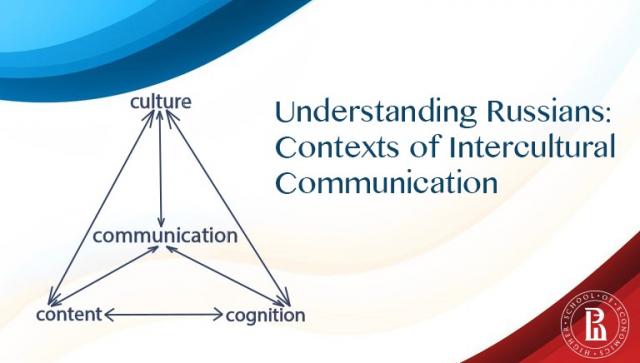
In the course “Understanding Russians: Contexts of Intercultural Communications": we will: build skills in the analysis of the intercultural communication process using Russian-Western communication as an example; apply the knowledge of interrelations between different contexts of communication (cultural, institutional, professional, social, interpersonal, etc, to the cultural history and national psychology of Russians. The purpose of the course is to provide the students with a broad overview of the basic principles governing the past, the present and the future interactions between Russia and the West, with a focus on the culture and national psychology of Russians and Western Europeans.

Aug 1st 2022
5-12 Weeks
Geopolitics of Europe (Coursera) Coursera
Sciences Po

Geopolitics of Europe (Coursera)

"Geopolitics of Europe" offers a dynamic program on both tensions and issues within the European Union, as well as its interactions with the rest of the world. Through maps, iconography, videos, computer graphics and role playing, the Mooc renders the main geopolitical issues appropriate to Europe while focusing on its representations around the world. Definitely multi-disciplinary, this Mooc offers the learners a real tool box built up through a combination of History, Geopolitics, Economics, Political science, Geography and Law.

Mar 4th 2024
5-12 Weeks
Business Russian Communication. Part 2 (Coursera) Coursera
Saint Petersburg State University

Business Russian Communication. Part 2 (Coursera)

Russian is considered to be one of the most difficult languages in the world, and many learners struggle to master its grammar and pronunciation. This course is aimed at those who wants to work in Russia, do business with Russian partners or study on business-related majors in Russian. In three units of this intensive course learners are going to find out how to maintain phone conversation with Russian partners and what speech clichés can be used, hope to pan and arrange an appointment and how to discuss business-related topics over email.

Aug 8th 2022
4 Weeks
The Holocaust: The Destruction of European Jewry (Coursera) Coursera
University of California, Santa Cruz

The Holocaust: The Destruction of European Jewry (Coursera)

The Holocaust: The Destruction of European Jewry is an adaptation of an on-campus course that has been co-taught by Murray Baumgarten, Distinguished Professor of English and Comparative Literature (Literature Department), and Peter Kenez, Professor Emeritus (History Department), for over 20 years at UC Santa Cruz. In this course, you will explore the Holocaust from the overlapping perspectives of literature and history—through memoirs, historical documents, poetry, documentary footage, filmic representations, and novels.

Sep 21st 2026
5-12 Weeks