The Holocaust through the Perspective of Primary Sources (Coursera)

Offered by Yad Vashem,
The Holocaust through the Perspective of Primary Sources (Coursera)

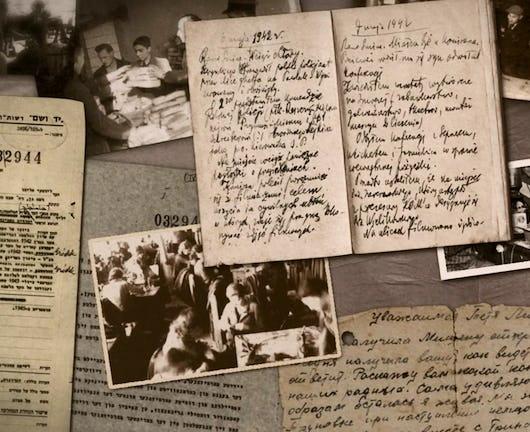
In this new online video course produced by EHRI, the European Holocaust Research Infrastructure, we will explore diaries, photographs, official Nazi documents, postwar survivor testimonies and much more - all together with leading scholars in the field. We will become acquainted with original documents and gain hands-on experience in using them while learning about their importance, and the unique perspectives they provide us into this cataclysmic event.

Class Deals by MOOC List - Click here and see Coursera's Active Discounts, Deals, and Promo Codes.

Yad Vashem is one of EHRI's 26 partners, tasked with creating and operating the course.

Syllabus

Introduction to the Course
Welcome to the online course "'It Must All Be Recorded Without a Single Fact Left Out': The Holocaust through the Perspective of Primary Sources" for EHRI, the European Holocaust Research Infrastructure. Yad Vashem is one of 26 EHRI partners, and tasked with creating and operating the course. In this first short week, we will introduce the subject of Holocaust research and study using primary sources, including some of the main issues within this domain.

The Warsaw Ghetto Through the Lens of Diaries
This week, we will learn about researching and studying the Holocaust using diaries as unique historical sources. We will demonstrate these through the diaries of Adam Czerniakow and Emanuel Ringelblum, among others.

The Lodz Ghetto through the Perspective of Photographs
This week, we will learn about the use of photographs and images as tools in documenting and commemorating the Holocaust, and as historical sources, through the photographs of two photographers active in the Lodz Ghetto: Walter Genevein, a Nazi official, and Mendel Grossman, a Jew incarcerated in the ghetto.

The Holocaust Through German Bureaucratic Sources
This week, we will learn about researching and studying the Holocaust using German bureaucratic sources. We will focus on four German bureaucratic source types relating to specific aspects and stages of the Holocaust: Situation Reports; documents on the confiscation of Jewish property; Einsatzgruppen reports; and documents on the deportation process.

Personal Letters Written Immediately After Liberation
This week, we will learn about researching and studying the Holocaust using personal letters written immediately after liberation. We will examine such letters' significance in Holocaust research and studies, the motives of their writers, and their main themes.

Testimonies of Survivors as Primary Sources
This week, we will learn about researching and studying the Holocaust using testimonies of survivors. These testimonies include early accounts submitted closer to the time of the events themselves, as well as later ones. We will explore questions and arguments regarding the use of testimonies as historical sources, their significance, and the invaluable perspective they offer, especially concerning topics where other source types are lacking.
Go to Class
MOOC List is learner-supported. When you buy through links on our site, we may earn an affiliate commission.

Related Courses

The Making of Modern Ukraine (Coursera) Coursera
Yale University

The Making of Modern Ukraine (Coursera)

Ukraine must have existed as a society and polity on 23 February 2022, else Ukrainians would not have collectively resisted Russian invasion the next day. What does it mean for a nation to exist? Is this a matter of structures, actions, or both? Why has the existence of Ukraine occasioned such controversy? In what ways are Polish, Russian, and Jewish self-understanding dependent upon experiences in Ukraine? Just how and when did a modern Ukrainian nation emerge?

Sep 14th 2026
1 Week
The Modern and the Postmodern (Part 2) (Coursera) Coursera
Wesleyan University

The Modern and the Postmodern (Part 2) (Coursera)

This course examines how the idea of "the modern" develops at the end of the 18th century in European philosophy and literature, and how being modern (or progressive, or hip) became one of the crucial criteria for understanding and evaluating cultural change. Are we still in modernity, or have we moved beyond the modern to the postmodern?

Oct 5th 2026
5-12 Weeks
Antisemitism: From Its Origins to the Present (FutureLearn) FutureLearn
Yad Vashem

Antisemitism: From Its Origins to the Present (FutureLearn)

Join 50 leading scholars in exploring antisemitism, from its roots to its contemporary forms. In this course, 50 leading scholars from all over the world will explore questions and issues relating to antisemitism including: what is antisemitism? How has it changed throughout history? Why can it be found among so many diverse cultures, and even among opposing ideologies? What happened to antisemitism after the Holocaust? How is antisemitism expressed today, and what are the main spheres in which it can be found?

Nov 8th 2021
5-12 Weeks
The Holocaust: an Introduction - Part 2 (FutureLearn) FutureLearn
Tel Aviv University

The Holocaust: an Introduction - Part 2 (FutureLearn)

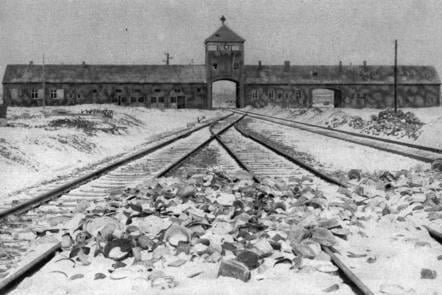
Part 2 of 2. This course depicts the complex history of the Holocaust, highlighting its impact on our world today. The Holocaust was an inconceivable historical event, which forever robbed Western culture of its innocence. As civilized human beings, we fail to understand how events of such horror could have taken place, and how an idea so inhumanly warped could have spread like wildfire through an entire continent, instigating the systematic annihilation of millions of Jews.

No sessions available
3 Weeks
The Einstein Revolution (edX) EdX
HarvardX,Harvard University

The Einstein Revolution (edX)

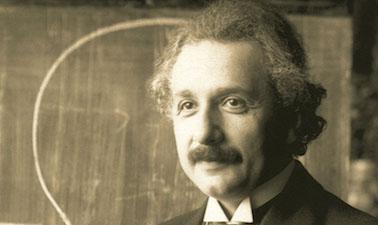
Traces Albert Einstein’s engagement with relativity, quantum mechanics, Nazism, nuclear weapons, philosophy, the arts, and technology. Albert Einstein has become the icon of modern science. Following his scientific, cultural, philosophical, and political trajectory, this course aims to track the changing role of physics in the 20th and 21st centuries.

Self Paced
Self-Paced
El Valle de los Reyes (Coursera) Coursera
Universitat Autònoma de Barcelona

El Valle de los Reyes (Coursera)

Este curso va dirigido a todos los amantes de la historia y arqueología, en general, y de manera particular a todos los interesados en egiptología, independientemente de su nivel de conocimiento inicial. El Valle de los Reyes constituye uno de los yacimientos arqueológicos más importantes de Egipto y su estudio, desde diferentes enfoques, resulta muy atractivo para cualquier aficionado o profesional de la egiptología. Con este curso nos proponemos conocer su historia y evolución a lo largo de las dinastías XVIII-XX del Reino Nuevo egipcio, desde su origen hasta su abandono y desmantelamiento.

Sep 28th 2026
5-12 Weeks
The Holocaust - An Introduction (I): Nazi Germany: Ideology, The Jews and the World (Coursera) Coursera
Tel Aviv University,Yad Vashem

The Holocaust - An Introduction (I): Nazi Germany: Ideology, The Jews and the World (Coursera)

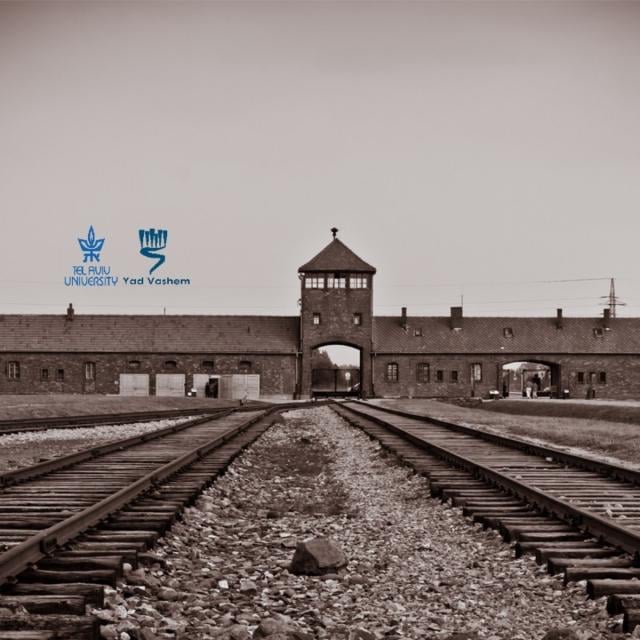
The Holocaust was an inconceivable historical event, which forever robbed Western culture of its innocence. As civilized human beings, we fail to understand how events of such horror could have taken place, and how an idea so inhumanly warped could have spread like wildfire through an entire continent, instigating the systematic annihilation of millions of Jews. This free online course was produced jointly by Tel Aviv University and Yad Vashem – the World Holocaust Remembrance Center. The course tracks the history of the Holocaust and has two parts.

Sep 20th 2026
3 Weeks
Egiptología (Egyptology) (Coursera) Coursera
Universitat Autònoma de Barcelona

Egiptología (Egyptology) (Coursera)

¿Sientes curiosidad por la civilización del antiguo Egipto? ¿Eres un apasionado de su cultura e historia? En este curso nos acercaremos a los templos de los antiguos faraones, a sus complejos funerarios, a sus ciudades, a su escritura jeroglífica, a su religión y a muchos otros aspectos de esta gran civilización.

Sep 28th 2026
5-12 Weeks
Iniciación a los Jeroglíficos Egipcios (Coursera) Coursera
Universitat Autònoma de Barcelona

Iniciación a los Jeroglíficos Egipcios (Coursera)

¿Te apasiona la historia y la cultura del antiguo Egipto? ¿Sientes fascinación por las lenguas y los sistemas de escritura de las civilizaciones de la Antigüedad? ¿Te atrae la idea de adentrarte en el secreto de los jeroglíficos egipcios y comprender las claves de su lectura e interpretación? ¡Si es así, este es tu curso!

Sep 28th 2026
5-12 Weeks
Intellectual Change in Early China: Warring States and Han (Coursera) Coursera
The Chinese University of Hong Kong

Intellectual Change in Early China: Warring States and Han (Coursera)

This sequence of four courses will propose a multi-disciplinary approach to the study of Chinese cultural history conceived of as a succession of modes of rationality (philosophical, bureaucratic, and economic). The focus will be on the moments of paradigm shift from one mode of rationality to another. For each of these moments, cultural facts and artifacts—thought, literature, ritual—will be examined in relationship to changing social, political, and economic systems.

Oct 5th 2026
5-12 Weeks