EdX

Sustainable Resource Recovery from Used Water (edX)

Sustainable Resource Recovery from Used Water (edX)

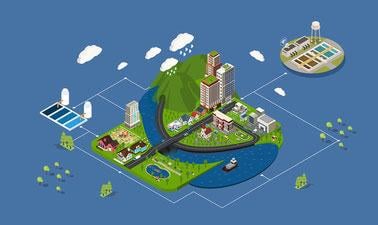
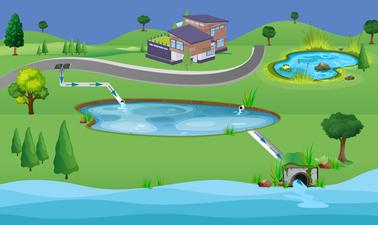
Learn about the latest resource recovery concepts, technologies and products related to sustainable wastewater management. Wastewater is a major end product generated by humans. Traditionally, wastewater has been treated mostly for sanitary and environmental protection reasons, but this waste product harbours an enormous value, both from an ecological and economical perspective.

Class Deals by MOOC List - Click here and see EdX's Active Discounts, Deals, and Promo Codes.

This course is about the state of the art in resource recovery technologies from wastewater. Regardless of your background, we will teach you the core concepts underpinning the recovery of carbon, nutrients, energy and water.
Learn from experts in wastewater engineering from The University of Queensland and Tsinghua University. This course will help you identify opportunities towards the sustainable management of wastewater as well as understand the major applications for recovered products.
What you'll learn

  • Identify recoverable resources in wastewater.
  • Appreciate the breadth of potential products.
  • Discover the technological principles of the resource recovery processes.
  • Recognise the resources that can be recovered in different situations.
  • Appreciate sustainability in the urban water cycle and the importance of resources recovery in a circular economy context.

Syllabus

MODULE 1: Introduction to the water cycle and used water management
Impact of water cycle on water resource sustainability, sources of used water, consumption of energy and resource recovery potentials, trends for used water management.

MODULE 2: Carbon
Carbon biological transformations, anaerobic digestion, carbon to electricity: microbial cells, carbon to PHA, cellulose recovery.

MODULE 3: Nutrients
Nitrogen and phosphorous biological metabolism, microbial protein production and use as feed or fertiliser, phosphorous recovery, source separation, element recovery.

MODULE 4: Water
Fit-for-purpose water reuse, water recycling for drinking or irrigation use, environmental application of reclaimed water, industrial application of reclaimed water - desalination.

MODULE 5: Integrated solutions and successful cases
Sustainability assessment of water technologies, the Huaifang case study, expert panel discussion, visions for the future of resource recovery.
Go to Class
MOOC List is learner-supported. When you buy through links on our site, we may earn an affiliate commission.

Related Courses

Water and Wastewater Treatment Engineering: Biochemical Technology (edX) EdX
Tsinghua University,TsinghuaX

Water and Wastewater Treatment Engineering: Biochemical Technology (edX)

Learn the basic principles and characteristics of biochemical technology in water and wastewater treatment engineering. Biochemical technology in water and wastewater treatment engineering is essential in the field of water treatment. In this environmental studies course you will learn the basic principles and characteristics of biochemical technology.

Self Paced
Self-Paced
Water Resources Management and Policy (Coursera) Coursera
University of Geneva

Water Resources Management and Policy (Coursera)

Water management today is faced with new challenges such as climate change or the effects of human activity. Public and private stakeholders who are active in this field must develop new ways to better manage the water cycle "as a whole". The objective of this MOOC is to develop an understanding of the problems related to water management. Firstly, this course will define a resource and, more specifically, the resource of water.

Jul 6th 2026
5-12 Weeks
Introduction to Water and Climate (edX) EdX
Delft University of Technology,DelftX

Introduction to Water and Climate (edX)

Water is a crucial element in climate and for society. Find out about the latest engineering interventions for water management in rivers, coasts and the urban environment. Water is essential for life on Earth and of crucial importance for society. Water also plays a major role in affecting climate. Its natural cycle, from ocean to atmosphere by evaporation, then by precipitation back to land returning via rivers and aquifers to the oceans, has a decisive impact on regional and global climate patterns.

Self Paced
Self-Paced
Global Warming I: The Science and Modeling of Climate Change (Coursera) Coursera
University of Chicago

Global Warming I: The Science and Modeling of Climate Change (Coursera)

This class describes the science of global warming and the forecast for humans’ impact on Earth’s climate. Intended for an audience without much scientific background but a healthy sense of curiosity, the class brings together insights and perspectives from physics, chemistry, biology, earth and atmospheric sciences, and even some economics—all based on a foundation of simple mathematics (algebra).

Jun 29th 2026
5-12 Weeks
Religious Symbols of the World (edX) EdX
Seoul National University,SNUx

Religious Symbols of the World (edX)

This course is the third and final course in the series following “Understanding Religious Symbolism” and “Myths, Rituals, and Cosmos.” Through the theories and patterns that you learned in these three courses, I hope that you will be able to interpret the various religious phenomena in different cultures, and through this gain a better understanding of culture and human beings.

Self Paced
Self-Paced
Agua 2.0: empresas eficientes para el siglo XXI (edX) EdX
Inter-American Development Bank - IDB,IDBx

Agua 2.0: empresas eficientes para el siglo XXI (edX)

Obtén una visión integral de la gestión sostenible de empresas prestadoras de servicios de agua y saneamiento, y descubre AquaRating: un modelo de éxito internacional para incentivar la transformación de este tipo de empresas. ¿Eres un profesional o actor activo del sector del Agua y Saneamiento? o simplemente, ¿te interesa conocer cómo es la gestión del agua en tu ciudad?

Self Paced
Self-Paced
Irrigation Efficiency: more food with less water (edX) EdX
KU Leuven University,KULeuvenX

Irrigation Efficiency: more food with less water (edX)

Learn to improve the efficiency of different irrigation system components over varying scales in order to extract less water from our resources while producing more food. How can we meet the demands of our ever hungrier and thirstier world? Irrigation water uses 70% of the fresh water extraction worldwide to produce 40% of the food.

Self Paced
Self-Paced
The Next Generation of Infrastructure (edX) EdX
Delft University of Technology,DelftX

The Next Generation of Infrastructure (edX)

Explore the challenges and complexity of both global and local infrastructure (IT/Telecom, Energy, Water and Transportation) and how to make the best decisions to improve it. We increasingly depend on reliable and affordable supply of energy, water, transport, telecommunication and information services to improve livability and facilitate economic development. However, today's infrastructure systems are drastically changing. They are becoming more and more web-based, interconnected and transnational, with increasingly fragmented public and private ownership, while new technologies are on their way.

This course is archived
5-12 Weeks
Biological Principles in Wastewater Treatment (edX) EdX
Purdue University,PurdueX

Biological Principles in Wastewater Treatment (edX)

This course introduces biological principles used in the design and operation of biological wastewater treatment plants. Water scarcity is one of the most critical challenges in human society. Billions of people in the world have poor access to clean water and such a situation is getting worse with rapid population growth and industrial development.

Jan 9th 2023
5-12 Weeks
Groundwater Cycle (edX) EdX
Purdue University,PurdueX

Groundwater Cycle (edX)

The Earth is blue for its oceans but green for the blankets of groundwater under our feet. This course explores the water cycle from under the ground. How much groundwater do we use and what for? How much do the trees? How do we model water fluxes? This course explores the water cycle from an underground perspective. We start with the description of groundwater as a resource: How much is there? Where is it? How do we use it? How much groundwater do plants and trees use every year? How much water do aquifers lose during droughts? How much do they gain during rain events or in a typical year?

Jan 10th 2022
5-12 Weeks
Groundwater Contamination (edX) EdX
Purdue University,PurdueX

Groundwater Contamination (edX)

The Earth is blue for its oceans and green for its groundwater. Access to clean freshwater is essential yet human activities deteriorate water quality. This unit describes contaminant transport in aquifers. Groundwater is the water beneath the ground surface. It is a vast freshwater reservoir often overlooked because invisible, yet 1000 times greater than all lakes and rivers. The Earth is blue for its oceans, but green for the freshwater under our feet.

This course is archived
5-12 Weeks