EdX

New Zealand Landscape as Culture: Wai (Water) (edX)

New Zealand Landscape as Culture: Wai (Water) (edX)

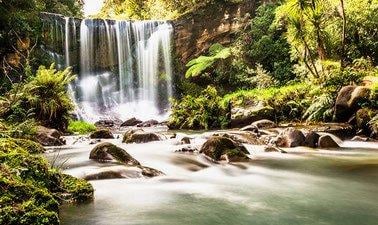
Come and learn about the water systems and the ocean of New Zealand and their complex geological and cultural histories. In this course, you will learn about New Zealand’s water, or 'wai', and the cultural identities attached to them. We'll explore the lives and identities of Indigenous Māori people who can trace their ancestry to their awa, or river, as well as the European, Pākehā perspectives on water. Discussing how the different cultures interpret and relate to water.

Class Deals by MOOC List - Click here and see EdX's Active Discounts, Deals, and Promo Codes.

We will delve below the surface to look at the unique geology that has created our watery nation, and the taonga (culturally prized possession) found within these waters. While also investigating the political, cultural and economic dynamics of our waterways.

New Zealand is a bicultural nation, and colonisation by the British in the nineteenth century produced a complex history and competing cultural ideas about landscape. The place of water in European culture led to conflicting beliefs about the ownership and status of water. This has implications today for the management of water resources, and how this can be done to ensure that cultural, economic and environmental imperatives are respected in Aotearoa New Zealand.
You will hear about the Māori world view from Dr Maria Bargh (Te Arawa and Ngāti Awa), who teaches Māori culture and politics at Te Herenga Waka—Victoria University of Wellington. Professor Lydia Wevers will introduce you to Pākehā, or European, New Zealand culture. Featuring guest appearances from other experts, this course will encourage you to think about landscape as an expression of culture, and allow you to transfer these ideas to the landscape you live in.

What you'll learn

  • Indigenous knowledge and narratives about wai or water.
  • The geology and formation of rivers and lakes of New Zealand.
  • The role of European culture in the colonisation of water.
  • Ways in which water is represented in New Zealand art, literature, and national identity.
Go to Class
MOOC List is learner-supported. When you buy through links on our site, we may earn an affiliate commission.

Related Courses

Water Works: Activating Heritage for Sustainable Development (edX) EdX
Delft University of Technology,DelftX

Water Works: Activating Heritage for Sustainable Development (edX)

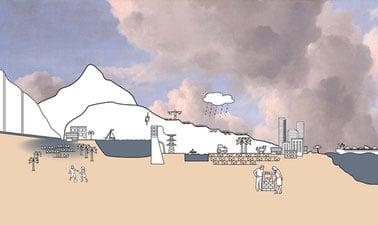
Address contemporary challenges from a socio-spatial and cultural perspective, and activate water heritage for decision-making in water management. Water has served and sustained societies throughout history. Understanding the complex and diverse water systems of the past is key to devising sustainable development for the future with regard to socioeconomic structures, policies, and cultures. Today, past systems form the framework for preservation and reuse as well as for new proposals.

Self Paced
Self-Paced
Landscape Leadership: Catalyse Sustainable Development in Landscapes (edX) EdX
Wageningen University,WageningenX

Landscape Leadership: Catalyse Sustainable Development in Landscapes (edX)

Learn how to become a landscape leader! Get the skills to mobilise human resources, manage and resolve conflict and facilitate and motivate stakeholders to achieve SDG-focused sustainable change. Achieving sustainable and productive landscapes and the Sustainable Development Goals (SDGs) calls for bold and innovative leadership. Governments, the global private sector, universities and international NGOs are seeking landscape leaders to stimulate and facilitate change.

Self Paced
Self-Paced
New Zealand Landscape as Culture: Motu (Islands) (edX) EdX
Victoria University of Wellington,VictoriaX

New Zealand Landscape as Culture: Motu (Islands) (edX)

Come and learn about the islands of New Zealand, 42 degrees south of the equator and rich in stories. In this course, you will learn about the islands of New Zealand, or Ngā Motu o Aotearoa, where humans have lived for a thousand years. The indigenous Māori people of New Zealand tell a powerful origin story about our islands. New Zealanders take pride in being islanders as it is part of their story, national identity and culture.

No sessions available
4 Weeks
Sensing Planet Earth - Water and Ice (edX) EdX
Chalmers University of Technology,ChalmersX

Sensing Planet Earth - Water and Ice (edX)

Learn how to measure and monitor the Earth’s water and ice masses to deepen your understanding of global change. Global warming. Rising sea levels. Droughts. Flooding. The melting of the polar ice caps. In this energy and earth science course, you will learn how continental water and ice masses are measured and monitored through remote sensing.

Self Paced
5-12 Weeks
Drinking Water Treatment (edX) EdX
Delft University of Technology,DelftX

Drinking Water Treatment (edX)

Learn about urban water services, focusing on conventional technologies for drinking water treatment. This course focuses on conventional technologies for drinking water treatment. Unit processes, involved in the treatment chain, are discussed as well as the physical, chemical and biological processes involved.

Self Paced
Self-Paced
The Next Generation of Infrastructure (edX) EdX
Delft University of Technology,DelftX

The Next Generation of Infrastructure (edX)

Explore the challenges and complexity of both global and local infrastructure (IT/Telecom, Energy, Water and Transportation) and how to make the best decisions to improve it. We increasingly depend on reliable and affordable supply of energy, water, transport, telecommunication and information services to improve livability and facilitate economic development. However, today's infrastructure systems are drastically changing. They are becoming more and more web-based, interconnected and transnational, with increasingly fragmented public and private ownership, while new technologies are on their way.

This course is archived
5-12 Weeks
L’eau et les sols - Hydrodynamique des milieux poreux (edX) EdX
LouvainX,Université Catholique de Louvain - UCL

L’eau et les sols - Hydrodynamique des milieux poreux (edX)

Ce cours de spécialisation vous donnera les clés pour comprendre, modéliser et mesurer les processus de transferts de l’eau dans le sol. Comment l’eau de pluie s'infiltre-t-elle dans le sol (et quelle partie ruisselle) ? Quelle est la recharge d’une nappe ? Quelle quantité d’eau un sol peut-il retenir ? Quelle sont les directions des flux de polluants dans un sol ?

Self Paced
Self-Paced
Introduction to Water and Climate (edX) EdX
Delft University of Technology,DelftX

Introduction to Water and Climate (edX)

Water is a crucial element in climate and for society. Find out about the latest engineering interventions for water management in rivers, coasts and the urban environment. Water is essential for life on Earth and of crucial importance for society. Water also plays a major role in affecting climate. Its natural cycle, from ocean to atmosphere by evaporation, then by precipitation back to land returning via rivers and aquifers to the oceans, has a decisive impact on regional and global climate patterns.

Self Paced
Self-Paced
Geology and Engineering Geology | 工程地质学 (edX) EdX
Tsinghua University,TsinghuaX

Geology and Engineering Geology | 工程地质学 (edX)

Learn the basics of geology and geological engineering as we explore ways to both protect and properly utilize the earth’s resources today and in the future. The earth is our home. The development of human civilization as we know it goes hand in hand with how we have used and continue to reshape the planet. This course will introduce the basic knowledge of geology and methods of engineering geology to help people protect and utilize our earth more effectively.

Self Paced
Self-Paced
Powering Resilient Communities: A Holistic Approach to Food, Energy, and Water Security (edX) EdX
University of Alaska Fairbanks,AlaskaX

Powering Resilient Communities: A Holistic Approach to Food, Energy, and Water Security (edX)

A research-based course on resilient renewable energy solutions, with an emphasis on microgrids, and Food, Energy, and Water (FEW) security. This course provides research-based and on-the-ground tools for community planners, grid designers, and business leaders to improve and implement stronger and more resilient renewable energy systems in Arctic communities.

Self Paced
Self-Paced