EdX

New Zealand Landscape as Culture: Motu (Islands) (edX)

New Zealand Landscape as Culture: Motu (Islands) (edX)

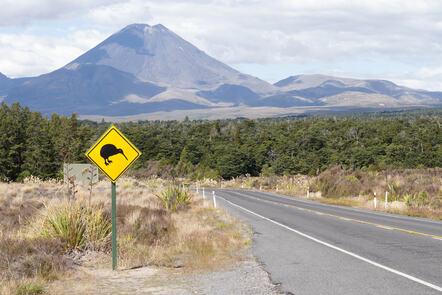
Come and learn about the islands of New Zealand, 42 degrees south of the equator and rich in stories. In this course, you will learn about the islands of New Zealand, or Ngā Motu o Aotearoa, where humans have lived for a thousand years. The indigenous Māori people of New Zealand tell a powerful origin story about our islands. New Zealanders take pride in being islanders as it is part of their story, national identity and culture.

Class Deals by MOOC List - Click here and see EdX's Active Discounts, Deals, and Promo Codes.

Remote from other landmasses, you will learn how the islands of New Zealand have a unique geology and form part of the Pacific ‘Ring of Fire.’ Our long history of remoteness has been expressed by a New Zealand poet as ‘Distance looks our way.' But the idea of distance is a European one - who are we far away from? For the peoples of the Pacific we inhabit one group of islands in the Pacific, 'a sea of Islands.'

New Zealand is a bicultural nation. Māori voyagers named this chain of islands Aotearoa or land of the long white cloud. Colonisation by the British in the nineteenth century produced a complex history. You will hear about the Māori world view, and Pākehā, or European, New Zealand culture, from Dr Maria Bargh (Te Arawa and Ngāti Awa) who teaches politics in Te Kawa a Māui, the School of Māori Studies, and Professor Lydia Wevers, a specialist in New Zealand literature and history. With guest appearances from other experts, the course will also explore the geology, popular culture, politics, art and literature of landscape. You will learn to think about landscape as an expression of culture and be able to transfer these ideas to the landscape you live in.
Māori refer to their home landscape as ‘whenua.’ We will take you to the whenua called Aotearoa.

What you'll learn

  • An Indigenous narrative of Aotearoa
  • The geology and formation of the islands of New Zealand
  • The role of Oceanic voyaging in Pacific cultures
  • How islands are represented in New Zealand art, literature and national identity

Go to Class
MOOC List is learner-supported. When you buy through links on our site, we may earn an affiliate commission.

Related Courses

China’s First Empires and the Rise of Buddhism (edX) EdX
HarvardX,Harvard University

China’s First Empires and the Rise of Buddhism (edX)

Learn about the Qin and Han dynasties, and how Buddhism and ideas of self-realization influenced the medieval period. This course, the second in a collection on Chinese history and culture, addresses how the Qin dynasty conquered China and established a new system of government and how the Han dynasty built a stable, centralized empire that lasted for hundreds of years. We cover the early history of Buddhism in China and how the rising feudal aristocracy responded to the loss of empire by looking inward.

Self Paced
Self-Paced
EAL: English Language for Nature Conservation and Sustainability (FutureLearn) FutureLearn
Te Pūkenga – New Zealand Institute of Skills and Technology,Nelson Marlborough Institute of Technology - NMIT

EAL: English Language for Nature Conservation and Sustainability (FutureLearn)

Advance your study of English as a second language as you explore sustainability and discover the wonders of New Zealand. Improve your language skills with the Nelson Marlborough Institute of Technology. The themes of conservation and sustainability are present in most major academic English exams such as IELTS, TOEFL, and NZCEL. This four-week course will prepare you for reading, listening, writing, and speaking about these themes.

Jun 27th 2022
4 Weeks
Te Reo Māori: Introduction to Pronunciation (FutureLearn) FutureLearn
EduMaxi

Te Reo Māori: Introduction to Pronunciation (FutureLearn)

Learn the basics of Māori language pronunciation, including some everyday words, key greetings and phrases. Develop your understanding of the pronunciation of the Māori language. The Māori language, culture, people, and land are intrinsically connected, with the language being the vehicle for that connection. To pronounce the Māori language correctly is to show respect for the people, culture, land, and history of New Zealand.

Jun 27th 2022
3 Weeks
Modern China’s Foundations: The Manchus and the Qing (edX) EdX
HarvardX,Harvard University

Modern China’s Foundations: The Manchus and the Qing (edX)

Learn how the Manchus conquered the Qing and established the last of the imperial dynasties. This course, part of a comprehensive series on China, looks at the Qing state in the early 1600s and the challenges that the Manchus faced as minority rulers. While living in Chinese cities and surrounded by Chinese culture — a culture that was far more sophisticated than their own — the Manchus struggled to hold onto their identity as a conquesting people.

Self Paced
Self-Paced
Introduction to Psychology | 心理学概论 (edX) EdX
Tsinghua University,TsinghuaX

Introduction to Psychology | 心理学概论 (edX)

Explore psychological research to understand basic theories and methods of scientific psychology with a strong focus on positive psychology. 本课程以心理学的经典理论和最新实证研究为蓝本,以积极心理学的视角,概览式地介绍科学心理学的基本理论、基本方法、研究领域和研究热点

Self Paced
Self-Paced
New Zealand Landscape as Culture: Wai (Water) (edX) EdX
Victoria University of Wellington,WellingtonX

New Zealand Landscape as Culture: Wai (Water) (edX)

Come and learn about the water systems and the ocean of New Zealand and their complex geological and cultural histories. In this course, you will learn about New Zealand’s water, or 'wai', and the cultural identities attached to them. We'll explore the lives and identities of Indigenous Māori people who can trace their ancestry to their awa, or river, as well as the European, Pākehā perspectives on water. Discussing how the different cultures interpret and relate to water.

No sessions available
4 Weeks
文物精品与文化中国:农业与制造业 | Relics in Chinese History - Part 1: Agriculture and Manufacturing (edX) EdX
Tsinghua University,TsinghuaX

文物精品与文化中国:农业与制造业 | Relics in Chinese History - Part 1: Agriculture and Manufacturing (edX)

Discover manufacturing and agriculture’s role in the history of China as we explore Chinese culture through artifacts and relics. 本课程以精品文物作引子,将学术界探索中华文明的过程作为线索,介绍古代中国在造船、玉器等诸多领域的杰出成就

Self Paced
Self-Paced
Visualizing Postwar Tokyo, Part 1 (edX) EdX
The University of Tokyo,UTokyoX

Visualizing Postwar Tokyo, Part 1 (edX)

Analyze the history of change and development in postwar Tokyo from different perspectives using archived photographs, films, and TV programs. Tokyo emerged out of the ruins of war to become a large city of 10 million people in only a quarter of a century. During this process of change, the capital of a military empire that once invaded East Asia experienced occupation by the U.S. armed forces, hosted the Olympic Games, and transformed into a consumer hub where young people could enjoy economic “wealth.”

Self Paced
Self-Paced
English for Doing Business in Asia - Speaking (edX) EdX
The Hong Kong University of Science and Technology - HKUST,HKUSTx

English for Doing Business in Asia - Speaking (edX)

Introducing strategies for developing your spoken English communication skills in the context of doing business in Asia. The use of English for doing business in multinational settings is a fact of life for many business people. As Asian economies expand and become more involved in the global economy, a lingua franca – a language used to communicate among groups of people who do not share a mother tongue – is needed to exchange information.

Self Paced
Self-Paced
Tangible Things: Discovering History Through Artworks, Artifacts, Scientific Specimens, and the Stuff Around You (edX) EdX
HarvardX,Harvard University

Tangible Things: Discovering History Through Artworks, Artifacts, Scientific Specimens, and the Stuff Around You (edX)

Gain an understanding of history, museum studies, and curation by looking at, organizing, and interpreting art, artifacts, scientific curiosities, and the stuff of everyday life. Have you ever wondered about how museum, library, and other kinds of historical or scientific collections all come together? Or how and why curators, historians, archivists, and preservationists do what they do?

Self Paced
Self-Paced
China and Communism (edX) EdX
HarvardX,Harvard University

China and Communism (edX)

Explore the Maoist period of China, from the Communist Party to the death of Mao and the reopening of China. How did the Communists conquer China? What role does culture play? What are the successes and failures of the Chinese Communist Party after seizing power in 1949? What constitutes liberation?

Self Paced
Self-Paced