EAL: English Language for Nature Conservation and Sustainability (FutureLearn)

EAL: English Language for Nature Conservation and Sustainability (FutureLearn)

Advance your study of English as a second language as you explore sustainability and discover the wonders of New Zealand. Improve your language skills with the Nelson Marlborough Institute of Technology. The themes of conservation and sustainability are present in most major academic English exams such as IELTS, TOEFL, and NZCEL. This four-week course will prepare you for reading, listening, writing, and speaking about these themes.

Class Deals by MOOC List - Click here and see FutureLearn's Active Discounts, Deals, and Promo Codes.

You’ll learn the language and vocabulary that go hand-in-hand with the important topics of conservation biology and sustainability. Specifically, you’ll explore the unique flora and fauna of New Zealand to broaden your understanding and help you progress further with your study of the English language.
Led by Dr. Ray Genet at the Nelson Marlborough Institute of Technology, a specialist in delivering lessons on preserving biodiversity, you’ll learn how to advance your language skills and communicate your interest in sustainability.

Explore different techniques to help you learn English language
The course will help take your English language skills to the next level as you delve into responding to a variety of language formats.
You’ll increase your reading, vocabulary, and pronunciation skills as you examine academic and spoken texts.

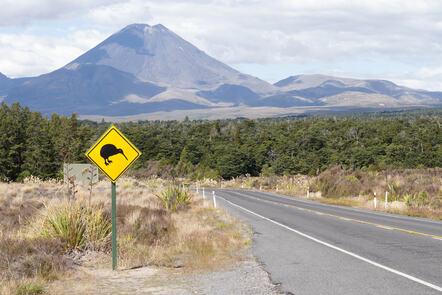
Discover the unique New Zealand wildlife
Being isolated from the rest of the world has allowed New Zealand’s wildlife to evolve in distinctive ways. However, with the increase in the number of humans, there has also been an increase in the number and types of pests.
In this course, you’ll learn how these introduced pests are being managed to restore parts of New Zealand. You’ll also look at the work by the Brook Waimārama Sanctuary, which aims to re-create a historic piece of New Zealand where native birds, reptiles, and invertebrates can flourish.
By the end of this course, you’ll have the knowledge and vocabulary skills to discuss different sustainability topics with ease.

What topics will you cover?

Week 1 - Focus on Writing and Reading for understanding - Our connection to nature
Week 2 - Focus on Reading - Forest Conservation in New Zealand
Week 3 - Focus on Listening for understanding - Ecological restoration & The Brook Sanctuary
Week 4 - Focus on Speaking - How to give an effective and persuasive presentation for biodiversity conservation

What will you achieve?
By the end of the course, you‘ll be able to...

  • Identify vocabulary and concepts in of nature conservation in written and spoken texts.
  • Analyse and discuss reasons to conserve nature.
  • Create and evaluate a PowerPoint presentation on a conservation project.
Go to Class
MOOC List is learner-supported. When you buy through links on our site, we may earn an affiliate commission.

Related Courses

Discovering Science: Science Writing (FutureLearn) FutureLearn
University of Leeds

Discovering Science: Science Writing (FutureLearn)

What science discoveries will you choose to write about? Without science writing, science could not really exist. By recording experiments and publishing the results of studies and discoveries, scientists can share their important work, and find an engaged audience. Science writing takes many forms: from press releases to video scripts. You’ll learn about different types of science writing, and look at the factors which you need to consider to write a story.

Sep 23rd 2024
2 Weeks
Start Writing Fiction (FutureLearn) FutureLearn
The Open University

Start Writing Fiction (FutureLearn)

Get started with your own fiction writing, focusing on the central skill of creating characters, with this hands-on course. Discover the rituals and approaches that successful fiction writers use. On this online course, established writers – including Louis de Bernières, Patricia Duncker, Alex Garland, Abdulrazak Gurnah, Tim Pears, Michèle Roberts and Monique Roffey – will talk about how they started writing.

Apr 15th 2024
5-12 Weeks
Ecology and Wildlife Conservation (FutureLearn) FutureLearn
University of Leeds

Ecology and Wildlife Conservation (FutureLearn)

Discover ecology and how we can protect wildlife and conserve the natural world. Do you worry about the effects of climate change on nature? This course will show you how the work of conservation biologists and study of ecosystems can help with conserving the world’s biodiversity. You’ll explore the impact that the presence of wind farms on populations of seabirds and understand how the use of advanced techniques can be used to study different populations.

Feb 16th 2026
2 Weeks
Renewable Energy: Sustainable Electricity Supply with Microgrids (FutureLearn) FutureLearn
University of Leeds

Renewable Energy: Sustainable Electricity Supply with Microgrids (FutureLearn)

Explore approaches to electrification, microgrids, and how to harness this form of renewable energy to achieve sustainability. Learn and assess different electrification approaches from around the world. On this two-week course, you will learn how electricity is generated globally and explore different approaches to electrification. You will then learn technical aspects of electrification options via a national grid, off grid, micro and mini grids and reflect on the barriers to affordable, clean and fair access to electricity.

Sep 23rd 2024
2 Weeks
Nutrition for Health and Sustainability (FutureLearn) FutureLearn
EIT Food,EIT

Nutrition for Health and Sustainability (FutureLearn)

Learn what makes up a healthy, sustainable diet and how certain food types can help to treat and prevent disease. Explore the relationship between health, nutrition, and sustainability. Diet is the biggest single risk factor for preventable diseases in the world and a key driver of diabetes, heart disease, and other non-communicable diseases (NCDs). On this course, you’ll look at what makes up a healthy diet, and see what types of foods play a crucial part in preventing diseases and improving wellbeing.

Sep 4th 2023
3 Weeks
Understanding Food Labels (FutureLearn) FutureLearn
University of Reading,EIT Food,EIT

Understanding Food Labels (FutureLearn)

Learn how to interpret food labels so you can make informed food choices and buy food that supports your health and wellbeing. Get the facts you need to put your trust in the food system. Huge amounts of information are provided on food product labels, but surveys have shown that we’re often unsure of its meaning. On this course, you’ll learn how to make sense of the regulations, data, and logos on packaging so that you can make more informed food choices.

Jan 2nd 2023
3 Weeks
Innovation in Arable Farming: Technologies for Sustainable Farming Systems (FutureLearn) FutureLearn
University of Reading,EIT Food,EIT

Innovation in Arable Farming: Technologies for Sustainable Farming Systems (FutureLearn)

Explore how innovative, digital technologies can help achieve sustainable intensification of arable farming systems. Consider ways arable farmers in the EU can use agri-tech to benefit business. On this course, you’ll explore evidence-based information that outlines the benefits and challenges of adopting new technologies within the EU, and have the chance to read case study examples of some of these applications.

Jan 2nd 2023
3 Weeks
Fashion Values: Cultures (FutureLearn) FutureLearn
London College of Fashion

Fashion Values: Cultures (FutureLearn)

Use storytelling to contribute to equitable, inclusive and diverse cultures in and through fashion. Reimagine fashion as a powerful medium to explore and amplify cultures. On this four-week course from London College of Fashion, you’ll learn how to find and tell stories of the ingenuity and creativity of fashion in its many cultural forms.

Dec 5th 2022
4 Weeks
Sustainability in the New Zealand Wine Industry (FutureLearn) FutureLearn
Te Pūkenga – New Zealand Institute of Skills and Technology,Nelson Marlborough Institute of Technology - NMIT

Sustainability in the New Zealand Wine Industry (FutureLearn)

Discover the sustainable wine industry in New Zealand, from the processes and principles to sustainability certifications. Explore how sustainable wine production works. New Zealand is a “new world” producer of wines, innovating to provide high-quality products assisted by technology and driven by sustainability. On this four-week course from the Nelson Marlborough Institute of Technology (NMIT), you’ll explore the concept of sustainable wine production, from a sustainable way of managing the environment called kaitiakitanga, to the vision and purpose of the sustainable wine label Tohu.

Jun 27th 2022
4 Weeks
Introduction to Sustainable Practices in Food Service (FutureLearn) FutureLearn
International Culinary Studio

Introduction to Sustainable Practices in Food Service (FutureLearn)

Create a more sustainable food service business and make a difference to your bottom line, your stakeholders, and the environment. Improve your sustainable practices within your organisation. Sustainability isn’t just about ‘greening’; sustainability actually means ‘meeting the needs of the present without compromising the ability of future generations to meet their needs.’ On this course, you’ll look at general global sustainability concepts, issues, and concerns, before focusing on sustainability specifically within food service and what you can do to reduce your impact.

Jun 27th 2022
2 Weeks
From Waste to Value: How to Tackle Food Waste (FutureLearn) FutureLearn
University of Reading,EIT Food,EIT

From Waste to Value: How to Tackle Food Waste (FutureLearn)

Discover the causes and impact of food waste, and learn how you can tackle it on a personal, community, and national level. Explore how combatting food waste and food loss can help the environment. The significant contribution the food system makes to climate change is widely recognised, and consumers are increasingly concerned about food waste. On this course, you’ll explore how you – as a consumer – can act and inspire others to reduce food waste effectively and sustainably.

Feb 6th 2023
3 Weeks
Organising for the Sustainable Development Goals (SDGs) (FutureLearn) FutureLearn
Hanken School of Economics

Organising for the Sustainable Development Goals (SDGs) (FutureLearn)

What are the Sustainable Development Goals and how will we achieve them? Learn how you can work towards the United Nations’ SDGs. Learn how to tackle sustainability challenges through the 17 SDGs. The world is facing unprecedented and pressing social and environmental challenges. On this course, you’ll explore the what, why and how of the 17 SDGs and understand what key global challenges remain as we work towards a sustainable and inclusive world.

Jan 20th 2025
5-12 Weeks