Sustainable business in the renewable energy sector (POK)

Offered by Politecnico di Milano,
Sustainable business in the renewable energy sector (POK)

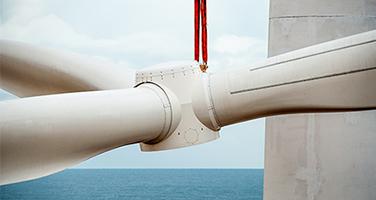
The course deals with the main issues related to the so-called community engagement in the sector of energy production from renewable sources. What is meant by sustainability? How can the renewable industry promote sustainable socio-economic development in the territories in which it operates? What is sustainability according to Falck Renewables? The growing global concern about climate change has led companies in all sectors to integrate the concept of sustainability into their strategic action lines.

The online course “Sustainable business in the renewable energy”, realized by Falck Renewables in collaboration with Politecnico di Milano, intends to provide theoretical elements and practical examples on sustainability in the renewable energy sector.

From its roots in the notion of “sustainable development” within the United Nations Agenda 2030, to the more pragmatic aspects of “sustainable solutions” in the onshore wind sector, sustainability is explained through videos and quizzes to learn in a flexible and interactive way a simple and at the same time ambitious concept.
You can access the course absolutely free of charge and completely online.
The course materials will still be available to all registered users, even after the closing of the edition.
Further editions of this course will be activated each academic year.
Go to Class
MOOC List is learner-supported. When you buy through links on our site, we may earn an affiliate commission.

Related Courses

Politics and Economics of International Energy (Coursera) Coursera
Sciences Po

Politics and Economics of International Energy (Coursera)

Energy issues have always been important in international relations, but in recent years may have become even more important than in the past due to the widespread awareness of existing limits to energy sources and negative climate impacts. The course discusses global trends in energy consumption and production, various available scenarios for potential developments in the coming decades, the availability of oil reserves and the evolution of the oil industry.

Aug 10th 2026
5-12 Weeks
Sustainable Textile Manufacturing (POK) Polimi OPEN KNOWLEDGE
Politecnico di Milano

Sustainable Textile Manufacturing (POK)

An overview of the Italian textile manufacturing sector to learn and understand how excellent companies are integrating sustainable practices and processes along the supply chain. The MOOC aims to describe the approach to sustainability in the Italian textile manufacturing sector (for clothing and other sectors) with a specific focus on all steps of the production chain.

Available
4 Weeks
Sustainable Vikings: Sustainability & Corporate Social Responsibility in Scandinavia (Coursera) Coursera
Copenhagen Business School

Sustainable Vikings: Sustainability & Corporate Social Responsibility in Scandinavia (Coursera)

This course gives you immediate access to the world leading sustainability and corporate social responsibility (CSR) practices. Scandinavian firms dominate the major sustainability and CSR performance indicators including the Dow Jones Sustainability Index (DJSI). In this course we explore the concepts of sustainability and CSR and focus attention on how Scandinavian firms, like Novo Nordisk, have achieved superior sustainability and CSR performances.

Aug 17th 2026
5-12 Weeks
Higher Education for Sustainable Development Goals (POK) Polimi OPEN KNOWLEDGE
Politecnico di Milano

Higher Education for Sustainable Development Goals (POK)

The course introduces the concept of Sustainable Development and the recent debate and policies promoted at the global level to face urgent environmental and societal challenges. 17 Sustainable Development Goals, the SDGs, aiming at addressing ambitious sustainability challenges by 2030, are presented across the course program. The course concludes with a call for action to accelerate and demonstrate the active commitment of the HE community.

Available
5-12 Weeks
Strategy and Sustainability (Coursera) Coursera
IESE Business School

Strategy and Sustainability (Coursera)

Business and environmental sustainability are not natural bedfellows. Business is about making money. Sustainability is about protecting the planet. Business is measured in months and quarters. Sustainability often requires significant short term costs to secure a sometimes uncertain long-term benefit. To some activists, all executives are exploitative, selfish one percenters. To some executives, all activists are irresponsible, unyielding extremists.

Aug 17th 2026
5-12 Weeks
Sustainable Agricultural Land Management (Coursera) Coursera
University of Florida

Sustainable Agricultural Land Management (Coursera)

This course will cover the agricultural and urban water quality issues in Florida, their bases, land and nutrient management strategies, and the science and policy behind the best management practices (BMPs). Students will learn to evaluate BMP research and analyze its role in determining practices and policies that protect water quality.

Aug 10th 2026
5-12 Weeks
Perspectives in Digital Transformation: Agribusiness (Coursera) Coursera
Inter-American Development Bank - IDB

Perspectives in Digital Transformation: Agribusiness (Coursera)

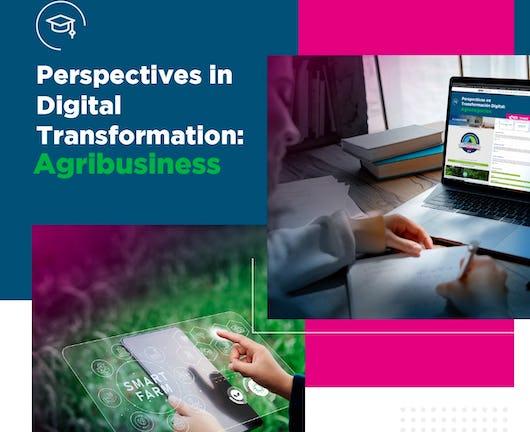
In this course, you will be learn how to apply the best practices that have been tested by global companies to make the most of the potentialities of digital transformation and its application to your business. Discover what the level of digital maturity is for your organization by identifying current trends in digital transformation, the use of technologies, and the impact on sustainability in the agribusiness sector in Latin America.

Aug 17th 2026
3 Weeks
Climate Change Mitigation in Developing Countries (Coursera) Coursera
University of Cape Town

Climate Change Mitigation in Developing Countries (Coursera)

This course challenges you to consider how one might lift societies out of poverty while also mitigating greenhouse gas emissions. We explore the inherent complexity of developing country governments wanting to grow their economies in a climate friendly way. You will be introduced to an approach with which to address this challenge. The approach consists of a facilitated process whereby academic researchers and high-level influential actors within society co-produce knowledge. You will track this process in four Latin American countries - Brazil, Chile, Colombia, Peru, and South Africa. You will hear from various professionals about their contexts and the different challenges and opportunities the process includes.

Aug 24th 2026
5-12 Weeks
Our Earth's Future (Coursera) Coursera
American Museum of Natural History

Our Earth's Future (Coursera)

Our Earth’s Future is about the science of climate change and how to talk about it. You will learn from scientists in the fields of climatology, oceanography, Earth science, and anthropology who study how climate change is affecting people, populations, and ways of life. Explore the multiple lines of evidence for the human-induced climate change that is happening today, and consider what that means for the future of our planet. At the end of this course you will be able to understand key scientific principles, identify and address misconceptions, and contribute confidently to conversations about climate change.

Aug 10th 2026
5-12 Weeks
Planning for Climate Change in African Cities (Coursera) Coursera
Erasmus University Rotterdam,United Cities and Local Governments of Africa,African Local Government Academy,Institute for Housing and Urban Development

Planning for Climate Change in African Cities (Coursera)

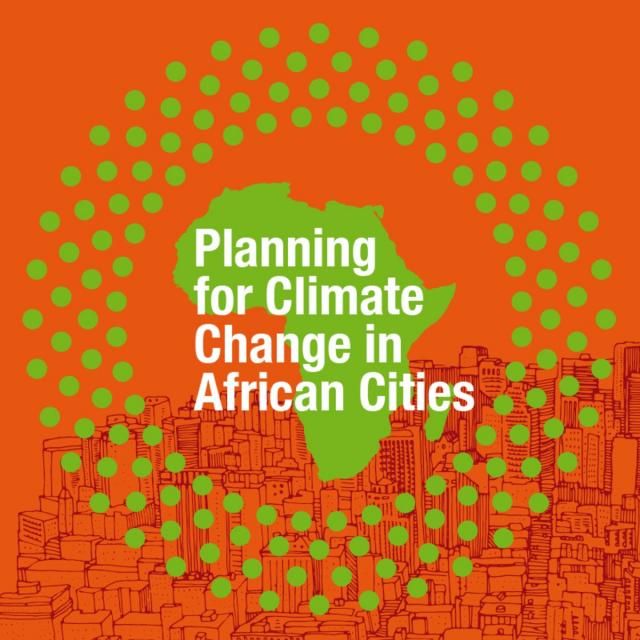
Climate change poses a threat to economic growth and long-term prosperity of many countries around the world. Africa is not an exception, considering the actual and potential impacts of climate change and climate variability that will threaten its vulnerable sectors and human populations. African countries are projected to experience changing rainfall patterns, rising sea levels, and higher temperatures that will affect food security, agricultural production, water availability, and public health, among others. These climate change impacts and climate variability can further produce social and political problems, such as rural-urban migration and water resource disputes.

Aug 17th 2026
5-12 Weeks
Biochemical Principles of Energy Metabolism (Coursera) Coursera
Korea Advanced Institute of Science and Technology - KAIST

Biochemical Principles of Energy Metabolism (Coursera)

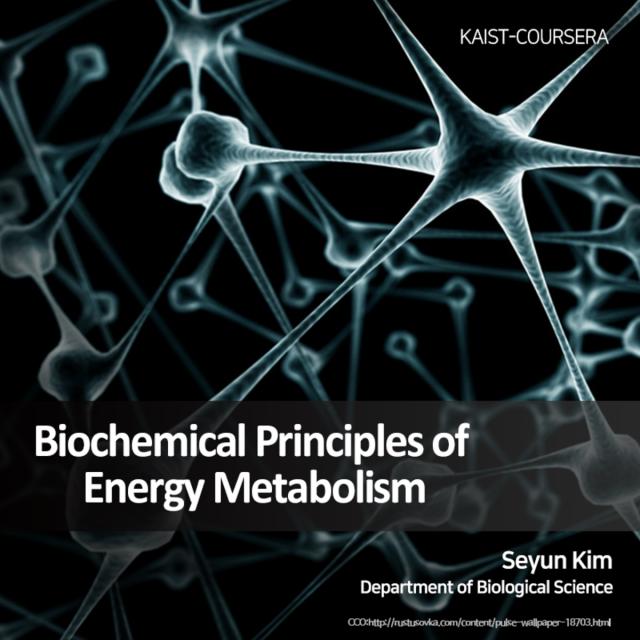
Everyone knows that energy is essential for sustaining life. How can you define energy in life? Have ever thought about ways of how carbohydrates like glucose from your diet can be used for extracting energy? A scientific field that focuses on energy production and flow though living cells and organisms is called bioenergetics. Energy metabolism covers various biochemical ways of energy transformation and regulatory mechanisms of over thousands chemical reactions. Without fine control of those metabolic processes, cells and organisms cannot maintain activities linked to life.

Aug 17th 2026
5-12 Weeks