Discover the structure of the materials that make up our modern world and learn how this underlying structure influences the properties and performance of these materials. Structure determines so much about a material: its properties, its potential applications, and its performance within those applications. This course from MIT’s Department of Materials Science and Engineering explores the structure of a wide variety of materials with current-day engineering applications.
Class Deals by MOOC List - Click here and see EdX's Active Discounts, Deals, and Promo Codes.
The course begins with an introduction to amorphous materials. We explore glasses and polymers, learn about the factors that influence their structure, and learn how materials scientists measure and describe the structure of these materials.
Then we begin a discussion of the crystalline state, exploring what it means for a material to be crystalline, how we describe directions in a crystal, and how we can determine the structure of crystal through x-ray diffraction. We explore the underlying crystalline structures that underpin so many of the materials that surround us. Finally, we look at how tensors can be used to represent the properties of three-dimensional materials, and we consider how symmetry places constraints on the properties of materials.
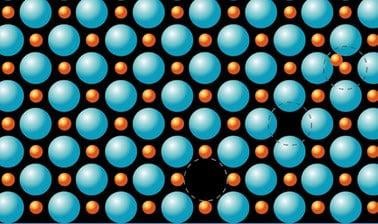
We move on to an exploration of quasi-, plastic, and liquid crystals. Then, we learn about the point defects that are present in all crystals, and we will learn how the presence of these defects lead to diffusion in materials. Next, we will explore dislocations in materials. We will introduce the descriptors that we use to describe dislocations, we will learn about dislocation motion, and will consider how dislocations dramatically affect the strength of materials. Finally, we will explore how defects can be used to strengthen materials, and we will learn about the properties of higher-order defects such as stacking faults and grain boundaries.
What you'll learn
- How we characterize the structure of glasses and polymers
- The principles of x-ray diffraction that allow us to probe the structure of crystals
- How the symmetry of a material influences its materials properties
- The properties of liquid crystals and how these materials are used in modern display technologies
- How defects impact numerous properties of materials—from the conductivity of semiconductors to the strength of structural materials
Course Syllabus
Part 1: An Introduction to Materials Science
Structure of materials roadmap
States of matter and bonding
Part 2: Descriptors
Descriptors: concept and function
Free volume
Pair distribution function
Part 3: Glasses
Glass processing methods
Continuous network model
Network modifiers
Part 4: Polymers
Random walk model
Chain-to-chain end distance
Order and disorder in polymers
Part 5: An Introduction to the Crystalline State
Translational symmetry
The crystalline state in 2D
The crystalline state in 3D
Part 6: Real and Reciprocal Space
Miller indices
Real space
Reciprocal space
Part 7: X-Ray Diffraction
Bragg’s Law
Diffraction examples
Part 8: Symmetry in 2D Crystals
Translation, mirror, glide and rotation symmetry
Part 9: Point groups in 2D
Allowed rotational symmetries in crystals
The 10 2D point groups
An introduction to crystallographic notation
Part 10: Plane groups in 2D
The five 2D lattice types
The 17 plane groups in 2D
Part 11: Symmetry in 3D Crystals
Inversion, Roto-Inversion, and Roto-reflection
Screw symmetry
Part 12: 3D Space Point groups
Space point groups
Stereographic projection
Part 13: 3D Space Groups
Crystal lattices
Space groups
Part 14: An Introduction to Tensors
Symmetry constraints on materials properties
Coordinate transformation
Part 15: Quasi, Plastic, and Liquid Crystals
Quasi crystals
An introduction to plastic and liquid crystals
Liquid crystal descriptors
Liquid crystal applications
Part 16: Introduction to Point Defects
Thermodynamics of point defects
Vacancies, interstitials, solid solutions and nonequilibrium defects
Part 17: Ionic Point Defects & Diffusion
Kröger-Vink notation
Extrinsic defects
Diffusion
Part 18: Dislocations and Deformation
Intro d shear stress
Part 19: Strengthening & Surface Energy
Strengthening Mechanisms
Surface free energy
Wulff shape
Part 20: 2-Dimensional Defects
Surface defects
Stacking faults
Grain boundaries
Surface reconstruction
Linear defects in liquid crystals