Seismic tomography: look inside the Earth (Coursera)

Seismic tomography: look inside the Earth (Coursera)

Welcome to the course “Seismic tomography: Look inside the Earth”. We will speak about the use of seismic tomography and its mathematical base, we’ll learn about earthquakes and find out how they start, also we’ll conduct some experiments and go on an expedition to Kamchatka. By the end of the course you’ll know the basics of seismology and how to use the technical instruments and programs in practice. So it doesn't matter what level you’re on. Complex things are explained with simple and accessible language.

Class Deals by MOOC List - Click here and see Coursera's Active Discounts, Deals, and Promo Codes.

Geophysists, mathematicians, geologists, geochemists, petrologists, engineers and everyone interested will find a lot of new information and get the access to the author's research methods and scientific algorithms that are used by seismologists all over the world. The adventure begins!

Syllabus

WEEK 1: Tomography as a tool to look inside the Earth
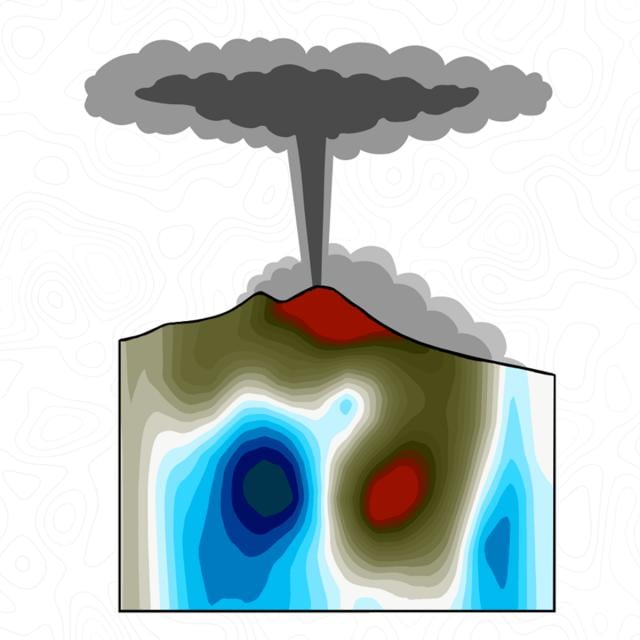
WEEK 2: Look inside a volcano
WEEK 3: Tomography: the must-know things
WEEK 4: Doing tomography with natural sources
Go to Class
MOOC List is learner-supported. When you buy through links on our site, we may earn an affiliate commission.

Related Courses

Photovoltaic Systems (Coursera) Coursera
Technical University of Denmark - DTU

Photovoltaic Systems (Coursera)

This course offers you advanced knowledge within the field of photovoltaic system technology. We'll learn about the solar resource and how photovoltaic energy conversion is used to produce electric power. From this fundamental starting point we'll cover the design and fabrication of different solar cell and module technologies, the various photovoltaic system components, how to design a photovoltaic plant and carry out energy yield simulations, essentials in energy economics, O&M and reliability assessment, as well as the role of photovoltaic energy in sustainable energy systems.

May 26th 2026
5-12 Weeks
Sustainability through Soccer: Systems-Thinking in Action (Coursera) Coursera
University of Virginia

Sustainability through Soccer: Systems-Thinking in Action (Coursera)

This course takes learners on a journey through a progression of systems-thinking and sustainability concepts. Using the beautiful game of soccer as an analogy, we'll work together to illuminate real-world interdependencies (such as between climate change and human rights), building the chain of concepts in a fun, accessible way. Soccer nerds and newbies alike will be entertained and, ultimately, rewarded with the epiphanies that come from seeing in systems more clearly.

May 25th 2026
4 Weeks
The Worldview of Thomas Berry: The Flourishing of the Earth Community (Coursera) Coursera
Yale University

The Worldview of Thomas Berry: The Flourishing of the Earth Community (Coursera)

Thomas Berry (1914-2009) was a historian of world religions and an early voice awakening moral sensibilities to the environmental crisis. He is known for articulating a “new story” of the universe that explores the implications of the evolutionary sciences and cultural traditions for creating a flourishing future. This course investigates Berry’s life and thought in relation to the Journey of the Universe project.

May 25th 2026
5-12 Weeks
Origens da Vida no Contexto Cósmico (Coursera) Coursera
Universidade de São Paulo, Brasil

Origens da Vida no Contexto Cósmico (Coursera)

Origens da vida no contexto cósmico é um curso desenvolvido no Instituto de Astronomia, Geofísica e Ciências Atmosféricas da Universidade de São Paulo, com o objetivo de apresentar os mais recentes avanços científicos na compreensão deste intrigante assunto. É um curso com formato multidisciplinar que o levará a compreender melhor os aspectos envolvidos no surgimento de vida na Terra e no possível surgimento de vida em outros planetas.

Jun 8th 2026
4 Weeks
A Circular Economy of Metals: Towards a Sustainable Societal Metabolism (Coursera) Coursera
Leiden University

A Circular Economy of Metals: Towards a Sustainable Societal Metabolism (Coursera)

Metals are present everywhere around us and are one of the major materials upon which our economies are built. Economic development is deeply coupled with the use of metals. During the 20th century the variety of metal applications in society grew rapidly. In addition to mass applications such as steel in buildings and aluminium in planes, more and more different metals are in use for innovative technologies such as the use of the specialty metal indium in LCD screens. A lot of metals will be needed in the future. It will not be easy to provide them. In particular in emerging economies, but also in industrialized countries, the demand for metals is increasing rapidly. Mining and production activities expand, and with that also the environmental consequences of metal production. In this course, we will explore those consequences and we will also explore options to move towards a more sustainable system of metals production and use.

Jun 15th 2026
5-12 Weeks
Our Earth's Future (Coursera) Coursera
American Museum of Natural History

Our Earth's Future (Coursera)

Our Earth’s Future is about the science of climate change and how to talk about it. You will learn from scientists in the fields of climatology, oceanography, Earth science, and anthropology who study how climate change is affecting people, populations, and ways of life. Explore the multiple lines of evidence for the human-induced climate change that is happening today, and consider what that means for the future of our planet. At the end of this course you will be able to understand key scientific principles, identify and address misconceptions, and contribute confidently to conversations about climate change.

Jun 15th 2026
5-12 Weeks
Getting started in cryo-EM (Coursera) Coursera
Caltech

Getting started in cryo-EM (Coursera)

This class covers the fundamental principles underlying cryo-electron microscopy (cryo-EM) starting with the basic anatomy of electron microscopes, an introduction to Fourier transforms, and the principles of image formation. Building upon that foundation, the class then covers the sample preparation issues, data collection strategies, and basic image processing workflows for all 3 basic modalities of modern cryo-EM: tomography, single particle analysis, and 2-D crystallography.

Jun 1st 2026
5-12 Weeks
The Dynamic Earth: A Course for Educators (Coursera) Coursera
American Museum of Natural History

The Dynamic Earth: A Course for Educators (Coursera)

The AMNH course The Dynamic Earth: A Course for Educators provides students with an overview of the origin and evolution of the Earth. Informed by the recently released Next Generation Science Standards, this course examines geological time scales, radiometric dating, and how scientists “read the rocks.” We will explore dramatic changes in the Earth over the last 4 billion years, including how the evolution of life on Earth has affected its atmosphere. In addition to looking at geology on a global scale, participants will take to their own backyards to explore and share their local geologic history.

Jun 1st 2026
4 Weeks
Oil & Gas Industry Operations and Markets (Coursera) Coursera
Duke University

Oil & Gas Industry Operations and Markets (Coursera)

The oil and gas industry has an enormous impact on all aspects of daily life. Individuals, corporations, and national governments make financial and policy decisions based on the cost, use, and availability of these two natural resources. This two-week course looks at the two most fundamental aspects of the oil and gas industry, its operations and markets, each of which is addressed as a separate module in the course.

Jun 10th 2026
2 Weeks
The Effect of Fires on People, Property and the Environment (Coursera) Coursera
University of Maryland, College Park

The Effect of Fires on People, Property and the Environment (Coursera)

Fires impact people, property and the environment in all countries around the world. In some cases, the resulting losses are extraordinary, causing hundreds of deaths, widespread damage to property and contents and significant impacts on the environment. More often, fires may cause a single casualty or affect a single home, though the effects are still highly significant to those affected and collectively are substantial. This course will provide an overview of the challenges posed by fire as well as the fire safety solutions that are available to meet those challenges.

May 25th 2026
5-12 Weeks
Planet Earth ... and You! (Coursera) Coursera
University of Illinois at Urbana-Champaign

Planet Earth ... and You! (Coursera)

Earthquakes, volcanoes, mountain building, ice ages, landslides, floods, life evolution, plate motions—all of these phenomena have interacted over the vast expanses of deep time to sculpt the dynamic planet that we live on today. Planet Earth presents an overview of several aspects of our home, from a geological perspective. We begin with earthquakes—what they are, what causes them, what effects they have, and what we can do about them. We will emphasize that plate tectonics—the grand unifying theory of geology—explains how the map of our planet's surface has changed radically over geologic time, and why present-day geologic activity—including a variety of devastating natural disasters such as earthquakes—occur where they do. We consider volcanoes, types of eruptions, and typical rocks found there.

Jun 1st 2026
5-12 Weeks