The Role of Culture in Teaching English Learners (Coursera)

Offered by Rice University,
The Role of Culture in Teaching English Learners (Coursera)

This course is designed for early career teachers (0-3 years of experience) to learn about the foundations of culture and the key role that culture plays in teaching English learners. You will also learn about the connection between language and culture and how to appropriately incorporate cultural topics into instruction. We will discuss how culture is an asset in the classroom and ways to celebrate diversity with students.

Class Deals by MOOC List - Click here and see Coursera's Active Discounts, Deals, and Promo Codes.

Culture and language are inextricably linked. As teachers, we are often faced with the challenge of teaching both language and elements of culture to our English learners. When these students join our classes, they come equipped with knowledge about their own culture, which may or may not have the same norms and values as the new one they find themselves in. It is not our job, as teachers, to prove that one culture is better than another. Instead, it’s our goal to understand how culture influences one’s identity, affirm our students’ identities in the classroom, and use best practices to teach intercultural communicative competence and promote acceptance and respect for those who are different from us.
Throughout this course, you will watch instructional videos and interviews with experienced teachers of English learners. You will read scholarly articles, participate in discussion boards, and complete assignments that will encourage you to think about your practices as a culturally responsive educator. Finally, you will complete this course with a treasure trove of practical tips for integrating culture into your classroom.
By the end of this course, teachers will be better prepared to serve the English learners in their classrooms. They will be able to evaluate curriculum for cultural responsiveness, identify best practices for teaching and assessing intercultural communicative competence, reflect on their own cultural background and how that may influence expectations for students, and create a lesson plan to teach cultural knowledge.
This course is part of the Introduction to Teaching English Learners Specialization.

What you'll learn

  • Discover new ideas for teaching and assessing cultural knowledge and intercultural communicative competence.
  • Learn how to incorporate culturally responsive teaching methods into your everyday classroom practices.
  • Understand the multi-dimensional nature of culture and its importance in teaching English learners.

Syllabus

What Is Culture?
In Module 1, you will learn about the complex construct of culture and the various factors that influence it. We'll explore the concepts of personal, social, cultural, and linguistic identities and how we can affirm our students' identities in the classroom. You will be able to distinguish between the processes of enculturation and acculturation in order to better understand your English learners' perspectives of learning a new culture. We wrap up the module by reflecting on your own cultural background and the ways in which your life experiences and influences relate to your current points of view.

Getting Comfortable with Culture in the Classroom
Module 2 is all about becoming comfortable with culture, for both teachers and students. We'll become aware of possible implicit biases and power dynamics between teacher and students that may impact learning in the classroom. We'll introduce the concept of culture shock and discuss ways to help newcomer English learners adjust to their new learning environment. You will discover how asset-based pedagogy models, including Culturally Responsive Teaching (CRT), can foster academic success for English learners. We wrap up the module by evaluating curriculum for elements of culturally responsive teaching.

Culture and Communication
In module 3, we will learn about the fundamental connection between culture and communication. You'll discover how culture affects language use and how language and thought are windows into cultural points of view. We introduce the crucial construct of intercultural communicative competence (ICC) and best practices to teach and assess it. You'll define a speech community and gain an understanding of the many speech communities your English learners have to navigate on a daily basis. We wrap up the module by evaluating a lesson for elements of ICC.

Incorporating Culture in the Classroom
The final module in the course aims to provide more practical tips for incorporating culture into the classroom across grade levels and subject areas. You will hear from experts about the various ways in which they have implemented culturally responsive teaching in math, STEM, art, and history. We'll review some traditional classroom activities for teaching about culture. You will gain insight into the best methods for and challenges of assessing cultural knowledge and ICC. We'll also highlight awareness of cultural biases in assessment and how to avoid them. The module wraps up with a lesson planning assignment in which you'll be asked to incorporate activities to teach ICC, cultural content knowledge, or implement culturally responsive teaching methods.

Go to Class
MOOC List is learner-supported. When you buy through links on our site, we may earn an affiliate commission.

Related Courses

Teach English Now! Second Language Listening, Speaking, and Pronunciation (Coursera) Coursera
Arizona State University

Teach English Now! Second Language Listening, Speaking, and Pronunciation (Coursera)

In this course, you will be introduced to some of the challenges of teaching and learning listening and speaking, such as paralinguistics, performance variables, reduced and regional forms, and differing types of oral discourse. Don't worry--you'll learn what those mean, too! Then you'll learn how to ease the acquisition of listening and speaking for your students. The course also highlights the powerful opportunity to include pronunciation in listening and speaking classes and offers strategies to incorporate pronunciation activities.

Aug 17th 2026
5-12 Weeks
Copyright for Educators & Librarians (Coursera) Coursera
Duke University,Emory University,University of North Carolina at Chapel Hill

Copyright for Educators & Librarians (Coursera)

Fear and uncertainty about copyright law often plagues educators and sometimes prevents creative teaching. This course is a professional development opportunity designed to provide a basic introduction to US copyright law and to empower teachers and librarians at all grade levels. Course participants will discover that the law is designed to help educators and librarians.

Aug 17th 2026
5-12 Weeks
Business English: Finance and Economics (Coursera) Coursera
Arizona State University

Business English: Finance and Economics (Coursera)

Do you work in finance or interact with finance professionals? Is it necessary to speak, write or understand English in your career? Follow the authentic characters in this course as they work through common business situations in finance and economics. Learn from your successes and failure, and think critically about your own communication options.

Aug 17th 2026
5-12 Weeks
Translation in Practice (Coursera) Coursera
Nanjing University

Translation in Practice (Coursera)

This course offers you basic but valuable techniques used by a good translator in the translation between English and Chinese. We’ll discuss what is translation, what is good translation, and learn about how to produce good translations. All the examples used in this course are taken from the course instructor's own translations of various genres and topics of writing.

Aug 10th 2026
5-12 Weeks
Business English: Marketing and Sales (Coursera) Coursera
Arizona State University

Business English: Marketing and Sales (Coursera)

If you work in marketing, sales, or advertising, you already know that effective communication is a requirement. This can be even more difficult when expressing your ideas in a persuasive manner in English. In this course, you will learn to use English more efficiently while joining successful global professionals around the world.

Aug 17th 2026
5-12 Weeks
Educating Deaf Children: Becoming an Empowered Teacher (Coursera) Coursera
University of Cape Town

Educating Deaf Children: Becoming an Empowered Teacher (Coursera)

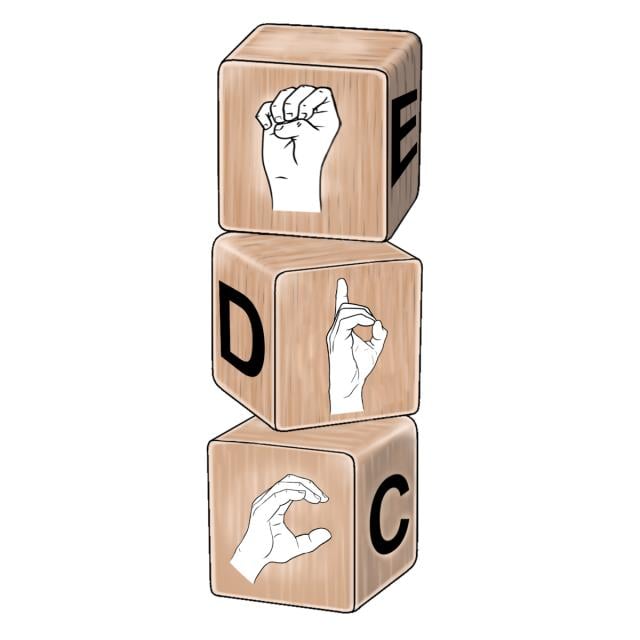
Many Deaf children around the world still leave school functionally illiterate. In some cases there is no allowance made for education of Deaf children at all. This 4 week course provides you with invaluable knowledge and skills about teaching Deaf children. You will learn about the importance of Deaf culture and community, the need for a language rich environment for the Deaf child from as young as possible, and that having access to sign language can help Deaf children academically, emotionally, and socially.

Aug 17th 2026
4 Weeks
Essentials for English Speeches and Presentations 英语演讲与演示 (Coursera) Coursera
Peking University

Essentials for English Speeches and Presentations 英语演讲与演示 (Coursera)

Students must learn essential knowledge and skills to deliver an impressive English speech or presentation for academic purposes, job hunting, and business occasions. Global perspectives and inter-cultural communication skills are taught here to facilitate most Chinese English learners. 学习在学术交流、求职、海外留学与商务场景下进行英文演讲与演示所必备的知识与技能,强化中国学生的全球化视角与跨文化沟通技巧。

Aug 10th 2026
5-12 Weeks
Writing in English at University (Coursera) Coursera
Lund University

Writing in English at University (Coursera)

Acquiring good academic research and writing skills early on is essential for your success both at university and in your professional life. This course aims: - to give you an understanding of the conventions of academic writing in English and to teach you the components and benefits of what is called process writing. - to help you to put together your own “toolbox” of academic writing skills, as well as to give you a chance to test out these tools and to reflect on your own development as a writer. - to encourage reflection on discipline specific conventions; although the course deals with generic skills, you will be able to apply these generic skills to meet the particular needs of your own discipline.

Aug 10th 2026
4 Weeks
Assessment in Higher Education: Professional Development for Teachers (Coursera) Coursera
Erasmus University Rotterdam

Assessment in Higher Education: Professional Development for Teachers (Coursera)

Are you a teacher in higher education wanting to get the best out of your students and assessments? Then on behalf of Risbo, Erasmus University Rotterdam, we would like to welcome you to this MOOC on Assessment in Higher Education. In this MOOC we will guide you through the different phases of preparing, creating and evaluating the assessments in your course.

Aug 17th 2026
5-12 Weeks
THINK GLOBAL: TEACHERS TRAINING COURSE (IDP-ICE) (Coursera) Coursera
University of Barcelona

THINK GLOBAL: TEACHERS TRAINING COURSE (IDP-ICE) (Coursera)

A group of seven European partners from Catalonia, Belgium, and Wales worked together on the Erasmus+ funded ‘Think Global’ project on global competence. The project seeks to address the following research question through development and piloting of practical classroom activities: What is global competence, and how can it be learned effectively?

Aug 17th 2026
5-12 Weeks