Robotic Vision (QUT)

Robotic Vision (QUT)

How can we make robots see like we do? Learn how we make robots perceive the world around them in this exciting six-week course, delivered by Professor Peter Corke. Robotic Vision introduces you to the field of computer vision and the mathematics and algorithms that underpin it. You'll learn how to interpret images to determine the colour, size, shape and position of objects in the scene.We'll work with you to build an intelligent vision system that can recognise objects of different colours and shapes.

A newer version of this course is available here:
Robotic Vision: Principles of Vision

This course is delivered over six weeks. Each week will include two video lectures, as well as quizzes and MATLAB exercises.
Week 1: Robot vision and getting images into a computer
Week 2: Image processing and spatial operators
Week 3: Feature extraction and what is colour?
Week 4: Image formation and image geometry
Week 5: 3D vision and advanced image processing operations
Week 6: Vision and motion.
To complete the MOOC you should know some basic programming (either of MATLAB or of an object-oriented programming language) and some of the following areas of maths: matrices, vectors and spaces, eigenvalues and eigenvectors. We’ve included links to Khan Academy on these topics. We believe this knowledge will be necessary to complete the course, and recommend that you view these before Week 1 begins, but you might prefer to watch them on an ‘as needed’ basis after you view our content.

  • Vectors
  • Matrices:

. basic matrix operations including multiplication and inversion
. zero and identity matrices
. vector transformations with matrices
. familiarity with the concepts of eigenvalues and eigenvectors.


Note: This course is currently not available.

Related Courses

Financing and Initiating Major Engineering Projects (Coursera) Coursera
University of Leeds

Financing and Initiating Major Engineering Projects (Coursera)

To successfully lead major projects you have to understand typical investor and project financing approaches. In this course, you’ll learn to interpret some key contractual instruments that are relevant for the financing of major engineering projects so that you are in a position to ensure the financially secure delivery of your project. You’ll explore the concept of “time value of money” and be able to compute key indicators such as “Pay-back time”, “Net Present value” and “Internal Rate of Return”.

Nov 9th 2026
5-12 Weeks
Oral Communication for Engineering Leaders (Coursera) Coursera
Rice University

Oral Communication for Engineering Leaders (Coursera)

Taught by Rice University communication faculty from the Rice Center for Engineering Leadership (RCEL). This course covers core topics in oral communication: Communication strategy, content, data visualization, and delivery. You’ll learn key principles in: Creating a communication strategy; Developing a clear message and organizing persuasive content; Creating strong visual support; Presenting data effectively; Presenting professionally and confidently; Handling formal presentations, giving pitches, speaking extemporaneously, managing online presentations, and lowering public speaking anxiety.

Nov 16th 2026
5-12 Weeks
Hydrogen for Mobility (IFP School) Other Providers
IFP School

Hydrogen for Mobility (IFP School)

Hydrogen is a hot topic nowadays. Why? Because society must find solutions to reduce its impact on climate change and because there is now a political will (in Europe) to develop a hydrogen economy. The mobility sector, and in particular the heavy mobility, is concerned by this transformation. After some general information about hydrogen production and the hydrogen economy, you will gain a deep understanding of the hydrogen solution for mobility. We will explore both the fuel cells and the hydrogen thermal engine solutions as a mean to reduce the environmental footprint of heavy mobility.

Jan 16th 2023
1 Week
Protecting the World: Introducing Corrosion Science and Engineering (Coursera) Coursera
University of Manchester

Protecting the World: Introducing Corrosion Science and Engineering (Coursera)

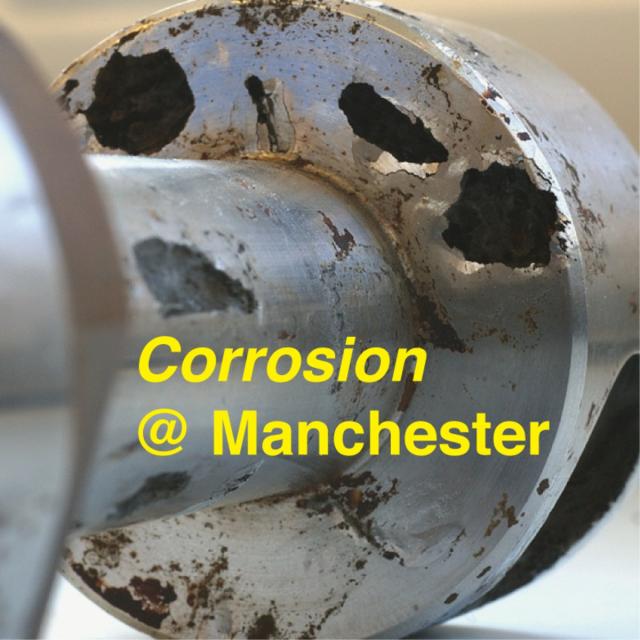
If you have ever encountered rusty car bodies, leaking pipes, tarnished silverware or the green patina of a copper roof then you have experienced corrosion in action. This course, from the Corrosion@Manchester team in collaboration with AkzoNobel, will teach you why metals corrode, what the environmental consequences are, how much corrosion costs and how corrosion can be controlled. It is designed for students, householders, teachers, professionals and anyone in-between.

Nov 16th 2026
4 Weeks
Nanotechnology and Nanosensors, Part 2 (Coursera) Coursera
Technion - Israel Institute of Technology

Nanotechnology and Nanosensors, Part 2 (Coursera)

Learn about novel sensing tools that make use of nanotechnology to screen, detect and monitor various events in personal or professional life. Together, we will lay the groundwork for infinite innovative applications, starting from diagnosis and treatments of diseases, continuing with quality control of goods and environmental aspects, and ending with monitoring security issues.

Nov 2nd 2026
5-12 Weeks
Quantitative Formal Modeling and Worst-Case Performance Analysis (Coursera) Coursera
EIT Digital

Quantitative Formal Modeling and Worst-Case Performance Analysis (Coursera)

Welcome to Quantitative Formal Modeling and Worst-Case Performance Analysis. In this course, you will learn about modeling and solving performance problems in a fashion popular in theoretical computer science, and generally train your abstract thinking skills. After finishing this course, you have learned to think about the behavior of systems in terms of token production and consumption, and you are able to formalize this thinking mathematically in terms of prefix orders and counting functions. You have learned about Petri-nets, about timing, and about scheduling of token consumption/production systems, and for the special class of Petri-nets known as single-rate dataflow graphs, you will know how to perform a worst-case analysis of basic performance metrics, like throughput, latency and buffering.

Nov 16th 2026
4 Weeks
Major Engineering Projects: Governance, Risk and Scope (Coursera) Coursera
University of Leeds

Major Engineering Projects: Governance, Risk and Scope (Coursera)

Gain confidence when dealing with stakeholders of major projects by learning to identify and manage those that are involved in the project planning and delivery. This course will enable you to explore project governance in theory and practice. Through real life examples you’ll understand how the critical challenges of the governance in major projects are resolved.

Nov 9th 2026
5-12 Weeks
Image and video processing: From Mars to Hollywood with a stop at the hospital (Coursera) Coursera
Duke University

Image and video processing: From Mars to Hollywood with a stop at the hospital (Coursera)

In this course, you will learn the science behind how digital images and video are made, altered, stored, and used. We will look at the vast world of digital imaging, from how computers and digital cameras form images to how digital special effects are used in Hollywood movies to how the Mars Rover was able to send photographs across millions of miles of space.

Nov 2nd 2026
5-12 Weeks