EdX

The Rise of Superheroes and Their Impact On Pop Culture (edX)

Offered by Smithsonian, SmithsonianX,
The Rise of Superheroes and Their Impact On Pop Culture (edX)

EXCLUSIVE! When you complete a verified certificate in this course, you will receive digital artwork from a current comic book artist, digitally signed by Stan Lee and Michael Uslan, and created exclusively for this course! Join the Smithsonian, and comic book industry legend Stan Lee, to explore the history of the comic book and the rise of superheroes.

Class Deals by MOOC List - Click here and see EdX's Active Discounts, Deals, and Promo Codes.

The ancient gods of Egyptian, Greek and Roman myths still exist, but today, they have superpowers, human foibles and secret identities. They come from comic books and graphic novels, and have taken over pop culture on the stage, screen, video games, and animation.
From Superman® and Spider-Man®, to The Avengers® and The Hulk® and beyond, who are these heroes? And, how have they evolved from folklore and myth, across all cultures and religions?

Learn from Smithsonian and industry experts including:

  • Stan Lee, who was one of the creators of the modern superhero template. His early comics featuring Spider-Man, Iron Man®, The Hulk, Thor®, and The Avengers led Marvel to success. He continues to reinvent himself to create modern global superheroes and appear in cameos in superhero films and TV, such as Avengers: Age of Ultron.
  • Michael Uslan, executive producer of top grossing, award winning movies, including The Dark Knight series, Lego® Movie, the animated Batman films and Batman® VS Superman.

In this self-paced course, we explore the following questions:

  • Why did superheroes first arise in 1938 and experience what we refer to as their “Golden Age” during World War II?
  • Why did the superhero genre ebb and flow in popularity over the decades?
  • How have comic books, published weekly since the mid-1930’s, mirrored a changing American society, reflecting our mores, slang, fads, biases and prejudices?
  • Why was the comic book industry nearly shut down in the McCarthy Era of the 1950’s?
  • How did our superheroes become super-villains in the eyes of the government, clergy, educators, and parents of the mid-20th Century?
  • When and how did comic books become acceptable again, and eventually become valid teaching tools in universities and schools?
  • When and how did comic book artwork become accepted as a true American art form as indigenous to this country as jazz?
  • Finally, when and how did comic books become “cool” and the basis for blockbuster movies, hit TV series, top-selling video games, and acclaimed animation, while also impacting fashion and style- and even the moral and ethical codes of children- around the globe?

For the first time ever, the Smithsonian's National Museum of American History is excited to offer the opportunity to go into the collection and see why superheroes are a dominant cultural force in today’s world. Not only will students be taught by Smithsonian experts, and three industry leaders - Stan Lee, Michael Uslan and David Uslan, but they will also get to ask questions and chat online with them around coursework. At last, fans, students and seekers of knowledge have the opportunity to enroll in the ultimate comic book course.

What you'll learn:

  • The history and origins of the first superheroes and comic books, and how they changed over time
  • The evolution of American society from the Depression to today, as viewed through the lens of the comic book genre
  • How the current globalization and diversity of the next generation of superheroes impacts our storytelling across all mediums
  • How to apply historical examples to create superheroes for the present day
Go to Class
MOOC List is learner-supported. When you buy through links on our site, we may earn an affiliate commission.

Related Courses

Chinese History From Warring States to the Tang Dynasty | 资治通鉴 (edX) EdX
Tsinghua University,TsinghuaX

Chinese History From Warring States to the Tang Dynasty | 资治通鉴 (edX)

Guides you through the Chinese masterpiece _Zizhi Tongjian, _an unprecedented work of governance and philosophical thinking spanning from the Warring States Period to the Tang Dynasty. Through the teacher's guided reading, students can go deep into the interior of this classic text, gain an overview of thousands of years of history, and improve their literacy in Chinese studies.

Self Paced
Self-Paced
China and Communism (edX) EdX
HarvardX,Harvard University

China and Communism (edX)

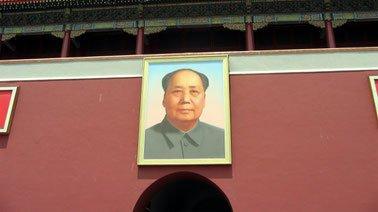
Explore the Maoist period of China, from the Communist Party to the death of Mao and the reopening of China. How did the Communists conquer China? What role does culture play? What are the successes and failures of the Chinese Communist Party after seizing power in 1949? What constitutes liberation?

Self Paced
Self-Paced
How to Make a Comic Book (Project-Centered Course) (Coursera) Coursera
High Tech High Graduate School of Education

How to Make a Comic Book (Project-Centered Course) (Coursera)

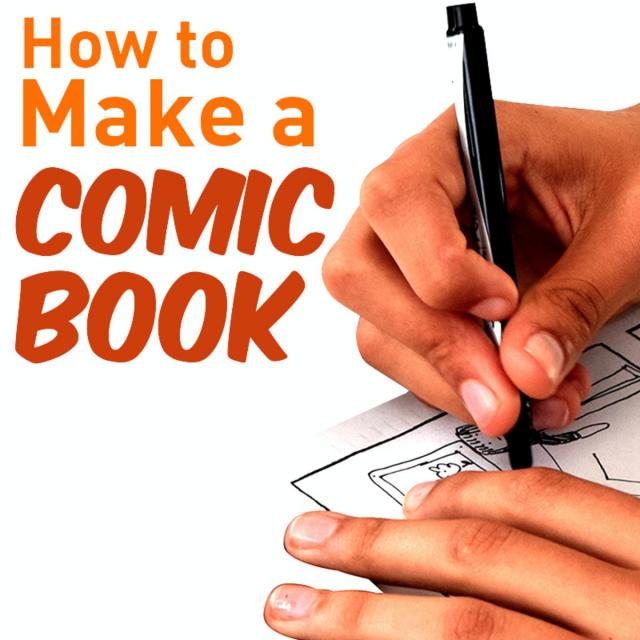
What you’ll achieve: In this project-centered course, you will create an original four page minicomic designed around a short story of your choosing. What you’ll need to get started: This project-centered course is designed for all-age learners (high school age and above, at least 13 years of age) who are interested in learning how to make a comic book, but have never completed one before. While comic books can be created with any kinds of materials, we recommend that learners have the following materials available to complete the project: at least one ream of 8.5x11 copy paper, #2 pencils and eraser, Sharpie-type fine point pens, ruler with inch measurements, and adjustable binding stapler. Learners should also have access to a printer and scanner (to facilitate digitizing work to be shared with peers on Coursera).

Oct 26th 2026
5-12 Weeks
Pop Art (FutureLearn) FutureLearn
Université du Québec à Montréal - UQAM,Université Paris Lumières,Centre Pompidou

Pop Art (FutureLearn)

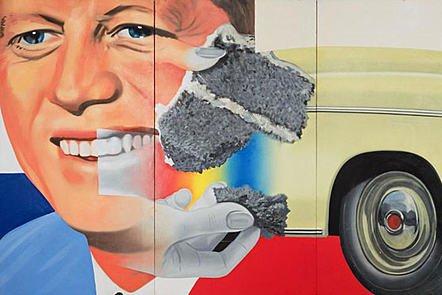
Discover a new side to the colourful history of Pop Art alongside experts at the world-famous Centre Pompidou. Think you know Pop Art? Think again. Pop Art changed the world – influencing fields as diverse as graphic design, philosophy, music, and advertising. But how did Pop Art really begin? And what do we know about its most famous artists?

Oct 5th 2020
4 Weeks
Comic Books, Geek Culture, and the Fandom Imaginary (Coursera) Coursera
University of Colorado Boulder

Comic Books, Geek Culture, and the Fandom Imaginary (Coursera)

"Comic Books, Geek Culture, and the Fandom Imaginary" explores some of the conventional framings of “fandom” (from comic book obsessives to cosplayers) and the cultural histories that sustain it. It also explores the dark side of these dynamics, looking at what can happen when fandom turns toxic in pop culture spaces. You will continue to apply frameworks of self-reflection and close reading/analysis to the study of contemporary popular culture, and explore how those frameworks provide tools for understanding the self as much as our cultural surroundings.

Oct 12th 2026
3 Weeks
English Grammar and Style (edX) EdX
University of Queensland,UQx

English Grammar and Style (edX)

Learn key concepts and strategies in grammar and style to help enhance your writing and confidently respond to the demand of high levels of literacy in the 21st century. With the rise of social media and the Internet, many people are writing more today for different mediums than ever before. We’ll present materials that cover grammatical principles, word usage, writing style, sentence and paragraph structure, and punctuation.

Self Paced
Self-Paced
Academic and Business Writing (edX) EdX
University of California, Berkeley,BerkeleyX

Academic and Business Writing (edX)

An introduction to academic and business writing for English Language Learners, focusing on grammar, vocabulary, structure, editing, and publication. College Writing 2.2x providesan introduction to academic and business writing for English Language Learners. In this course, students focus on understanding the demands of different styles of writing, andwork to improve grammatical correctness, vocabulary development, and revision and editing skills.

Self Paced
Self-Paced
Visualizing Postwar Tokyo, Part 2 (edX) EdX
The University of Tokyo,UTokyoX

Visualizing Postwar Tokyo, Part 2 (edX)

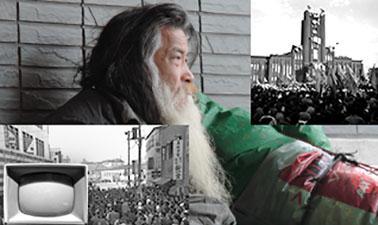
Identify the geopolitics historically involved in the practice of “visualizing postwar Tokyo.” The history of postwar Tokyo reveals an essential feature of the modern city, i.e., the city as a place of visualities. In postwar Tokyo, countless gazes fell upon others; gazes from and upon Americans and the Emperor, gazes going up skyscrapers or rushing aggressively through the cityscape, and gazes twining and wriggling among classes, genders, and ethnic groups in downtown Tokyo.

Self Paced
Self-Paced
Introduction to Psychology | 心理学概论 (edX) EdX
Tsinghua University,TsinghuaX

Introduction to Psychology | 心理学概论 (edX)

Explore psychological research to understand basic theories and methods of scientific psychology with a strong focus on positive psychology. 本课程以心理学的经典理论和最新实证研究为蓝本,以积极心理学的视角,概览式地介绍科学心理学的基本理论、基本方法、研究领域和研究热点

Self Paced
Self-Paced
Cosmopolitan Tang: Aristocratic Culture in China (edX) EdX
HarvardX,Harvard University

Cosmopolitan Tang: Aristocratic Culture in China (edX)

Explore the reunification of China under the Tang with a focus on aristocratic culture — from poetry to calligraphy to literature. By the Tang period, China was divided into northern and southern dynasties with different rulers and political systems. The north was conquered by relatively unsophisticated barbarians, but in the south, the aristocratic families established a refined appreciation of writing and literature.

Self Paced
Self-Paced
Circular Economy: An Introduction (edX) EdX
Delft University of Technology,DelftX

Circular Economy: An Introduction (edX)

Ready to make a difference? Learn how to contribute to a sustainable economic system by implementing novel business and design approaches! Our global society is not sustainable. We all know about the challenges we’re facing: waste, climate change, resource scarcity, loss of biodiversity. At the same time, we want to sustain our economies and offer opportunities for a growing world population. This course is about providing solutions we really believe in: a Circular Economy.

Self Paced
Self-Paced