Quantifying Relationships with Regression Models (Coursera)

Quantifying Relationships with Regression Models (Coursera)

This course will introduce you to the linear regression model, which is a powerful tool that researchers can use to measure the relationship between multiple variables. We’ll begin by exploring the components of a bivariate regression model, which estimates the relationship between an independent and dependent variable. Building on this foundation, we’ll then discuss how to create and interpret a multivariate model, binary dependent variable model and interactive model. We’ll also consider how different types of variables, such as categorical and dummy variables, can be appropriately incorporated into a model.

Class Deals by MOOC List - Click here and see Coursera's Active Discounts, Deals, and Promo Codes.

Overall, we’ll discuss some of the many different ways a regression model can be used for both descriptive and causal inference, as well as the limitations of this analytical tool. By the end of the course, you should be able to interpret and critically evaluate a multivariate regression analysis.
Course 3 of 5 in the Data Literacy Specialization.

Syllabus

WEEK 1
Regression Models: What They Are and Why We Need Them
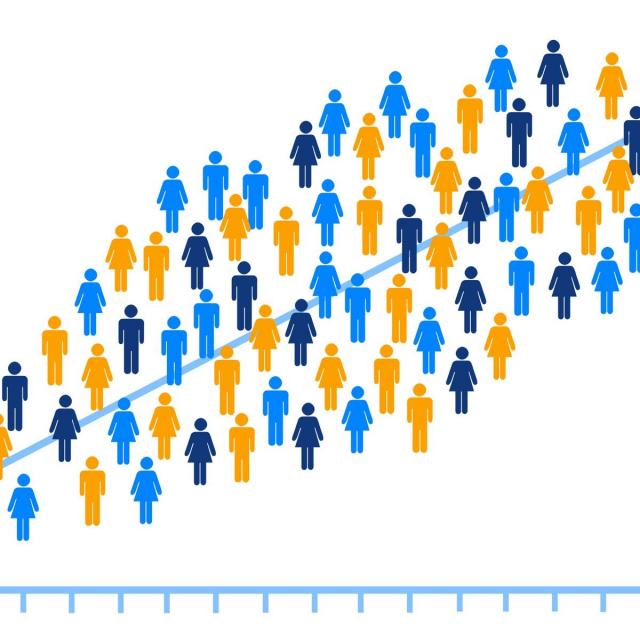
While graphs are useful for visualizing relationships, they don't provide precise measures of the relationships between variables. Suppose you want to determine how an outcome of interest is expected to change if we change a related variable. We need more than just a scatter plot to answer this question. What should you do, for example, if you want to calculate whether air quality changes when vehicle emissions decline? Or if you want to calculate how consumer purchasing behavior changes if a new tax policy is implemented? To calculate these predicted effects, we can use a regression model. This module will first introduce correlation as an initial means of measuring the relationship between two variables. The module will then discuss prediction error as a framework for evaluating the accuracy of estimates. Finally, the module will introduce the linear regression model, which is a powerful tool we can use to develop precise measures of how variables are related to each other.

WEEK 2
Fitting and Evaluating a Bivariate Regression Model
Now that you've got a handle on the basics of regression analysis, the next step is to consider how to evaluate and modify a basic regression model. This module will introduce you to a common measure of model fit and the three core assumptions of regression analysis. In addition, we'll explore the special circumstance of conducting a regression analysis with a binary (AKA dummy) treatment variable. Dummy variables, which take on two values, are frequently used in statistics. Understanding how to use and interpret dummy variables provides a foundation for developing a multivariate regression model, which we'll get to in the next module.

WEEK 3
Multivariate Regression Models
The bivariate regression model is an essential building block of statistics, but it is usually insufficient in practice as a useful model for descriptive, causal or predictive inference. This is because there are usually multiple variables that impact a particular dynamic. Whether you are modeling political behavior, environmental processes or drug treatment outcomes, it is almost always necessary to account for multiple influences on an outcome of interest. This module will introduce the multivariate model of regression analysis and explain the appropriate ways to interpret and evaluate the results from a multivariate analysis.

WEEK 4
Extensions of the Multivariate Model
Once you've mastered the OLS multivariate model, you're ready to learn about a wide array of regression modeling techniques. Remember, researchers should always employ modeling tools that best enable them to answer the question at hand. This module will focus on two tools in particular, interaction terms and models for binary dependent variables. Keep in mind, however, that there are numerous regression modeling tools that you can learn and implement based on the research question you're trying to answer. After you've developed a solid understanding of regression basics, you should feel capable of expanding this knowledge base as you move forward as a producer and consumer of analytics.
Go to Class
MOOC List is learner-supported. When you buy through links on our site, we may earn an affiliate commission.

Related Courses

Teaching Impacts of Technology: Relationships (Coursera) Coursera
University of California, San Diego

Teaching Impacts of Technology: Relationships (Coursera)

In this course you’ll focus on how “smart” devices have changed how we interact with others in personal ways, impacting how we stay connected in our increasingly mobile society. This will be done through a series of paired teaching sections, exploring a specific “Impact of Computing” in your typical day and the “Technologies and Computing Concepts” that enable that impact, all at a K12-appropriate level.

Jun 3rd 2026
4 Weeks
Machine Learning: Regression (Coursera) Coursera
University of Washington

Machine Learning: Regression (Coursera)

Case Study - Predicting Housing Prices. In our first case study, predicting house prices, you will create models that predict a continuous value (price) from input features (square footage, number of bedrooms and bathrooms,...). This is just one of the many places where regression can be applied. Other applications range from predicting health outcomes in medicine, stock prices in finance, and power usage in high-performance computing, to analyzing which regulators are important for gene expression.

Jun 1st 2026
5-12 Weeks
Introduction to Machine Learning (Coursera) Coursera
Duke University

Introduction to Machine Learning (Coursera)

This course will provide you a foundational understanding of machine learning models (logistic regression, multilayer perceptrons, convolutional neural networks, natural language processing, etc.) as well as demonstrate how these models can solve complex problems in a variety of industries, from medical diagnostics to image recognition to text prediction.

Jun 5th 2026
5-12 Weeks
Foundations: Data, Data, Everywhere (Coursera) Coursera
Google

Foundations: Data, Data, Everywhere (Coursera)

This is the first course in the Google Data Analytics Certificate. These courses will equip you with the skills you need to apply to introductory-level data analyst jobs. Organizations of all kinds need data analysts to help them improve their processes, identify opportunities and trends, launch new products, and make thoughtful decisions. In this course, you’ll be introduced to the world of data analytics through hands-on curriculum developed by Google. The material shared covers plenty of key data analytics topics, and it’s designed to give you an overview of what’s to come in the Google Data Analytics Certificate. Current Google data analysts will instruct and provide you with hands-on ways to accomplish common data analyst tasks with the best tools and resources.

Jun 2nd 2026
5-12 Weeks
Regression Modeling in Practice (Coursera) Coursera
Wesleyan University

Regression Modeling in Practice (Coursera)

This course focuses on one of the most important tools in your data analysis arsenal: regression analysis. Using either SAS or Python, you will begin with linear regression and then learn how to adapt when two variables do not present a clear linear relationship. You will examine multiple predictors of your outcome and be able to identify confounding variables, which can tell a more compelling story about your results. You will learn the assumptions underlying regression analysis, how to interpret regression coefficients, and how to use regression diagnostic plots and other tools to evaluate the quality of your regression model. Throughout the course, you will share with others the regression models you have developed and the stories they tell you.

Jun 5th 2026
4 Weeks
Regression Models (Coursera) Coursera
Johns Hopkins University

Regression Models (Coursera)

Linear models, as their name implies, relates an outcome to a set of predictors of interest using linear assumptions. Regression models, a subset of linear models, are the most important statistical analysis tool in a data scientist’s toolkit. This course covers regression analysis, least squares and inference using regression models.

Jun 1st 2026
4 Weeks
Practical Machine Learning (Coursera) Coursera
Johns Hopkins University

Practical Machine Learning (Coursera)

One of the most common tasks performed by data scientists and data analysts are prediction and machine learning. This course will cover the basic components of building and applying prediction functions with an emphasis on practical applications. The course will provide basic grounding in concepts such as training and tests sets, overfitting, and error rates.

Jun 1st 2026
4 Weeks
Genomic Data Science and Clustering (Bioinformatics V) (Coursera) Coursera
University of California, San Diego

Genomic Data Science and Clustering (Bioinformatics V) (Coursera)

How do we infer which genes orchestrate various processes in the cell? How did humans migrate out of Africa and spread around the world? In this class, we will see that these two seemingly different questions can be addressed using similar algorithmic and machine learning techniques arising from the general problem of dividing data points into distinct clusters.

Jun 1st 2026
3 Weeks
Data Visualization and Communication with Tableau (Coursera) Coursera
Duke University

Data Visualization and Communication with Tableau (Coursera)

One of the skills that characterizes great business data analysts is the ability to communicate practical implications of quantitative analyses to any kind of audience member. Even the most sophisticated statistical analyses are not useful to a business if they do not lead to actionable advice, or if the answers to those business questions are not conveyed in a way that non-technical people can understand. In this course you will learn how to become a master at communicating business-relevant implications of data analyses.

Jun 1st 2026
5-12 Weeks
Principles of fMRI 2 (Coursera) Coursera
Johns Hopkins University,University of Colorado Boulder

Principles of fMRI 2 (Coursera)

Functional Magnetic Resonance Imaging (fMRI) is the most widely used technique for investigating the living, functioning human brain as people perform tasks and experience mental states. It is a convergence point for multidisciplinary work from many disciplines. Psychologists, statisticians, physicists, computer scientists, neuroscientists, medical researchers, behavioral scientists, engineers, public health researchers, biologists, and others are coming together to advance our understanding of the human mind and brain. This course covers the analysis of Functional Magnetic Resonance Imaging (fMRI) data.

Jun 1st 2026
4 Weeks
Statistical Inference (Coursera) Coursera
Johns Hopkins University

Statistical Inference (Coursera)

Statistical inference is the process of drawing conclusions about populations or scientific truths from data. There are many modes of performing inference including statistical modeling, data oriented strategies and explicit use of designs and randomization in analyses. Furthermore, there are broad theories (frequentists, Bayesian, likelihood, design based, …) and numerous complexities (missing data, observed and unobserved confounding, biases) for performing inference.

Jun 1st 2026
4 Weeks
Python Project for Data Science (Coursera) Coursera
IBM

Python Project for Data Science (Coursera)

This mini-course is intended to for you to demonstrate foundational Python skills for working with data. The completion of this course involves working on a hands-on project where you will develop a simple dashboard using Python. This course is part of the IBM Data Science Professional Certificate and the IBM Data Analytics Professional Certificate.

Jun 4th 2026
1 Week