Professional Knife Skills (FutureLearn)

Professional Knife Skills (FutureLearn)

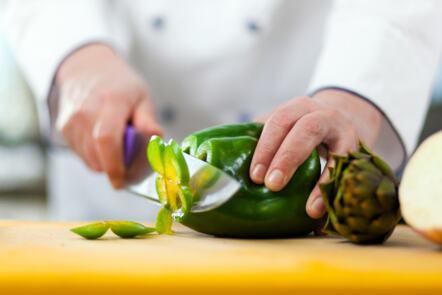
Certify your chef knife skills and learn how to prepare food safely and quickly using professional knife training techniques. Boost your culinary skills with this chef knife skills training course. This course is designed for anyone who would like to improve their knife skills in the kitchen, be it a home or in a professional kitchen. Alongside experienced chefs at the International Culinary Studio, you’ll learn everything you need to know about effective and safe knife cutting when cooking.

Class Deals by MOOC List - Click here and see FutureLearn's Active Discounts, Deals, and Promo Codes.

Study the different types of knives and how to use them
Knives are considered one of the most important tools for the chef in the kitchen, and chefs typically have a range of knives in their tool kit, each with a specific use.
On this course, you’ll learn about different types of knives and how to select a knife that is suitable to your needs.
You’ll also learn about knife maintenance, getting professional tips for caring for, washing, sharpening and correctly storing your knives and cutting equipment.

Learn the best knife cutting techniques to prevent injury
Using a knife incorrectly can result in serious injury. You’ll learn various safe knife cutting techniques that will ensure you can prepare food safely and effectively.
As well as building safe but fast knife skills, you’ll learn about age restrictions on certain cutting equipment and how to handle and carry knives correctly.

What will you achieve?
By the end of the course, you‘ll be able to...

  • Identify the different types of knives and cutting equipment and uses
  • Explain the importance of correct and safe use of knives and cutting equipment
  • Describe the different ways to clean, maintain and store knives and cutting equipment
  • Identify relevant age restrictions specific to the use of cutting equipment.
  • Demonstrate the ability to make use of various cutting techniques.
Go to Class
MOOC List is learner-supported. When you buy through links on our site, we may earn an affiliate commission.

Related Courses

Identifying Food Fraud (FutureLearn) FutureLearn
University of East Anglia

Identifying Food Fraud (FutureLearn)

An introduction to modern analytical science techniques and how they can be used to uncover food fraud. The food industry is one of the most important commercial sectors in the world. Everyone uses it, but how many people abuse it? As we witness the increasing globalisation of the supply chain, a growing challenge is verifying the questionable identity of raw materials in the food we eat.

Self Paced
4 Weeks
Circular Business Models for Sustainable Urban Food Systems (FutureLearn) FutureLearn
EIT Food,University of Helsinki,EIT,University of Turin

Circular Business Models for Sustainable Urban Food Systems (FutureLearn)

Discover how circular business models transform urban food systems to tackle grand challenges through innovative solutions. Explore how circular economy can foster sustainable urban food systems. On this course, you’ll discover how to design and build circular food systems for resilient, smart and sustainable cities.

Jan 2nd 2023
4 Weeks
Edible Insects (Coursera) Coursera
National Taiwan University

Edible Insects (Coursera)

This English language course covers the science and sociology of insects as food and feed. Increasing media, investment, and public policy attention has been given over the years to the role insects may play in the future of food. Can eating insects really save the world from famine and environmental destruction? Are there health costs or benefits to adding insects to the diet? Will all people accept insects as food? Can we feed them to livestock? Should we be promoting edible insects at all, and if so, how best do we do it? What species will we eat and how shall we raise them?

Aug 17th 2026
4 Weeks
Food and Mood: Improving Mental Health Through Diet and Nutrition (FutureLearn) FutureLearn
Deakin University,Food & Mood Centre

Food and Mood: Improving Mental Health Through Diet and Nutrition (FutureLearn)

Explore the relationship between nutrition and brain health, why it matters, and how to work towards positive food changes. Learn how healthy dietary choices can improve your mental and brain health. Poor diet and poor mental health are the leading causes of mortality and morbidity worldwide. We now know that diet quality is a modifiable factor that is linked to mental and brain health across all stages of our lives. We will explore how our daily diets may affect our mental and brain health, including the role of our immune system and gut microbiome.

Self Paced
3 Weeks
Sustainable Food Teach-Out (FutureLearn) FutureLearn
University of Michigan

Sustainable Food Teach-Out (FutureLearn)

Discover the link between food and climate change and learn about the collective journey towards a sustainable global diet. Explore the importance of food choices in reducing greenhouse gas emissions. What we choose to eat matters. Did you know that a quarter of all greenhouse gas emissions come from food and agricultural systems? One way each and every one of us can reduce our impact on the environment is to change what is on the end of our forks.

Nov 1st 2021
2 Weeks
Revolucionar la cadena alimentaria mediante la tecnología (FutureLearn) FutureLearn
Queen’s University Belfast,EIT Food,EIT

Revolucionar la cadena alimentaria mediante la tecnología (FutureLearn)

Explore cómo la tecnología y la digitalización pueden modificar el funcionamiento del sistema alimentario. Descubra cómo la tecnología podría revolucionar el sector alimentario. La calidad y la seguridad de los alimentos se ven cada vez más amenazadas, dado que los recursos naturales se están viendo desbordados por el cambio climático, el hambre y un crecimiento explosivo de la población mundial.

Jan 3rd 2022
5-12 Weeks
Food and Nutrition: The Truth Behind Food Headlines (FutureLearn) FutureLearn
University of Reading,EIT Food

Food and Nutrition: The Truth Behind Food Headlines (FutureLearn)

Learn how to find reliable, scientific information about food and nutrition and identify the truth behind food headlines. Rebuild your trust in nutrition science and look beyond the media headlines. Due to conflicting messages from the media, it’s becoming harder to know what to believe when it comes to following a healthy diet and lifestyle. On this course, you’ll compare how nutrition and health topics are handled by the media and science.

Jan 2nd 2023
3 Weeks
Superfoods: Myths and Truths (FutureLearn) FutureLearn
EIT Food,University of Turin

Superfoods: Myths and Truths (FutureLearn)

What is a 'superfood'? What foods are 'superfoods'? What effect do they have on the body and society? Find out with this course. Explore the definition and impact of superfoods. Goji berries, quinoa, amaranth and green tea are all foods that have been labelled ‘superfoods’. But what does this superfood label actually mean? On this course you will learn about the definition of a ‘superfood’.

Jan 2nd 2023
4 Weeks
The Human Microbiome (FutureLearn) FutureLearn
EIT Food,EIT,University of Turin

The Human Microbiome (FutureLearn)

Discover what the microbiome is, how it changes throughout your life, and the role it plays in good human health. Learn how a healthy microbiome can combat disease. The microbiome – the microbes that live within the human body – can have a huge impact on human health. As such, it’s vital to understand the complexity of the microbiome, and how it can impact on disease and wellbeing. On this course, you’ll go on a fascinating journey into the human body – down to the gut – where the ecology and roles of the human microbiome will be narrated.

Jan 2nd 2023
3 Weeks
Grand Challenges: Food for Thought (FutureLearn) FutureLearn
University of Exeter,Eden Project

Grand Challenges: Food for Thought (FutureLearn)

Where does our food come from and what impact does it have on our environment? Our demand for food from natural systems is changing the world we live in from the soil beneath our feet to the birds in the sky and the fish in the sea. Unsustainable practices of production (overfishing or monoculture) and consumerism are to blame.

Available Now
4 Weeks