EdX

Probability Theory (edX)

Probability Theory (edX)

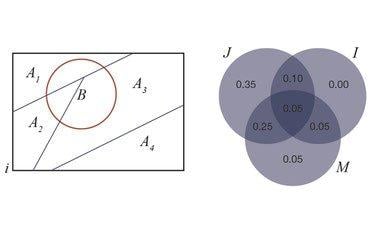
This course provides an introduction to probability theory. You will encounter discrete and continuous random variables and learn in which situations they appear, what their properties are and how they interact. A strong foundation in mathematics is critical for success in all science and engineering disciplines. Whether you want to make a strong start to a master’s degree, prepare for more advanced courses, solidify your knowledge in a professional context or simply brush up on fundamentals, this course will get you up to speed.

Class Deals by MOOC List - Click here and see EdX's Active Discounts, Deals, and Promo Codes.

Probability theory can be applied to learn more about real-life problems, and it is useful for building models. Moreover, it provides the basis for statistics and applications in data analysis. Therefore, it is a useful subject for any aspiring or practicing engineer.
We will use some basic calculus, in particular (partial) differentiation and (multiple) integration. The focus will be on the interpretation rather than on the computation; so the required techniques will be low-level. If, however, you feel insecure about these topics, you can brush up on them in our calculus courses within this series.
This course will offer you an overview of the probability theory elements common to most engineering bachelor programs. It will provide enough depth to cover the probability theory you need to succeed in your engineering master’s or profession in areas such as modeling, finance, signal processing, logistics and more.
This is a review course
This self-contained course is modular, so you do not need to follow the entire course if you wish to focus on a particular aspect. As a review course you are expected to have previously studied or be familiar with most of the material. Hence the pace will be higher than in an introductory course.
This format is ideal for refreshing your bachelor level mathematics and letting you practice as much as you want. Through the Grasple platform, you will have access to plenty of exercises – often with different numbers – and receive intelligent, personal and immediate feedback.
This course is part of the Mastering Probability and Statistics Professional Certificate.

What you'll learn

  • Describe discrete and continuous random variables (RVs).
  • Deduce properties of RVs, such as expectation and variance.
  • Gain insight into when certain RVs appear in a specific context.
  • Observe how two RVs interact.
  • Obtain understanding into some limiting results, in particular the Central Limit Theorem and how powerful it is.
  • Simulate some real-life situations.

Prerequisites:
Prior knowledge of all the material covered.
Some calculus will be used: (partial) differentiation and (multiple) integration. We expect you to be familiar with these topics.
This course is a review course. As such we expect that you are already familiar with some basic topics in probability theory.

Syllabus

Week 1: Probability spaces and general concepts

  • events
  • probability function
  • conditional probability
  • introduction to discrete random variables

Week 2: Discrete random variables

  • Bernoulli distribution
  • geometric distribution
  • binomial distribution
  • Poisson distribution
  • applications

Week 3: Continuous random variables

  • density function
  • exponential distribution
  • Pareto distribution
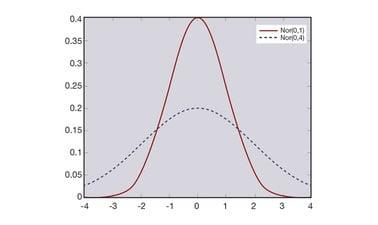
  • normal distribution

Week 4: Multivariate random variables

  • joint distribution
  • marginal distribution
  • covariance and correlation
  • independence
  • conditional expectation

Week 5: Limiting theorems

  • law of large numbers (LLN)
  • central limit theorem (CLT)
  • applications

Week 6: Simulation

  • Monte Carlo simulation
  • examples
Go to Class
MOOC List is learner-supported. When you buy through links on our site, we may earn an affiliate commission.

Related Courses

Probability and Statistics IV: Confidence Intervals and Hypothesis Tests (edX) EdX
Georgia Institute of Technology,GTx

Probability and Statistics IV: Confidence Intervals and Hypothesis Tests (edX)

This course covers two important methodologies in statistics – confidence intervals and hypothesis testing. Confidence intervals allow us to make probabilistic statements such as: “We are 95% sure that Candidate Smith’s popularity is 52% +/- 3%.” Hypothesis testing allows us to pose hypotheses and test their validity in a statistically rigorous way. For instance, “Does a new drug result in a higher cure rate than the old drug”?

Self Paced
Self-Paced
Probability and Statistics in Data Science using Python (edX) EdX
University of California, San Diego,UC San DiegoX

Probability and Statistics in Data Science using Python (edX)

Using Python, learn statistical and probabilistic approaches to understand and gain insights from data. The job of a data scientist is to glean knowledge from complex and noisy datasets. Reasoning about uncertainty is inherent in the analysis of noisy data. Probability and Statistics provide the mathematical foundation for such reasoning.

Self Paced
Self-Paced
A Hands-on Introduction to Engineering Simulations (edX) EdX
CornellX,Cornell University

A Hands-on Introduction to Engineering Simulations (edX)

Learn how to analyze real-world engineering problems using ANSYS simulation software and gain important professional skills sought by employers. In this hands-on course, you’ll learn how to perform engineering simulations using a powerful tool from ANSYS, Inc. This is a problem-based course where you’ll learn by doing. The focus will be on understanding what’s under the blackbox so as to move beyond garbage-in, garbage-out. You’ll practice using a common solution approach to problems involving different physics: structural mechanics, fluid dynamics and heat transfer.

Self Paced
Self-Paced
Fat Chance: Probability from the Ground Up (edX) EdX
HarvardX,Harvard University

Fat Chance: Probability from the Ground Up (edX)

Increase your quantitative reasoning skills through a deeper understanding of probability and statistics. Created specifically for those who are new to the study of probability, or for those who are seeking an approachable review of core concepts prior to enrolling in a college-level statistics course, Fat Chance prioritizes the development of a mathematical mode of thought over rote memorization of terms and formulae.

Self Paced
Self-Paced
Introduction to Data Science and Basic Statistics for Business (edX) EdX
Tecnológico de Monterrey,TecdeMonterreyX

Introduction to Data Science and Basic Statistics for Business (edX)

In this course you will acquire statistical methods for decision making in business, as well as technological tools to develop quantitative skills. Areas such as " big data" require very clear knowledge of statistics and business, technology provides us various applications that require solid training in statistics for proper use and interpretation .

Self Paced
Self-Paced
Modeling and Simulation of Multibody Systems - Part I (edX) EdX
LouvainX,Université Catholique de Louvain - UCL

Modeling and Simulation of Multibody Systems - Part I (edX)

Vehicles, bicycles, cranes, human body and robots are multibody systems. Learn how to model them and compute their kinematic and dynamic characteristics, such as velocities, accelerations and forces. This course aims at acquainting you with the modeling and simulation of complex articulated mechanical systems, denoted as multibody systems, such as vehicles, merry-go-rounds, motorbikes, cranes, human bodies, suspensions, robot manipulators, mechanical transmissions, etc.

Self Paced
Self-Paced
Mathematical Methods for Quantitative Finance (edX) EdX
MIT,MITx

Mathematical Methods for Quantitative Finance (edX)

Learn the mathematical foundations essential for financial engineering and quantitative finance: linear algebra, optimization, probability, stochastic processes, statistics, and applied computational techniques in R. Modern finance is the science of decision making in an uncertain world, and its language is mathematics. As part of the MicroMasters® Program in Finance, this course develops the tools needed to describe financial markets, make predictions in the face of uncertainty, and find optimal solutions to business and investment decisions.

Jun 26th 2024
5-12 Weeks
Introductory Statistics : Sample Survey and Instruments for Statistical Inference (edX) EdX
Seoul National University,SNUx

Introductory Statistics : Sample Survey and Instruments for Statistical Inference (edX)

The purpose of this course is to introduce basic concepts of sample surveys and to teach statistical inference process using real-life examples. In this course, you will learn about sample surveys with the concepts of samples and populations. In addition, we will discuss possible problems(bias) of the surveys based on practical examples and concept of probability errors in sampling.

Self Paced
Self-Paced
Introduction to Probability (edX) EdX
HarvardX,Harvard University

Introduction to Probability (edX)

Learn probability, an essential language and set of tools for understanding data, randomness, and uncertainty. Probability and statistics help to bring logic to a world replete with randomness and uncertainty. This course will give you tools needed to understand data, science, philosophy, engineering, economics, and finance.

Self Paced
Self-Paced