EdX

Post-Tensioned Structures (edX)

Offered by Purdue University, PurdueX,
Post-Tensioned Structures (edX)

Learn the essentials of design of post-tensioned concrete structures for use in concrete slabs or in preventing cracks and leakage in concrete water tanks. This module is currently offered in the Lyles School of Civil Engineering as part of the CE57200 “Prestressed Concrete Design” 3-Credits (CR) course in the area of structural engineering available to senior undergraduate/graduate students.

Class Deals by MOOC List - Click here and see EdX's Active Discounts, Deals, and Promo Codes.

It integrates science and engineering principles to design prestressed concrete members and structural systems. The application of scientific and engineering knowledge is demonstrated in solving engineering problems associated with the design of precast prestressed building members both composite and non-composite for superimposed loads, and one-way post-tensioned floor slabs systems bonded and unbonded also composite and non-composite for superimposed loads. Design of pretensioned Hollow-Core slabs, Double-Tee and I-Beam members, and one-way post-tensioned floor slabs is exercised using current building code requirements to provide experiences in realistic design practice. The following subjects are used to solve engineering problems: calculus and differential equations; use of computer tools, data manipulation, statistical analysis, numerical calculation, and reinforced concrete design principles.
The course is developed in three modules each of 1-CR. Module 3 (this module) is focused on the essentials of design of post-tensioned concrete structures.
This course is available to practicing engineers for 1.5 CEUs for learners completing the course on the verified track.

This course is part of the Structural Design MicroMasters

What you'll learn

  • Post-tensioned Construction
  • Review of equivalent load concept
  • Continuity effects
  • Flexure Design
  • Shear Design
  • Estimate of frictional losses

Prerequisites:
Module 3 focuses on post-tensioned construction and has Module 1 or equivalent as prerequisite and CE473 course or equivalent.
CE 47300: Reinforced Concrete Design or equivalent. Description: This course integrates science and engineering principles to design reinforced concrete beams, one-way slabs, and columns. These include determination of strength, detailing of reinforcement, and service load considerations such as crack control and deflections. The following subjects are used to solve engineering problems: calculus and differential equations, data manipulation, statistical analysis, strength of materials, and structural mechanics. Additional requirement: Working knowledge of basic software such as MathCAD, Excel or similar.

Go to Class
MOOC List is learner-supported. When you buy through links on our site, we may earn an affiliate commission.

Related Courses

Fundamentos de Mecánica para Ingeniería (edX) EdX
Universitat Politècnica de València,UPValenciaX

Fundamentos de Mecánica para Ingeniería (edX)

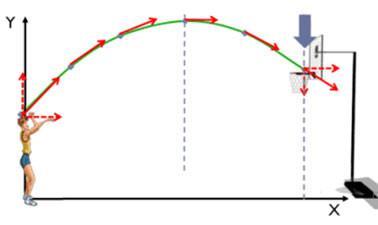
Estudiaremos la cinemática y la dinámica del punto, los conceptos de trabajo y potencia y la energía mecánica. Se aborda el estudio del universo físico analizando objetos en movimiento. Se definen y analizan todas las magnitudes y leyes físicas que permiten describir geométrica y causalmente el movimiento de cuerpos representados por un punto.

Self Paced
Self-Paced
Solar Energy: Photovoltaic (PV) Technologies (edX) EdX
Delft University of Technology,DelftX

Solar Energy: Photovoltaic (PV) Technologies (edX)

Explore the main PV technologies in the current market. Get in-depth knowledge on the design and processing methods of solar cells. The technologies used to produce solar cells and photovoltaic modules are advancing to deliver highly efficient and flexible solar panels. In this course you will explore the main PV technologies in the current market.

Self Paced
5-12 Weeks
Field Operations and Administrative Tools in Construction Management (edX) EdX
University of Maryland, College Park,University System of Maryland - USM,USMx,UMD

Field Operations and Administrative Tools in Construction Management (edX)

Learn the Construction Management tools needed to manage the people and the project, including estimating and scheduling. These tools combined with methods of control will ensure effective feedback and create a powerful system for delivery on-schedule and under budget.

Self Paced
Self-Paced
A System View of Communications: From Signals to Packets (Part 3) (edX) EdX
The Hong Kong University of Science and Technology - HKUST,HKUSTx

A System View of Communications: From Signals to Packets (Part 3) (edX)

Explore the tradeoffs in designing communication systems like mobile phones, and the engineering tools to handle them. Have you ever wondered how information is transmitted using your mobile phone or a WiFi hotspot? Gain an understanding of the basic engineering tools used and tradeoffs encountered in the design of these communication systems.

Self Paced
Self-Paced
A System View of Communications: From Signals to Packets (Part 2) (edX) EdX
The Hong Kong University of Science and Technology - HKUST,HKUSTx

A System View of Communications: From Signals to Packets (Part 2) (edX)

Explore the tradeoffs in designing communication systems like mobile phones, and the engineering tools to handle them. Have you ever wondered how information is transmitted using your mobile phone or a WiFi hotspot? This introductory course seeks to enable you to understand the basic engineering tools used and tradeoffs encountered in the design of these communication systems.

Self Paced
Self-Paced
The Basics of Transport Phenomena (edX) EdX
Delft University of Technology,DelftX

The Basics of Transport Phenomena (edX)

Learn the basic framework to work on a broad spectrum of engineering problems concerning transfer of heat, mass and momentum. Learn through examples of everyday processes at home, in the lab and in industry. Have you ever wondered why ventilation helps to cool down your hot chocolate? Do you know why a surfing suit keeps you warm? Why iron feels cold, while wood feels warm at room temperature? Or how air is transferred into aqueous liquids in a water treatment plant? How can we sterilize milk with the least amount of energy? How does medicine spread in our tissue? Or how do we design a new cooling tower of a power plant? All these are phenomena that involve heat transfer, mass transfer or fluid flow.

Self Paced
Self-Paced
A System View of Communications: From Signals to Packets (Part 1) (edX) EdX
The Hong Kong University of Science and Technology - HKUST,HKUSTx

A System View of Communications: From Signals to Packets (Part 1) (edX)

Explore the tradeoffs in designing communication systems like mobile phones, and the engineering tools to handle them. Have you ever wondered how information is transmitted using your mobile phone or a WiFi hotspot? This introductory course seeks to enable you to understand the basic engineering tools used and tradeoffs encountered in the design of these systems.

Self Paced
Self-Paced
Railway Engineering: An Integral Approach (edX) EdX
Delft University of Technology,DelftX

Railway Engineering: An Integral Approach (edX)

Discover the science and complexity behind the exciting world of metro, tram and railway systems. Have you ever wondered what it takes to get your train on the right platform at the scheduled time every day? Understanding the complexity behind today’s sophisticated railway systems will give you a better insight into how this safe and reliable transportation system works. We will show you the many factors which are involved and how multiple people, behind the scenes, have a daily task that enables you to get from home to work. Journey with us into the world of rail - a complex system that connects people, cities and countries.

Apr 10th 2024
5-12 Weeks
Introduction to Quantum Transport (edX) EdX
Purdue University,PurdueX

Introduction to Quantum Transport (edX)

This course introduces the non-equilibrium Green’s function (NEGF) method widely used to describe quantum effects in nanoscale devices, along with its applications to spintronic devices. This course introduces the Schrödinger equation, using the tight-binding method to discuss the concept of bandstructure and E(k) relations, followed by an introduction to the NEGF method with simple illustrative examples. Concept of spinors is introduced along with the application of the NEGF method to spintronic devices.

Feb 12th 2024
5-12 Weeks
Dynamics and Control (edX) EdX
Universitat Politècnica de València,UPValenciaX

Dynamics and Control (edX)

This is an interactive course about the basic concepts of Systems, Control and their impact in all the human activities. First, the basic concepts of systems, dynamics, structure and control are introduced. Then, looking at many examples in Nature and human made devices, we will realize that the dynamic behavior of most systems can be modified by adding a control system. Later we will see how knowing how to evaluate the dynamic behavior of a system and measure its performance will provide the tools to design new controlled systems fulfilling some requirements.

Self Paced
Self-Paced