EdX

Fundamentals of Prestressed Concrete (edX)

Offered by Purdue University, PurdueX,
Fundamentals of Prestressed Concrete (edX)

Learn the fundamentals of prestressed concrete design and the mechanics of how prestressed materials work under load. The prestressing mechanism provides strength for tensile forces when the material is in service; a common example of use of prestressed concrete is in parking garages.

Class Deals by MOOC List - Click here and see EdX's Active Discounts, Deals, and Promo Codes.

This module is currently offered in the Lyles School of Civil Engineering as part of the CE57200 “Prestressed Concrete Design” 3-Credits (CR) course in the area of structural engineering available to senior undergraduate/graduate students. It integrates science and engineering principles to design prestressed concrete members and structural systems.
The application of scientific and engineering knowledge is demonstrated in solving engineering problems associated with the design of precast prestressed building members both composite and non-composite for superimposed loads, and one-way post-tensioned floor slabs systems bonded and unbonded also composite and non-composite for superimposed loads. Design of pretensioned Hollow-Core slabs, Double-Tee and I-Beam members, and one-way post-tensioned floor slabs is exercised using current building code requirements to provide experiences in realistic design practice. The following subjects are used to solve engineering problems: calculus and differential equations; use of computer tools, data manipulation, statistical analysis, numerical calculation, and reinforced concrete design principles.
This course is part of the Structural Design MicroMasters.

What you'll learn

  • History of pre-stressed concrete.
  • Use of standard materials.
  • Pretension and post-tension method used in construction.
  • Flexure and shear behavior.
  • Equivalent load concept.

Prerequisites
The course is developed in three modules each of 1-CR. This is Module 1 and must be taken first if the student is not familiar with the subject of the course. Module 1 provides the fundamentals. It requires CE473 or similar. CE 47300: Reinforced Concrete Design or equivalent.
Description: This course integrates science and engineering principles to design reinforced concrete beams, one-way slabs, and columns. These include determination of strength, detailing of reinforcement, and service load considerations such as crack control and deflections. The following subjects are used to solve engineering problems: calculus and differential equations, data manipulation, statistical analysis, strength of materials, and structural mechanics. Additional requirement: Working knowledge of basic software such as MathCAD, Excel or similar.
Module 3 addresses post-tensioned construction, and has Module 1 or equivalent as prerequisite.

Go to Class
MOOC List is learner-supported. When you buy through links on our site, we may earn an affiliate commission.

Related Courses

Caer o No caer. El secreto de las estructuras (edX) EdX
Universidad Carlos III de Madrid - UC3M,UC3Mx

Caer o No caer. El secreto de las estructuras (edX)

Las estructuras están presentes en todos los sistemas que nos rodean. Descubrirlas y comprender cómo funcionan es sencillo y fascinante. Las estructuras están implicadas en nuestras vidas: las plantas, los animales, casi todo lo que fabrica el ser humano, incluso nuestro propio cuerpo, deben soportar una serie de fuerzas sin romperse, y por lo tanto prácticamente cualquier elemento de nuestro entorno es una estructura de una clase u otra.

Self Paced
Self-Paced
The Industry and Profession in Construction Management (edX) EdX
University of Maryland, College Park,University System of Maryland - USM,USMx,UMD

The Industry and Profession in Construction Management (edX)

Learn the different sectors of the industry and the profession by looking at the nature of the industry, future trends, and opportunities. Understand the different sectors of the industry and the role of each participant, specifically the Owner, Designer, and Construction Manager.

Self Paced
Self-Paced
Solar Energy: Photovoltaic (PV) Technologies (edX) EdX
Delft University of Technology,DelftX

Solar Energy: Photovoltaic (PV) Technologies (edX)

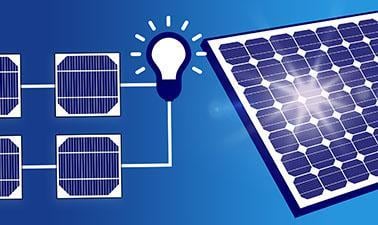
Explore the main PV technologies in the current market. Get in-depth knowledge on the design and processing methods of solar cells. The technologies used to produce solar cells and photovoltaic modules are advancing to deliver highly efficient and flexible solar panels. In this course you will explore the main PV technologies in the current market.

Self Paced
5-12 Weeks
Design of mound breakwaters for feasibility studies. Cubipod® Manual 2016 (edX) EdX
Universitat Politècnica de València,UPValenciaX

Design of mound breakwaters for feasibility studies. Cubipod® Manual 2016 (edX)

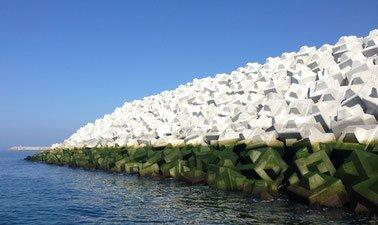
The goal of this course is to provide the tools to create feasible designs of mound breakwaters protected with Cubipod® armors fulfiling the prescribed economic, functional and safety requirements. This course is intended for professionals of coastal and port engineering who work in the preliminary design and feasibility studies of breakwaters.

Self Paced
Self-Paced
A Hands-on Introduction to Engineering Simulations (edX) EdX
CornellX,Cornell University

A Hands-on Introduction to Engineering Simulations (edX)

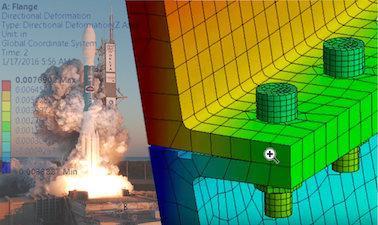
Learn how to analyze real-world engineering problems using ANSYS simulation software and gain important professional skills sought by employers. In this hands-on course, you’ll learn how to perform engineering simulations using a powerful tool from ANSYS, Inc. This is a problem-based course where you’ll learn by doing. The focus will be on understanding what’s under the blackbox so as to move beyond garbage-in, garbage-out. You’ll practice using a common solution approach to problems involving different physics: structural mechanics, fluid dynamics and heat transfer.

Self Paced
Self-Paced
Modeling and Simulation of Multibody Systems - Part I (edX) EdX
LouvainX,Université Catholique de Louvain - UCL

Modeling and Simulation of Multibody Systems - Part I (edX)

Vehicles, bicycles, cranes, human body and robots are multibody systems. Learn how to model them and compute their kinematic and dynamic characteristics, such as velocities, accelerations and forces. This course aims at acquainting you with the modeling and simulation of complex articulated mechanical systems, denoted as multibody systems, such as vehicles, merry-go-rounds, motorbikes, cranes, human bodies, suspensions, robot manipulators, mechanical transmissions, etc.

Self Paced
Self-Paced
Software Engineering: Introduction (edX) EdX
The University of British Columbia,UBCx

Software Engineering: Introduction (edX)

Learn how to apply engineering principles, such as Agile, to build a full-stack software system. You will learn software engineering principles that are applicable to the breadth of large-scale software systems. The course explores topics such as agile development, REST and Async programming, software specification, design, refactoring, information security, and more.

Self Paced
Self-Paced
Decision-Making for Autonomous Systems (edX) EdX
Chalmers University of Technology,ChalmersX

Decision-Making for Autonomous Systems (edX)

Learn effective tactics for making key decisions when working with autonomous, self-driving vehicles. In autonomous vehicles such as self-driving cars, we find a number of interesting and challenging decision-making problems. Starting from the autonomous driving of a single vehicle, to the coordination among multiple vehicles. This course will teach you the fundamental mathematical model for many of these real-world problems.

Self Paced
Self-Paced
Sustainable Construction Management (edX) EdX
University of Maryland, College Park,University System of Maryland - USM,USMx,UMD

Sustainable Construction Management (edX)

Learn Sustainable Construction Management practices, and how to implement a sustainable green project. Sustainability has become essential for private and public owners who want to incorporate the economic, social, and environmental aspects of their project to improve the triple bottom line.

Self Paced
Self-Paced
Introducción a la Ingeniería del Software (edX) EdX
Universidad Autonoma de Madrid,UAMx

Introducción a la Ingeniería del Software (edX)

Conoce las distintas fases de desarrollo por las que pasa un proyecto informático, así como las actividades de gestión necesarias para lograr finalizar el proyecto con éxito. ¿Alguna vez te has preguntado qué es y para qué sirve la Ingeniería de Software? ¿Quieres saber por qué es tan necesaria esta disciplina y por qué se utiliza tanto en entornos tecnológicos? ¿O cuál es el motivo de que muchos proyectos informáticos no finalizan en tiempo y coste o con la calidad deseada?

Self Paced
Self-Paced