Quantum information and quantum computations is a new, rapidly developing branch of physics that has arisen from quantum mechanics, mathematical physics and classical information theory. Significant interest in this area is explained by the great prospects that will open upon the implementation of its ideas, capturing almost all areas of human activity related to the transfer, storage and processing of information.
Class Deals by MOOC List - Click here and see Coursera's Active Discounts, Deals, and Promo Codes.
The purpose of this course is to show the basic ideas of quantum informatics, as well as the physical laws and basic mathematical principles. Much attention is paid to such phenomena as quantum entanglement, quantum parallelism, and quantum interference. It is these phenomena that underlie most of the known quantum protocols and algorithms, which are devoted to individual sections of this course. In particular, from the course, students will learn about quantum teleportation, quantum algorithms, quantum error correction and other topics related to the quantum computations theory.
As a result of the course, the students will be able to master the modern mathematical apparatus of quantum mechanics used in quantum computations, master the ideas that underlie the most important quantum logic algorithms and protocols for transmitting and processing quantum information, and learn how to solve problems on these topics.
The course consists of six modules, which are arranged in two parts. The first part (Modules 1-2) focuses on the mathematical apparatus and the foundations of Quantum Mechanics. Physical laws and processes which underlay quantum computations are extensively described. In the second part of the course (Modules 3-6), we show how quantum computations, quantum logic algorithms and protocols of quantum information transfer could be implemented using the laws of quantum physics and phenomena discussed in the first part.
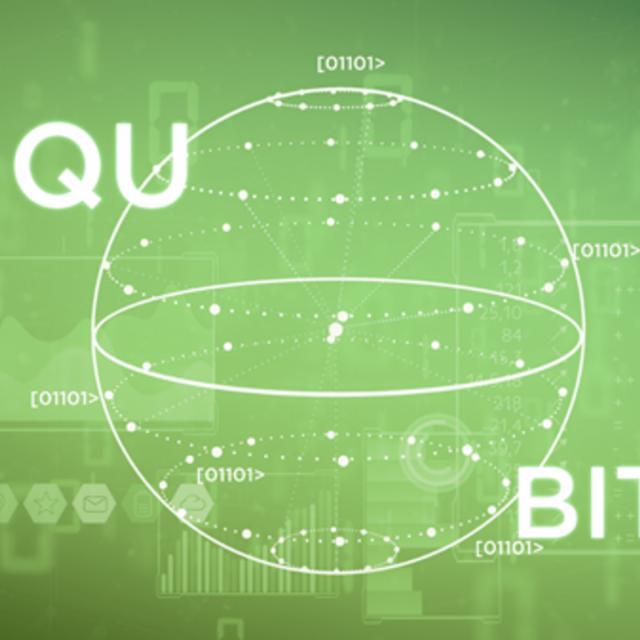
Module 1 focuses on the postulates of Quantum Mechanics and Quantum Information Theory. We introduce the important concept of a qubit and consider variants of its physical implementation. Certain statistical aspects of quantum theory are discussed. The concept of density matrix and separability, the notion of pure and mixed quantum states are introduced. In Module 2 we focus on the phenomenon of quantum entanglement and the mathematical description of entangled physical systems. We also describe an experiment aimed to test Bell inequalities and consider the well-known EPR paradox. In Module 3 we compare classical and quantum computations. Particularly, elementary logical elements (gates) and the simplest commutation schemes are described. The distinctive features of quantum computations are explained in Module 4. In particular, the No-Cloning theorem is proved, which forbids one to copy a qubit, quantum parallelism and superdense coding are discussed. We also describe in detail the protocol of quantum teleportation and give an example of its physical implementation. The well-known quantum logic algorithms are described in Module 5, these are Deutsch and Deutsch-Jozsa algorithms, Quantum Fourier Transform and Shor’s algorithms for integer factorization. In Module 6 we discuss quantum and classical error correction theory: we highlight their differences and similarities, classify the possible error types and describe protocols of their correction.
The material is given in a form of short but informative videos with presentations and a detailed syllabus. At the end of every module, there are tests and control tasks according to the discussed topics. The tasks are organized in the form of problems and tests with multiple choice. Every module is supplemented with a literature list, which contains references on the mentioned researches and extra sources for self-study.
Learning outcomes:
The student who completed this course should:
To know
• fundamental concepts of quantum mechanics and the quantum information theory;
• The most important protocols for the transfer and processing of quantum information;
• The most important quantum logic algorithms;
• The basic protocols of the classical and quantum error correction theory.
To be able to
• work with classical and quantum circuits;
• solve problems in the quantum information theory.
To master
• mathematical apparatus of quantum mechanics used in the quantum information theory.
Syllabus
WEEK 1
Statistical aspects of quantum mechanics
Module 1 focuses on the postulates of Quantum Mechanics and Quantum Information Theory. We introduce the important concept of a qubit and consider variants of its physical implementation. Certain statistical aspects of quantum theory are discussed. The concept of density matrix and separability, the notion of pure and mixed quantum states are introduced.
WEEK 2
Quantum entanglement
In Module 2 we focus on the phenomenon of quantum entanglement and the mathematical description of entangled physical systems. We also describe an experiment aimed to test Bell inequalities and consider the well-known EPR paradox.
WEEK 3
Classical and quantum logical operations
In Module 3 we compare classical and quantum computations. Particularly, elementary logical elements (gates) and the simplest commutation schemes are described. The distinctive features of quantum computations are explained in
WEEK 4
Distinctive features of quantum computations
Module 4. In particular, the No-Cloning theorem is proved, which forbids one to copy a qubit, quantum parallelism and superdense coding are discussed. We also describe in detail the protocol of quantum teleportation and give an example of its physical implementation. The well-known quantum logic algorithms are described
WEEK 5
Quantum algorithms
Module 5, these are Deutsch and Deutsch-Jozsa algorithms, Quantum Fourier Transform and Shor’s algorithms for integer factorization.
WEEK 6
Basics of error correction theory
Module 6 we discuss quantum and classical error correction theory: we highlight their differences and similarities, classify the possible error types and describe protocols of their correction.