Phases of Matter: Solid, Liquid, Gas and Beyond (Coursera)

Phases of Matter: Solid, Liquid, Gas and Beyond (Coursera)

Complex systems can exhibit emergent phenomena, wherein the interplay of simple underlying rules governing the constituent parts leads to rich and unexpected behavior of the whole. Condensed matter physics is the branch of physics devoted to understanding such emergence in physical systems. It is the largest subfield of physics, and has developed a wealth of ideas and techniques for taming complexity. The course provides an introduction to this physics of emergence.

Class Deals by MOOC List - Click here and see Coursera's Active Discounts, Deals, and Promo Codes.

The course is aimed at a general audience. It assumes familiarity with algebra, and passing familiarity with basic concepts such as atoms and energy, but does not assume knowledge of advanced physics or mathematics. It is the first of a series of three courses introducing the key ideas of modern condensed matter physics. However, it can also be taken as a standalone course.
This course is part of the The Physics of Emergence: Introduction to Condensed Matter Specialization.

What you'll learn

  • Define what constitutes a phase of matter.
  • Interpret phases in terms of symmetries, and describe spontaneous symmetry breaking.
  • Identify the competition between energy and entropy, and explain how this produces phase transitions.

Syllabus

Emergent Phenomena and Phases of Matter
Module 1
This module introduces the notion of emergent phenomena, and a central application of this notion: phases of matter. We define what constitutes a phase of matter, and explain that there are many phases beyond the familiar trio of solid, liquid, and gas.

Symmetries and Symmetry Breaking
Module 2
This module introduces the notion of symmetries, which provide a powerful tool for thinking about phases of matter. It also introduces the notion of spontaneous symmetry breaking.

Energy, Entropy and Phase Structure
Module 3
This module introduces the concepts of energy, entropy and explains how the competition between them can drive phase transitions.

Mean Field Theory
Module 4
In this module, you will learn a powerful tool for analyzing phases that are classified by symmetries, known as mean field theory. You will learn to apply this tool.

Go to Class
MOOC List is learner-supported. When you buy through links on our site, we may earn an affiliate commission.

Related Courses

Municipal Solid Waste Management in Developing Countries (Coursera) Coursera
École Polytechnique Fédérale de Lausanne

Municipal Solid Waste Management in Developing Countries (Coursera)

Have you come across large piles of garbage in neighborhoods and streets, or smelly waste disposal sites polluting the environment of low and middle income countries? Are you also convinced that improvements are necessary and do you want to know what kind of sustainable solutions are appropriate to better manage waste and enhance recycling and recovery? If yes, this course is for you!

Oct 5th 2026
5-12 Weeks
Particle Physics: an Introduction (Coursera) Coursera
University of Geneva

Particle Physics: an Introduction (Coursera)

This course introduces you to subatomic physics, i.e. the physics of nuclei and particles. More specifically, the following questions are addressed: What are the concepts of particle physics and how are they implemented?; What are the properties of atomic nuclei and how can one use them?; How does one accelerate and detect particles and measure their properties?; What does one learn from particle reactions at high energies and particle decays?; How do electromagnetic interactions work and how can one use them?; How do strong interactions work and why are they difficult to understand?; How do weak interactions work and why are they so special?; What is the mass of objects at the subatomic level and how does the Higgs boson intervene?; How does one search for new phenomena beyond the known ones?; What can one learn from particle physics concerning astrophysics and the Universe as a whole?

Oct 5th 2026
5-12 Weeks
Wind resources for renewable energies (Coursera) Coursera
École Polytechnique

Wind resources for renewable energies (Coursera)

The main goal of this course is to get the necessary knowledge on atmospheric and fluid dynamics in order to quantify the wind resource of a local or regional area. We’ll learn about basic meteorology, the specific dynamics of turbulent boundary layers and some standard techniques to estimate wind resources regardless of the type of turbine used or the level of efficiency achieved.

Oct 5th 2026
4 Weeks
Foundation of Structural Dynamics (Coursera) Coursera
ISAE-SUPAERO

Foundation of Structural Dynamics (Coursera)

A course with variable geometry where everyone, we hope, will find personal benefits. The parts can be studied sequentially or independently; and inside each part, elementary learning items can be picked up. Globally, this course proposes a deep knowledge of fundamental dynamics, with possible explicit and implicit applications in structural dynamics, but also in physics and control of any dynamic system (automatics, …).

Oct 5th 2026
5-12 Weeks
Understanding Modern Physics I: Relativity and Cosmology (Coursera) Coursera
The Hong Kong University of Science and Technology - HKUST

Understanding Modern Physics I: Relativity and Cosmology (Coursera)

The 20th century was known as the century of physics. In the past 120 years, concepts such as space, time, energy, entropy and particles were understood to much deeper levels. New paradigms of thinking such as relativity and quantum mechanics emerged. This course is the first course in the Understanding Modern Physics series, which covers an introduction to special relativity, general relativity and cosmology.

Sep 28th 2026
5-12 Weeks
The Sun and the Total Eclipse of August 2017 (Coursera) Coursera
University of Colorado Boulder

The Sun and the Total Eclipse of August 2017 (Coursera)

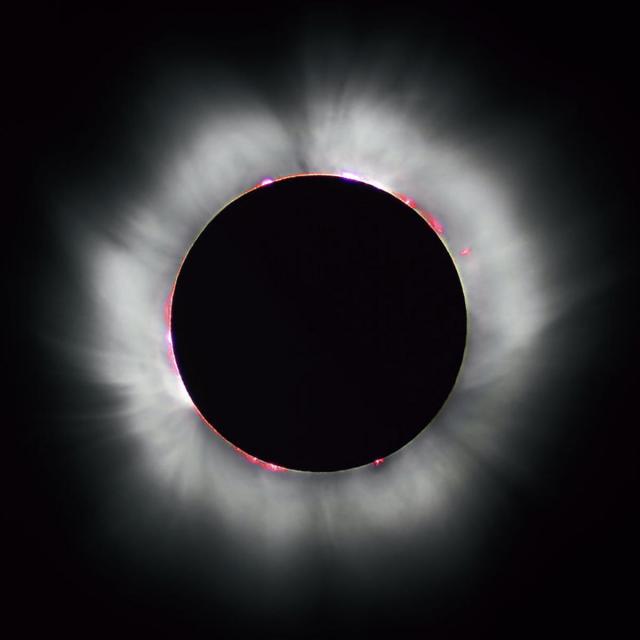
A total eclipse is one of the most spectacular sights you can ever see! It looks like the end of the world may be at hand. There is a black hole in the sky where the sun should be. Pink flames of solar prominences and long silver streamers of the sun's corona stretch across the sky. It gets cold, and animals do strange things. People scream and shout and cheer, and remember the experience their whole life. But total eclipses are important scientifically as well.

Sep 28th 2026
5-12 Weeks
Photovoltaic solar energy (Coursera) Coursera
École Polytechnique

Photovoltaic solar energy (Coursera)

The course is an introduction to the photovoltaic (PV) applications in the general mix energetic context dominated by climate warming mitigation. The various uses of solar energy are firstly presented before a short description of the principle of the direct solar photon conversion into electricity (PV). The various PV technologies are reviewed in the current context dominated by crystalline silicon cells. The perspectives of the various technologies are then analysed in terms of R&D investments.

Sep 28th 2026
3 Weeks
Oil & Gas Industry Operations and Markets (Coursera) Coursera
Duke University

Oil & Gas Industry Operations and Markets (Coursera)

The oil and gas industry has an enormous impact on all aspects of daily life. Individuals, corporations, and national governments make financial and policy decisions based on the cost, use, and availability of these two natural resources. This two-week course looks at the two most fundamental aspects of the oil and gas industry, its operations and markets, each of which is addressed as a separate module in the course.

Sep 30th 2026
2 Weeks
Mastering bitumen for better roads and innovative applications (Coursera) Coursera
École des Ponts ParisTech

Mastering bitumen for better roads and innovative applications (Coursera)

During the four coming weeks, best experts in bitumen will bring you their knowledge and experience to build a strong understanding of today’s realities and new perspectives on the future of bitumen. Total is the European leader on bitumen markets. Innovation has always been the key to sustainability and durability in the products they develop. Their main objective here is to share technical knowledge and experience to insure bitumen are being used in the most effective and efficient ways for their different applications in road works.

Oct 5th 2026
4 Weeks
Fundamentals of Fluid-Solid Interactions (Coursera) Coursera
École Polytechnique

Fundamentals of Fluid-Solid Interactions (Coursera)

What is fluid-solid interactions ? It is what happens when the motions of a fluid and of a solid are somehow coupled. This happens all the time, around you when leaves flutter in the wind, inside you when your heart beats, above you when wings of a plane vibrate, under the sea... The idea behind this MOOC is to give you the basic tools to be able to predict and eventually mitigate things called flutter, galloping, sloshing, vortex-induced vibrations, added mass, to cite a few. We are going to consider any possible domains of applications such as civil engineering, aerospace engineering, nuclear engineering , ocean engineering, biomechanics and even food processing !

Oct 5th 2026
5-12 Weeks
Thermodynamique : applications (Coursera) Coursera
École Polytechnique Fédérale de Lausanne

Thermodynamique : applications (Coursera)

Ce cours complète le MOOC « Thermodynamique : fondements » qui vous permettra de mettre en application les concepts fondamentaux de la thermodynamique. Pour atteindre cet objectif, le Professeur J.-Ph. Ansermet de l’Ecole Polytechnique Fédérale de Lausanne s’est entouré d’experts et de spécialistes des différents domaines d’application provenant de diverses institutions partenaires du réseau RESCIF. Vous pourrez ainsi voir l’usage de la thermodynamique en chimie, en ingénierie et en physique.

Sep 28th 2026
5-12 Weeks