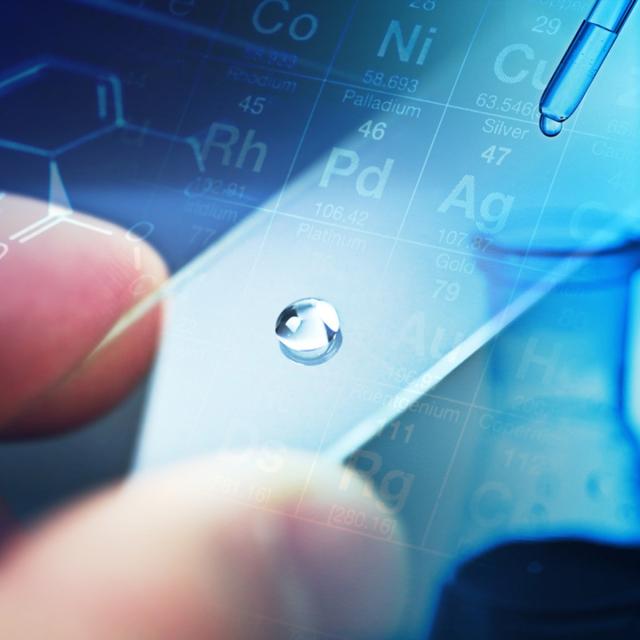
Phase Diagrams I & II (Coursera)

Phase Diagrams I & II (Coursera)

In this course, we will look at phase diagrams and how they are used to determine the state of the material as a function of temperature and composition. We will also investigate how the microstructure and materials properties can be manipulated as a function of temperature and composition. A special focus will be on the eutectic phase diagram.

Class Deals by MOOC List - Click here and see Coursera's Active Discounts, Deals, and Promo Codes.

Course 4 of 4 in the Materials Science for Technological Application Specialization.

What You Will Learn
The use of principles of phase diagrams to predict microstructures and properties of metals and alloys.

Syllabus

WEEK 1
Phase Diagrams I & II
In this course, we will look at phase diagrams and how they are used to determine the state of the material as a function of temperature and composition. We will also investigate how the microstructure and materials properties can be manipulated as a function of temperature and composition. A special focus will be on the eutectic phase diagram.

WEEK 2
Module 1: Diffusion and Its Mechanisms
In this module, we explain the concepts of solubility, solubility limit, saturation and solubility limit lines (solvus) on phase diagrams.

WEEK 3
Module 2: Eutectic Phase Diagrams
The eutectic phase diagram is important for solder ball and inter-metal interconnects in semiconductor industry. In this module we discuss eutectic phase diagrams.

WEEK 4
Module 3: Eutectic Microstructures
In this module, we examine eutectic microstructure and eutectic properties.

WEEK 5
Module 4: Microstructures and Properties
In this module, you will explore hypoeutectic and hypereutectic alloys and their composition and cooling impacts microstructures.
Go to Class
MOOC List is learner-supported. When you buy through links on our site, we may earn an affiliate commission.

Related Courses

Nanotechnology and Nanosensors, Part 1 (Coursera) Coursera
Technion - Israel Institute of Technology

Nanotechnology and Nanosensors, Part 1 (Coursera)

Nanotechnology and nanosensors are broad, interdisciplinary areas that encompass (bio)chemistry, physics, biology, materials science, electrical engineering and more. The present course will provide a survey on some of the fundamental principles behind nanotechnology and nanomaterials and their vital role in novel sensing properties and applications. The course will discuss interesting interdisciplinary scientific and engineering knowledge at the nanoscale to understand fundamental physical differences at the nanosensors.

Oct 5th 2026
5-12 Weeks
Ferrous Technology I (Coursera) Coursera
Pohang University of Science and Technology - POSTECH

Ferrous Technology I (Coursera)

Steel, ever-evolving material, has been the most preeminent of all materials since it can provide wide range of properties that can meet ever-changing requirements. In this course, we explore both fundamental and technical issues related to steels, including iron and steelmaking, microstructure and phase transformation, and their properties and applications.

Sep 28th 2026
5-12 Weeks
Science & Cooking: From Haute Cuisine to Soft Matter Science (chemistry) (edX) EdX
HarvardX,Harvard University

Science & Cooking: From Haute Cuisine to Soft Matter Science (chemistry) (edX)

Top chefs and Harvard researchers explore how everyday cooking and haute cuisine can illuminate basic principles in chemistry, physics, and engineering. Learn about food molecules and how chemical reactions can affect food texture and flavor. During each module of this course, chefs reveal the secrets behind some of their most famous culinary creations — often right in their own restaurants. Inspired by such cooking mastery, the Harvard team will then explain the science behind the recipe.

Self Paced
Self-Paced
Diffusion and Mass Transfer (FutureLearn) FutureLearn
Taipei Medical University

Diffusion and Mass Transfer (FutureLearn)

Master a core field of chemical engineering by learning about transport phenomena like diffusion, convection, and mass transfer. This six-week course from Taipei Medical University (TMU) provides a comprehensive overview of transport phenomena, with a particular focus on diffusion, mass transfer, and convection. Once you’ve understood the fundamentals of all three processes, you’ll learn how to analyse them using coefficient models.

Self Paced
5-12 Weeks
Materials Data Sciences and Informatics (Coursera) Coursera
Georgia Institute of Technology

Materials Data Sciences and Informatics (Coursera)

This course aims to provide a succinct overview of the emerging discipline of Materials Informatics at the intersection of materials science, computational science, and information science. Attention is drawn to specific opportunities afforded by this new field in accelerating materials development and deployment efforts.

Oct 5th 2026
5-12 Weeks
Materials Science: 10 Things Every Engineer Should Know (Coursera) Coursera
University of California, Davis

Materials Science: 10 Things Every Engineer Should Know (Coursera)

We explore “10 things” that range from the menu of materials available to engineers in their profession to the many mechanical and electrical properties of materials important to their use in various engineering fields. We also discuss the principles behind the manufacturing of those materials. By the end of the course, you will be able to: recognize the important aspects of the materials used in modern engineering applications; explain the underlying principle of materials science: “structure leads to properties,”; identify the role of thermally activated processes in many of these important “things” – as illustrated by the Arrhenius relationship; relate each of these topics to issues that have arisen (or potentially could arise) in your life and work.

Sep 28th 2026
5-12 Weeks
Engineering Systems in Motion: Dynamics of Particles and Bodies in 2D Motion (Coursera) Coursera
Georgia Institute of Technology

Engineering Systems in Motion: Dynamics of Particles and Bodies in 2D Motion (Coursera)

This course is an introduction to the study of bodies in motion as applied to engineering systems and structures. We will study the dynamics of particle motion and bodies in rigid planar (2D) motion. This will consist of both the kinematics and kinetics of motion. Kinematics deals with the geometrical aspects of motion describing position, velocity, and acceleration, all as a function of time. Kinetics is the study of forces acting on these bodies and how it affects their motion.

Oct 5th 2026
5-12 Weeks
Image and video processing: From Mars to Hollywood with a stop at the hospital (Coursera) Coursera
Duke University

Image and video processing: From Mars to Hollywood with a stop at the hospital (Coursera)

In this course, you will learn the science behind how digital images and video are made, altered, stored, and used. We will look at the vast world of digital imaging, from how computers and digital cameras form images to how digital special effects are used in Hollywood movies to how the Mars Rover was able to send photographs across millions of miles of space.

Oct 5th 2026
5-12 Weeks
Material Behavior (Coursera) Coursera
Georgia Institute of Technology

Material Behavior (Coursera)

Have you ever wondered why ceramics are hard and brittle while metals tend to be ductile? Why some materials conduct heat or electricity while others are insulators? Why adding just a small amount of carbon to iron results in an alloy that is so much stronger than the base metal? In this course, you will learn how a material’s properties are determined by the microstructure of the material, which is in turn determined by composition and the processing that the material has undergone.

Oct 5th 2026
5-12 Weeks
Fundamentals of Digital Image and Video Processing (Coursera) Coursera
Northwestern University

Fundamentals of Digital Image and Video Processing (Coursera)

In this class you will learn the basic principles and tools used to process images and videos, and how to apply them in solving practical problems of commercial and scientific interests. Digital images and videos are everywhere these days – in thousands of scientific (e.g., astronomical, bio-medical), consumer, industrial, and artistic applications. Moreover they come in a wide range of the electromagnetic spectrum - from visible light and infrared to gamma rays and beyond.

Oct 5th 2026
5-12 Weeks
Nanotechnology and Nanosensors, Part 2 (Coursera) Coursera
Technion - Israel Institute of Technology

Nanotechnology and Nanosensors, Part 2 (Coursera)

Learn about novel sensing tools that make use of nanotechnology to screen, detect and monitor various events in personal or professional life. Together, we will lay the groundwork for infinite innovative applications, starting from diagnosis and treatments of diseases, continuing with quality control of goods and environmental aspects, and ending with monitoring security issues.

Oct 5th 2026
5-12 Weeks