Introduction to Materials Science (Coursera)

Introduction to Materials Science (Coursera)

Periods of our civilization have names associated with materials – stone age, bronze age, iron age and the silicon age. Materials impact all aspects of your daily life and will continue to do so in the future. The more we understand materials, the more we imagine the future with fantastic devices and advancements enabled by materials. This initial specialization introduces a limited number of material science and engineering concepts.

Class Deals by MOOC List - Click here and see Coursera's Active Discounts, Deals, and Promo Codes.

The topic presentations are at the concept level without being mired in heavy mathematics. Participation in each course is best done by initially having a firm sense of what MSE does and its impact on society. Topics in this specialization span from atom bonding and crystal structure to diffusion and phase diagrams. Some of the position titles that may benefit from this course include Materials Engineer, Chemical Engineer, Electrical Engineer, Aerospace Engineer and Materials Quality Control. Others who want to explore the world of materials will find it helpful.

Course 1 of 4 in the Materials Science for Technological Application Specialization.

What You Will Learn
The role of materials engineers in contemporary engineering practice.

Syllabus

WEEK 1
Course Introduction
This course introduces students to the basic ideas of materials science and engineering. This course includes an introduction to the relationship between processing, properties, and structure. This course is different from many other courses in that it uses a rudimentary introduction of fundamental concepts materials selection. It also identifies the characteristics and properties of the different families of materials based on their interatomic bonding. Finally, we explore how materials properties vary across the periodic table.

WEEK 2
Module 1: Introduction to Specialization and Course
In this module, we will see a high-level overview of materials science and engineering and learn about materials selection, materials families, types of bonding and processing of materials.

WEEK 3
Module 2: Atomic Structure and Interatomic Bonding I Property Relationships
In this module, we will learn about atomic structure, interatomic bonding and how the location of an element on the periodic table affects its chemical properties. Various examples are discussed.

WEEK 4
Module 3: Atomic Structure
In this module, we learn about different kinds of atomic structures and the relationships between structure and properties of materials.

WEEK 5
Module 4: Crystal Structures
In this module, we learn about different kinds of atomic structures, and the relationships between structure and properties of materials.

WEEK 6
Module 5: Unit Cells
In this module, we discuss how to identify and locate positions in unit cells, and how to specify and identify directions in unit cells

Go to Class
MOOC List is learner-supported. When you buy through links on our site, we may earn an affiliate commission.

Related Courses

Cómo autoconstruir tu vivienda (Coursera) Coursera
Universidad Nacional Autónoma de México

Cómo autoconstruir tu vivienda (Coursera)

Aprenderás las bases y los procedimientos precisos paso a paso para que puedas llevar a cabo la autoconstrucción de una vivienda básica, segura y económica para ti y tu familia; también te será de gran utilidad si estás buscando aprender a reparar, mejorar la estructura de tu vivienda e incluso si buscas autoemplearte.

Oct 12th 2026
4 Weeks
Material Processing (Coursera) Coursera
Georgia Institute of Technology

Material Processing (Coursera)

Have you ever wondered why ceramics are hard and brittle while metals tend to be ductile? Why some materials conduct heat or electricity while others are insulators? Why adding just a small amount of carbon to iron results in an alloy that is so much stronger than the base metal? In this course, you will learn how a material’s properties are determined by the microstructure of the material, which is in turn determined by composition and the processing that the material has undergone.

Oct 12th 2026
2 Weeks
Fundamentals of Nanomaterials and Nanotechnology (edX) EdX
Purdue University,PurdueX

Fundamentals of Nanomaterials and Nanotechnology (edX)

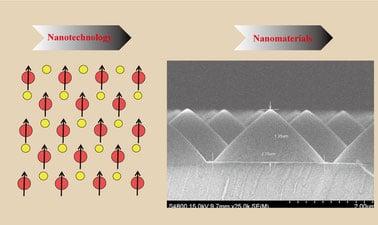
Learn about the application of nanomaterials in civil and environmental engineering. This course will introduce students to the field of nanotechnology with a special emphasis on nanomaterials synthesis, characterizations and their applications in civil and environmental engineering. The specific applications will include, but not limited to, tailoring mechanical property, durability, self-cleaning, self-sealing, self-sensing, energy harvesting and other multi-functionality.

Aug 22nd 2022
5-12 Weeks
Materials Science and Engineering (edX) EdX
NUST MISIS,MISISx

Materials Science and Engineering (edX)

Gain a fundamental understanding of materials, its structures on different levels (from crystal cell to macrostructure), phase transformations and how it influences its mechanical, electrical, optical and magnetic properties from common science perspective. This course will introduce you to the various properties and structures of materials and lay a strong foundation for your further study of engineering and its related disciplines.

No sessions available
5-12 Weeks
Requirements Writing (Coursera) Coursera
UNSW Sydney - University of New South Wales

Requirements Writing (Coursera)

Welcome to "Requirements Writing". As the title indicates, over the next four weeks, we will be looking at the important task of writing of text-based requirement statements. The course takes you step by step through the rules for writing requirements statements in accordance with the "Guide for Writing Requirements" published by the International Council on Systems Engineering (INCOSE).

Oct 18th 2026
5-12 Weeks
Materials Science: 10 Things Every Engineer Should Know (Coursera) Coursera
University of California, Davis

Materials Science: 10 Things Every Engineer Should Know (Coursera)

We explore “10 things” that range from the menu of materials available to engineers in their profession to the many mechanical and electrical properties of materials important to their use in various engineering fields. We also discuss the principles behind the manufacturing of those materials. By the end of the course, you will be able to: recognize the important aspects of the materials used in modern engineering applications; explain the underlying principle of materials science: “structure leads to properties,”; identify the role of thermally activated processes in many of these important “things” – as illustrated by the Arrhenius relationship; relate each of these topics to issues that have arisen (or potentially could arise) in your life and work.

Sep 28th 2026
5-12 Weeks
Digital Signal Processing 4: Applications (Coursera) Coursera
École Polytechnique Fédérale de Lausanne

Digital Signal Processing 4: Applications (Coursera)

Digital Signal Processing is the branch of engineering that, in the space of just a few decades, has enabled unprecedented levels of interpersonal communication and of on-demand entertainment. By reworking the principles of electronics, telecommunication and computer science into a unifying paradigm, DSP is a the heart of the digital revolution that brought us CDs, DVDs, MP3 players, mobile phones and countless other devices.

Oct 12th 2026
3 Weeks
Introducción a los modelos de demanda de transporte (Coursera) Coursera
Pontificia Universidad Católica de Chile

Introducción a los modelos de demanda de transporte (Coursera)

¿Cuántos viajan? ¿Por dónde? ¿En qué modo? En general, los proyectos de transporte (tanto de infraestructura como gestión) poseen plazos y costos de realización sumamente elevados. Por estos motivos, la evaluación de este tipo de proyectos requiere de una adecuada estimación de la demanda para su correcto dimensionamiento.

Oct 12th 2026
5-12 Weeks
Geographical Information Systems - Part 1 (Coursera) Coursera
École Polytechnique Fédérale de Lausanne

Geographical Information Systems - Part 1 (Coursera)

This course is organized into two parts presenting the theoretical and practical foundations of geographic information systems (GIS). Together theses courses constitute an introduction to GIS and require no prior knowledge. By following this introduction to GIS you will quickly acquire the basic knowledge required to create spatial databases and produce high-quality maps and cartographic representations. This is a practical course and is based on free, open-source software, including QGIS.

Oct 12th 2026
5-12 Weeks
Digital Signal Processing 2: Filtering (Coursera) Coursera
École Polytechnique Fédérale de Lausanne

Digital Signal Processing 2: Filtering (Coursera)

Digital Signal Processing is the branch of engineering that, in the space of just a few decades, has enabled unprecedented levels of interpersonal communication and of on-demand entertainment. By reworking the principles of electronics, telecommunication and computer science into a unifying paradigm, DSP is a the heart of the digital revolution that brought us CDs, DVDs, MP3 players, mobile phones and countless other devices.

Oct 12th 2026
3 Weeks