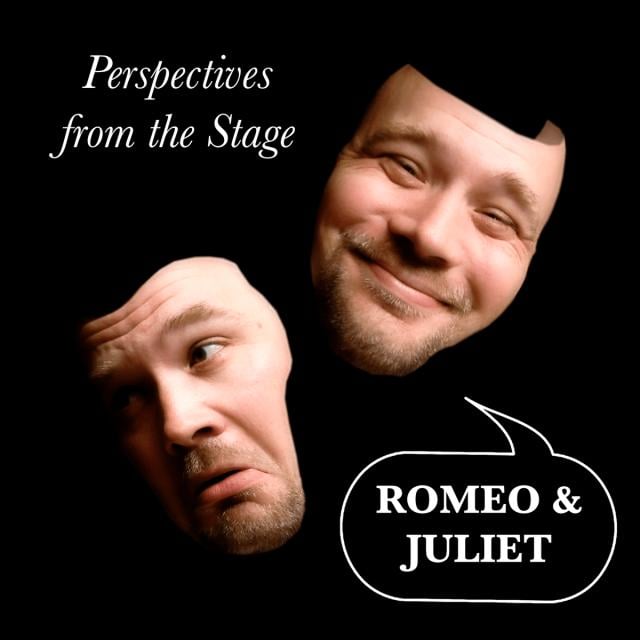
Perspectives from the Stage: Actors Discuss Romeo and Juliet (Coursera)

Perspectives from the Stage: Actors Discuss Romeo and Juliet (Coursera)

This course is meant for anyone who is reading Romeo & Juliet and would like to hear the perspectives of professional actors who have performed in the play. This course primarily consists of interviews with 14 professional actors who have performed in at least one production of Romeo & Juliet somewhere in the US, at theaters and Shakespeare festivals including the American Shakespeare Center, American Players Theatre, and the Arkansas, Colorado, Illinois, New Jersey, and Utah Shakespeare Festivals.

Class Deals by MOOC List - Click here and see Coursera's Active Discounts, Deals, and Promo Codes.

In completing this course, learners will be able to describe the plot of Romeo & Juliet, identify major characters and themes, analyze and interpret heightened text, and consider multiple theatrical approaches to the play.

What You Will Learn
By successfully completing this course, you will be able to describe the plot of Romeo and Juliet and identify major characters and themes.

  • You will be able to analyze and interpret heightened text.
  • You will be able to describe multiple theatrical approaches to Shakespeare's plays.

Syllabus

WEEK 1
Act 1: Introductions
In this module, you will be introduced to the course and some of the major characters in the play. You’ll hear perspectives on the major events in Act 1, including the feud between the Capulets and the Montagues, Romeo’s lovesickness for Rosaline, the marriage being planned for Juliet and Paris, and Capulet’s party, where Romeo and Juliet meet for the first time.

WEEK 2
Act 2: The Courtship
In this module, you’ll hear perspectives on the major events in Act 2, including the whirlwind courtship and secret marriage of Romeo & Juliet, and the increasing involvement of people close to them, including Mercutio, Benvolio, Friar Lawrence and the Nurse.

WEEK 3
Act 3: The Fight
In this module, you’ll hear perspectives on the major events in Act 3, where the romantic comedy begins to pivot towards tragedy. Our actors discuss the fights that take place in this act as well as the aftermath of those fights.

WEEK 4
Act 4: The Last Hope
In this module, you’ll hear perspectives on the major events in Act 4, including the Capulets planning a wedding for Juliet and Paris, and Romeo, Juliet and the Friar planning something very different.

WEEK 5
Act 5: The Tragedy
In this concluding module, our actors discuss the final events of this remarkable play, and offer personal takeaways from having performed in it, as well as reflections on why this play is still so widely read and performed today, over 400 years after it was written.


Go to Class
MOOC List is learner-supported. When you buy through links on our site, we may earn an affiliate commission.

Related Courses

Dante tra poesia e scienza (Federica Web Learning) Federica Web Learning
University of Naples Federico II

Dante tra poesia e scienza (Federica Web Learning)

La Commedia di Dante, una delle opere più importanti della letteratura di tutti i tempi, è endiadi di poesia e scienza. Certamente la cultura scientifica di Dante è vasta per i suoi tempi; essa è talmente fusa nel discorso poetico che non disturba l’orecchio e la mente del lettore; essa non è espressione di mera conoscenza, ma rientra sempre nel concetto del poeta di leggere unitariamente il mondo e le sue espressioni; e di sicuro essa è la manifestazione più alta della scienza del Medioevo, frutto di non poche letture di una cultura scientifica non solo europea, ma anche araba, conosciuta attraverso le traduzioni latine delle opere o dalla frequentazione, come appare dalle ultime ipotesi di ricerche, di musulmani residenti in paesi dell’Italia settentrionale.

Mar 6th 2017
5-12 Weeks
Richard Schechner's Introduction to Performance Studies (Coursera) Coursera
New York University

Richard Schechner's Introduction to Performance Studies (Coursera)

Performance Studies: An Introduction explores the wide world of performance--from theatre, dance, and music to ritual, play, political campaigns, social media, and the performances of everyday life. Performance studies also ranges across cultures--Asia, Africa, the Caribbean, Europe, the Americas. And it spans historical periods from the art of the paleolithic caves to YouTube and the avantgarde. This course is devised by Richard Schechner, one of the pioneers of performance studies, in dialogue with more than a dozen expert scholars and artists.

Jun 8th 2026
13-24 Weeks
Latino: forme e circolazione nella pars Orientis dell’Impero (Federica Web Learning) Federica Web Learning
University of Naples Federico II

Latino: forme e circolazione nella pars Orientis dell’Impero (Federica Web Learning)

Se per l’Occidente mancano testimonianze che non siano quelle indirette di trattazioni specifiche come l’Institutio oratoria di Quintiliano, l’Oriente ha restituito una serie di testimoni diretti delle forme dell’insegnamento del latino,tra I a.C. e VI d.C.: favorita fondamentalmente dall’occupazione militare e dai bisogni dell’amministrazione per tutta la prima età imperiale, nelle province eccentriche dell’Impero, la circolazione del latino venne ulteriormente incentivata da una politica che lo identificava con la lingua dell’amministrazione (e del diritto) a partire dal III secolo. Continuo, infatti, è il contatto dei latinofoni con allofoni che, spesso, si misero alla prova con l’apprendimento della lingua di Roma.

Apr 12th 2017
5-12 Weeks
Medieval Cultural and Literary Expression (saylor.org) Saylor Academy
Saylor.org

Medieval Cultural and Literary Expression (saylor.org)

The Medieval Period, or the Middle Ages, occurred between the fall of the Roman Empire and the beginning of the European Renaissance. In many ways, these “middle times” separate the ancient from the modern world, and although the Renaissance is traditionally touted as a period of particularly explosive creativity and cultural rebirth, we will discover that art and literature flourished in the Middle Ages as well.

Legacy Course
Self-Paced
Il était une fois la littérature de jeunesse (FUN) FUN
Université de Liège

Il était une fois la littérature de jeunesse (FUN)

Pendant 6 semaines, vous découvrirez les richesses de la littérature de jeunesse dans un MOOC qui évoquera le livre dans sa globalité, depuis ses origines jusqu'aux représentations actuelles. On évoquera les romans, les albums mais également quelques maisons d'édition et leur inscription dans le paysage éditorial, les livres numériques ainsi que l'univers numérique des livres de jeunesse, pour clôturer par une dernière séance sur les fictions hors du livre comme les fanfictions ou les objets dérivés.

Feb 28th 2022
5-12 Weeks
Introduction to Acting (FutureLearn) FutureLearn
Luleå University of Technology

Introduction to Acting (FutureLearn)

Be ready for any audition and develop your overall creativity as you learn more about the art of acting. Learn to approach your acting in both a structured and creative way. If you’d like to become an actor, or are interested in the self-knowledge that comes with acting, this three-week course from Luleå University of Technology is for you.

Jan 17th 2022
3 Weeks
Shakespeare's Language: Revealing Meanings and Exploring Myths (FutureLearn) FutureLearn
Lancaster University

Shakespeare's Language: Revealing Meanings and Exploring Myths (FutureLearn)

Demystify renowned Shakespeare myths and get introduced to corpus-based methods for analysing his use of language in context. Debunk and discover common myths surrounding the language of William Shakespeare. William Shakespeare is a global phenomenon, yet there is actually relatively little work specifically devoted to his language, and even less deploying the latest techniques from linguistics.

Jul 12th 2021
4 Weeks