Penshurst Place and the Sidney Family of Writers (FutureLearn)

Offered by Lancaster University,
Penshurst Place and the Sidney Family of Writers (FutureLearn)

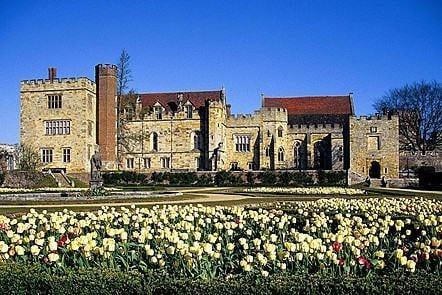
Uncover the literary history of Penshurst Place, the 16th-century home of the Sidney family of writers and poets. Learn how Lady Mary Wroth and the Sidney family shaped the English Renaissance. In the 16th century, Penshurst Place was the home to the Sidney family, renowned for their literary works in the age of Shakespeare. The family, including Lady Mary Wroth and her uncle Sir Philip Sidney, wrote poetry and prose that still appeal to audiences today.

Class Deals by MOOC List - Click here and see FutureLearn's Active Discounts, Deals, and Promo Codes.

On this course, you will be introduced to Penshurst Place, the Sidney family, and their famous works. You will learn how Lady Mary Wroth and Mary Sidney paved the way for female authors in Elizabethan England. You will also review Wroth’s drama ‘Love’s Victory’, which was reenacted and filmed at Penshurst Place in September 2018.

Syllabus
Week 1: The Sidney Family and Penshurst Place
Week 2: The Sidneys and Love
Week 3: The Sidneys and Women’s Household Theatre
Week 4: The Sidneys and Religion

What will you achieve?
By the end of the course, you‘ll be able to...

  • Explore how aristocratic family networks fostered writing by both men and women in the age of Shakespeare
  • Evaluate examples of writings by the Sidney family and their importance as an influence on English literary history
  • Investigate a different type of theatre from Shakespeare's age
  • Explore how individual writers responded to questions of faith and belief in a time of turbulent religious change
  • Investigate how writing shapes the natural environment and the emotions of others both within a family network and beyond.
Go to Class
MOOC List is learner-supported. When you buy through links on our site, we may earn an affiliate commission.

Related Courses

Literature of the English Country House (FutureLearn) FutureLearn
The University of Sheffield

Literature of the English Country House (FutureLearn)

Take a journey through the literature of English country houses from the time of Thomas More to Oscar Wilde. Trace the history and context of country house literature. Through the course you will investigate and discuss the role and representation of the English country house in literature, and learn how to build your own authoritative interpretation of these texts.

Feb 8th 2021
5-12 Weeks
Words Spun Out of Images: Visual and Literary Culture in Nineteenth Century Japan (Coursera) Coursera
The University of Tokyo

Words Spun Out of Images: Visual and Literary Culture in Nineteenth Century Japan (Coursera)

In their ambition to capture “real life,” Japanese painters, poets, novelists and photographers of the nineteenth century collaborated in ways seldom explored by their European contemporaries. This course offers learners the chance to encounter and appreciate behavior, moral standards and some of the material conditions surrounding Japanese artists in the nineteenth century, in order to renew our assumptions about what artistic “realism” is and what it meant.

Oct 5th 2026
4 Weeks
Creative Writing: The Craft of Setting and Description (Coursera) Coursera
Wesleyan University

Creative Writing: The Craft of Setting and Description (Coursera)

In this course aspiring writers will be introduced to the techniques that masters of fiction use to ground a story in a concrete world. From the most realist settings to the most fantastical, writers will learn how to describe the physical world in sharp, sensory detail. We will also learn how to build credibility through research, and to use creative meditation exercises to deepen our own understanding of our story worlds, so that our readers can see all that we imagine.

Sep 14th 2026
4 Weeks
The American Renaissance: Classic Literature of the 19th Century (edX) EdX
DartmouthX

The American Renaissance: Classic Literature of the 19th Century (edX)

Explore the writings of famous American authors from Ralph Waldo Emerson and Harriet Beecher Stowe to Mark Twain, and examine the historic role Dartmouth College played in their formation. What is the American Renaissance? How did Dartmouth help foster the formation of the American Renaissance and its reevaluation and reinvention in the twentieth? Why should we, as twenty-first century readers, concern ourselves with this literature?

Self Paced
4 Weeks
Humphry Davy: Laughing Gas, Literature, and the Lamp (FutureLearn) FutureLearn
Lancaster University,Royal Institution - RI

Humphry Davy: Laughing Gas, Literature, and the Lamp (FutureLearn)

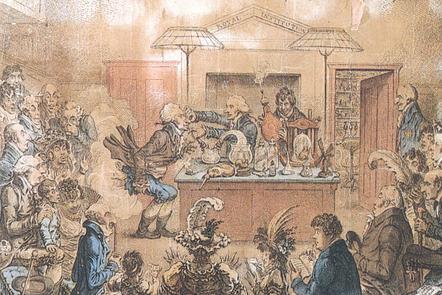
Discover Humphry Davy and his contribution to science and the arts. Before culture was divided into the sciences and the arts there was a chemist who was also a poet. Sir Humphry Davy (1778-1829) is one of the best known men of science of the nineteenth century: he was the first person to inhale nitrous oxide; he isolated nine chemical elements; and he invented the miners’ safety lamp known as the Davy lamp. This course will consider Davy’s life and career using manuscript sources held at the Royal Institution of Great Britain.

Oct 9th 2023
4 Weeks
Jane Austen: Myth, Reality and Global Celebrity (FutureLearn) FutureLearn
University of Southampton

Jane Austen: Myth, Reality and Global Celebrity (FutureLearn)

Discover the fascinating story of author Jane Austen, from her own life in Hampshire to what she means to a global audience today. Jane Austen went from being a moderately successful anonymous novelist in her own time to a global celebrity in ours. On this course you will explore how that happened, exploring Austen’s own literary influences, and her reputation over time.

Self Paced
3 Weeks
Classic Detective Fiction (FutureLearn) FutureLearn
The University of Newcastle, Australia

Classic Detective Fiction (FutureLearn)

Develop detailed knowledge of one of the most popular and widely read literary sub-genres of crime fiction. Are you the next Hercule Poirot? A budding Sherlock Holmes? Embrace your inner Dick Tracy and dive into the world of detective fiction! Explore the back-stories of some of the earliest examples of crime fiction. This course delves deep into the evolution of the crime fiction genre from the early nineteenth century to the present day with a focus on detective novels. Many of these novels shaped the way we think about reading, and have engaged generations of readers from childhood through to our twilight years.

No sessions available
3 Weeks
Literature in the Digital Age: from Close Reading to Distant Reading (FutureLearn) FutureLearn
University of Basel

Literature in the Digital Age: from Close Reading to Distant Reading (FutureLearn)

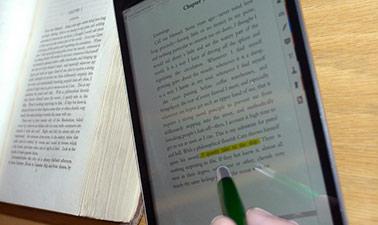
Learn new ways of interpreting literary texts, from time-tested methods to computer-assisted practices such as distant reading. As we make sense of what we read, we construe meaning using the ancient cultural technique of interpretation. Only rarely do we actually reflect this process: what are the means that help us to understand literary texts? How does interpretation work? And how has our increasing use of e-books and tablets changed the way we read and interpret literature?

Available now
5-12 Weeks
Shakespeare: Context and Stagecraft (FutureLearn) FutureLearn
King's College London

Shakespeare: Context and Stagecraft (FutureLearn)

Explore Shakespeare’s stagecraft through three of his most well-known plays: Romeo and Juliet, The Merchant of Venice and Macbeth. Study fascinating theatrical and social contexts that shaped Shakespeare’s plays. On this course, you’ll explore the language, themes, and contexts of three of Shakespeare’s most widely studied and frequently performed plays.

Self Paced
2 Weeks
Fairy Tales: Meanings, Messages, and Morals (FutureLearn) FutureLearn
The University of Newcastle, Australia

Fairy Tales: Meanings, Messages, and Morals (FutureLearn)

Build your skills in literary analysis and creative writing by exploring the meaning of fairy tales. Discover the fascinating circumstances and meanings behind fairy tales. On this course, you will look deeper into the enchanting and surprisingly dark themes of several well-known European fairy tales. What were the authors thinking? What were the cultural and personal concerns that have shaped these stories? What are the readers being asked to believe?

No sessions available
3 Weeks