Literature in the Digital Age: from Close Reading to Distant Reading (FutureLearn)

Offered by University of Basel,
Literature in the Digital Age: from Close Reading to Distant Reading (FutureLearn)

Learn new ways of interpreting literary texts, from time-tested methods to computer-assisted practices such as distant reading. As we make sense of what we read, we construe meaning using the ancient cultural technique of interpretation. Only rarely do we actually reflect this process: what are the means that help us to understand literary texts? How does interpretation work? And how has our increasing use of e-books and tablets changed the way we read and interpret literature?

Class Deals by MOOC List - Click here and see FutureLearn's Active Discounts, Deals, and Promo Codes.

This free online course addresses these key questions as it introduces you to a variety of ways of interpreting literary texts. We will look into time-tested methods such as close reading and historical contextualisation. We shall also address more recent, computer-assisted practices such as distant reading.

Syllabus

Week 1: How we read today
Week 2: Close reading
Week 3: Hyper reading & social reading
Week 4: New Historicism
Week 5: Distant reading
Week 6: Surface reading & the materiality of communication

What will you achieve?

  • Reflect on the different lay and professional reading strategies that are available for reading literature today.
  • Describe the various media in which we read literature in the digital age.
  • Identify the strengths and weaknesses of different reading strategies.
  • Apply the core method of literary studies: close reading.
  • Investigate the various strategies you use on a daily basis as you read online texts.
  • Engage in a cooperative form of online reading called social reading.
  • Compare two forms of historical readings of literary texts: historical and literary-historical contextualization.
  • Discuss the uses and limitations of distant reading, a recent scholarly approach to literary texts that relies on big data and computer analysis.
  • Report on your own distant reading experiment, using the Google Ngram Viewer.
  • Explore approaches to literary texts that do not seek to interpret them but focus on their surface and materiality.

Who is the course for?
This course is for people from all walks of life who enjoy reading literature and would like to know how literary scholars interpret texts in the digital age.
If you are a student looking for an introduction to literary analysis, ‘Literature in the Digital Age’ will provide that.
The only requirement is that you like to read and love to reflect your experience and discuss it with others.
Go to Class
MOOC List is learner-supported. When you buy through links on our site, we may earn an affiliate commission.

Related Courses

Penshurst Place and the Sidney Family of Writers (FutureLearn) FutureLearn
Lancaster University

Penshurst Place and the Sidney Family of Writers (FutureLearn)

Uncover the literary history of Penshurst Place, the 16th-century home of the Sidney family of writers and poets. Learn how Lady Mary Wroth and the Sidney family shaped the English Renaissance. In the 16th century, Penshurst Place was the home to the Sidney family, renowned for their literary works in the age of Shakespeare. The family, including Lady Mary Wroth and her uncle Sir Philip Sidney, wrote poetry and prose that still appeal to audiences today.

No sessions available
4 Weeks
Writing and Disseminating Grey Literature (Coursera) Coursera
Indian Institute for Human Settlements

Writing and Disseminating Grey Literature (Coursera)

If you are a researcher, academic, student, development sector professional or a practitioner who is keen to reach the research-based knowledge you have created to a wider audience, this course is for you. Vast amounts of knowledge are produced by educational and research institutions through rigorous research and fieldwork. Yet, there is a dearth of access to this knowledge among non-academic communities (which includes practitioners, policymakers, and citizens) due to the language used. Researchers can bring visibility to grey literature if they engage with alternate public writing forms.

Oct 19th 2026
5-12 Weeks
Childhood in the Digital Age (FutureLearn) FutureLearn
The Open University

Childhood in the Digital Age (FutureLearn)

Delve into the lives of children and discuss the potential benefits and limitations of technology in their lives. Are you a technology optimist or a technology pessimist? The amount of technology available to children today is greater than in any previous generation, and it is more specifically designed to capture their imaginations. There is heated debate as to how the digital influx is shaping children’s development and experience.

No sessions available
4 Weeks
Classic Detective Fiction (FutureLearn) FutureLearn
The University of Newcastle, Australia

Classic Detective Fiction (FutureLearn)

Develop detailed knowledge of one of the most popular and widely read literary sub-genres of crime fiction. Are you the next Hercule Poirot? A budding Sherlock Holmes? Embrace your inner Dick Tracy and dive into the world of detective fiction! Explore the back-stories of some of the earliest examples of crime fiction. This course delves deep into the evolution of the crime fiction genre from the early nineteenth century to the present day with a focus on detective novels. Many of these novels shaped the way we think about reading, and have engaged generations of readers from childhood through to our twilight years.

No sessions available
3 Weeks
Literature and Mental Health: Reading for Wellbeing (FutureLearn) FutureLearn
The University of Warwick

Literature and Mental Health: Reading for Wellbeing (FutureLearn)

Find out how poems, plays and novels can help us understand and cope with deep emotional strain in this free online course. The great 18th century writer Dr Samuel Johnson, who suffered from severe bouts of depression, said “the only end of writing is to enable the reader better to enjoy life or better to endure it.” This free online course will explore how enjoying literature can help us to endure life.

No sessions available
5-12 Weeks
Shakespeare: Context and Stagecraft (FutureLearn) FutureLearn
King's College London

Shakespeare: Context and Stagecraft (FutureLearn)

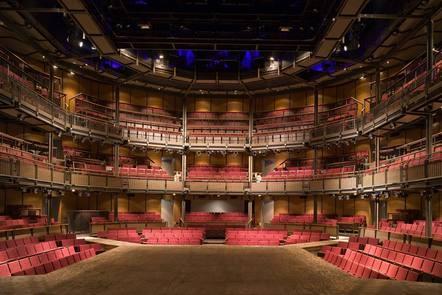
Explore Shakespeare’s stagecraft through three of his most well-known plays: Romeo and Juliet, The Merchant of Venice and Macbeth. Study fascinating theatrical and social contexts that shaped Shakespeare’s plays. On this course, you’ll explore the language, themes, and contexts of three of Shakespeare’s most widely studied and frequently performed plays.

Self Paced
2 Weeks
Shakespeare's Language: Revealing Meanings and Exploring Myths (FutureLearn) FutureLearn
Lancaster University

Shakespeare's Language: Revealing Meanings and Exploring Myths (FutureLearn)

Demystify renowned Shakespeare myths and get introduced to corpus-based methods for analysing his use of language in context. Debunk and discover common myths surrounding the language of William Shakespeare. William Shakespeare is a global phenomenon, yet there is actually relatively little work specifically devoted to his language, and even less deploying the latest techniques from linguistics.

Jul 12th 2021
4 Weeks