Much Ado about Nothing: in Performance (FutureLearn)

Much Ado about Nothing: in Performance (FutureLearn)

Explore how Much Ado about Nothing is performed and interpreted, from original stagings to the modern day, with this free course.

Class Deals by MOOC List - Click here and see FutureLearn's Active Discounts, Deals, and Promo Codes.

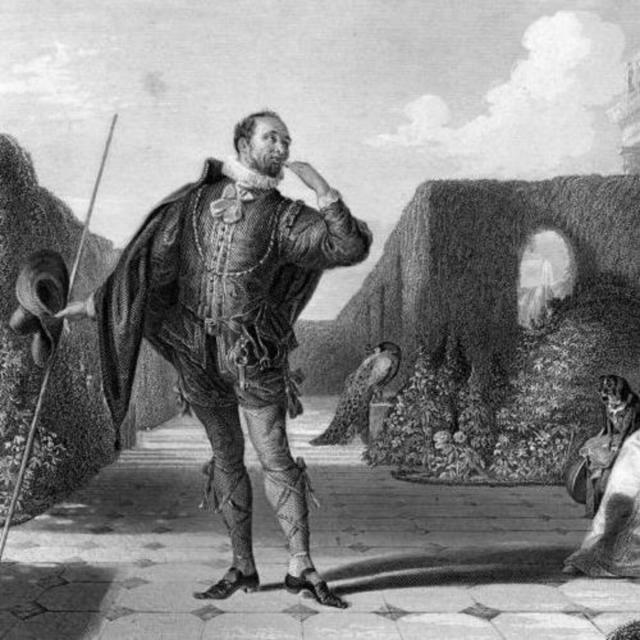
Shakespeare’s much loved play, Much Ado about Nothing, is read and studied all over the world. But it was written to be staged, and can only be fully appreciated and understood through performance.
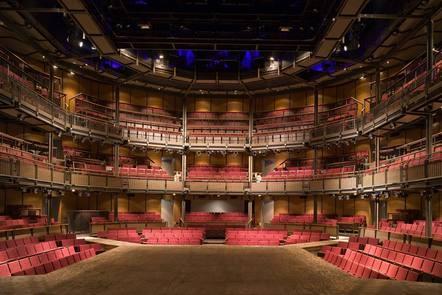
In this free online course, the Royal Shakespeare Company (RSC), the University of Birmingham’s Shakespeare Institute and the Shakespeare Birthplace Trust will welcome you to Stratford-upon-Avon - the home of William Shakespeare and the Royal Shakespeare Theatre.

Learn from actors, academics and an RSC director
Learning from actors, academics and the director of the RSC’s current production, the course will explore Much Ado about Nothing in performance, with a different area of focus for each of its four weeks:

  • Week 1: Dr Nick Walton from the Shakespeare Birthplace Trust will discuss original performance conditions, looking at how Much Ado about Nothing was staged in Shakespeare’s time; how his role as an actor shaped his writing; and how he reflects the age in which he lived.
  • Week 2: Dr Abigail Rokison from the Shakespeare Institute will look at the different ways in which the play has been interpreted for the stage throughout the 20th and 21st centuries, focussing on how the darker side of Much Ado about Nothing has been explored.
  • Week 3: Christopher Luscombe, Director of the RSC’s current production of Much Ado about Nothing, will discuss his role, as he worked on the play from initial rehearsals to its culmination on the Royal Shakespeare Theatre stage.
  • Week 4: Michelle Terry and Edward Bennett, who play Beatrice and Benedick in the current production, will discuss their approach as actors, and how they use the text to create performances with depth, coherence and energy.

Interpret Much Ado about Nothing (Love’s Labour’s Won)
By the end of the course, you’ll feel confident in commenting analytically on the interpretations and staging choices made in the RSC’s current production of Much Ado about Nothing. This sets the play in a new era, just after World War 1, and sees it performed as Love’s Labour’s Won - a title possibly attributed to it during Shakespeare’s lifetime.
This course is an excellent accompaniment to the production, which can be watched: on DVD from the RSC; in production at the Chichester Festival Theatre 24 September 2016 – 29 October 2016; and at the Theatre Royal Haymarket in London from 9 December 2016 – 18 March 2017.

Go to Class
MOOC List is learner-supported. When you buy through links on our site, we may earn an affiliate commission.

Related Courses

Introduction to Who Wrote Shakespeare (Coursera) Coursera
University of London,Goldsmiths, University of London

Introduction to Who Wrote Shakespeare (Coursera)

This free course from the University of London explores critical thinking, and the interpretation of texts, through the Shakespeare authorship question. Using doubt about Shakespeare’s authorship as our playground, we will explore the key concept of authorship attribution, while developing skills in literary analysis, interpretation, and argument. Through forensic exploration of key texts, you will learn why Shakespeare’s authorship is questioned, and what evidence is cited on both sides of the debate.

Jun 1st 2026
4 Weeks
Shakespeare and his World (FutureLearn) FutureLearn
The University of Warwick

Shakespeare and his World (FutureLearn)

Together with the Shakespeare Birthplace Trust, Professor Jonathan Bate explores Shakespeare, his works and the world he lived in. William Shakespeare is one of the most famous authors of all time. 2014 marks the 450th anniversary of his birth. His words have inspired and moved people from around the globe for centuries.

No sessions available
5-12 Weeks
Gabriel García Márquez: entre el poder, la historia y el amor (FutureLearn) FutureLearn
Universidad de los Andes

Gabriel García Márquez: entre el poder, la historia y el amor (FutureLearn)

Identifique las contribuciones del autor a la literatura universal mediante el estudio de tres de sus grandes obsesiones. En este curso usted podrá identificar los aportes narrativos del escritor colombiano Gabriel García Márquez a la literatura universal a través del estudio de tres de las grandes obsesiones del autor: el poder, la historia y el amor.

No sessions available
5-12 Weeks
Literature in the Digital Age: from Close Reading to Distant Reading (FutureLearn) FutureLearn
University of Basel

Literature in the Digital Age: from Close Reading to Distant Reading (FutureLearn)

Learn new ways of interpreting literary texts, from time-tested methods to computer-assisted practices such as distant reading. As we make sense of what we read, we construe meaning using the ancient cultural technique of interpretation. Only rarely do we actually reflect this process: what are the means that help us to understand literary texts? How does interpretation work? And how has our increasing use of e-books and tablets changed the way we read and interpret literature?

Available now
5-12 Weeks
Classic Detective Fiction (FutureLearn) FutureLearn
The University of Newcastle, Australia

Classic Detective Fiction (FutureLearn)

Develop detailed knowledge of one of the most popular and widely read literary sub-genres of crime fiction. Are you the next Hercule Poirot? A budding Sherlock Holmes? Embrace your inner Dick Tracy and dive into the world of detective fiction! Explore the back-stories of some of the earliest examples of crime fiction. This course delves deep into the evolution of the crime fiction genre from the early nineteenth century to the present day with a focus on detective novels. Many of these novels shaped the way we think about reading, and have engaged generations of readers from childhood through to our twilight years.

No sessions available
3 Weeks
Humphry Davy: Laughing Gas, Literature, and the Lamp (FutureLearn) FutureLearn
Lancaster University,Royal Institution - RI

Humphry Davy: Laughing Gas, Literature, and the Lamp (FutureLearn)

Discover Humphry Davy and his contribution to science and the arts. Before culture was divided into the sciences and the arts there was a chemist who was also a poet. Sir Humphry Davy (1778-1829) is one of the best known men of science of the nineteenth century: he was the first person to inhale nitrous oxide; he isolated nine chemical elements; and he invented the miners’ safety lamp known as the Davy lamp. This course will consider Davy’s life and career using manuscript sources held at the Royal Institution of Great Britain.

Oct 9th 2023
4 Weeks
Gabriel García Márquez: Power, History and Love (FutureLearn) FutureLearn
Universidad de los Andes

Gabriel García Márquez: Power, History and Love (FutureLearn)

Identify the author’s contributions to world literature through the study of three of his obsessions: power, history and love. In this course you will be able to identify Colombian writer Gabriel García Márquez’s narrative contributions to world literature through the study of three of the author’s obsessions: power, history and love.

No sessions available
5-12 Weeks
Japanese Culture Through Rare Books (FutureLearn) FutureLearn
Keio University

Japanese Culture Through Rare Books (FutureLearn)

Explore the important roles that books have played in the cultural history of Japan. A book is a tool for preserving words and images. Through books, an abundance of information, including the knowledge and experiences of the people of the past, has been handed down to the present. But books are more than records of words and images.

No sessions available
3 Weeks
Online Games: Literature, New Media, and Narrative (Coursera) Coursera
Vanderbilt University

Online Games: Literature, New Media, and Narrative (Coursera)

Intended for both newcomers who are curious about video games and experienced gamers who want to reflect on their passion, this course will explore what happens to stories, paintings, and films when they become the basis of massively multiplayer online games. The Lord of the Rings trilogy—the novels, films, and video game—are our central example of how “remediation” transforms familiar stories as they move across media.

May 18th 2026
5-12 Weeks