Old Norse Mythology in the Sources (Coursera)

Old Norse Mythology in the Sources (Coursera)

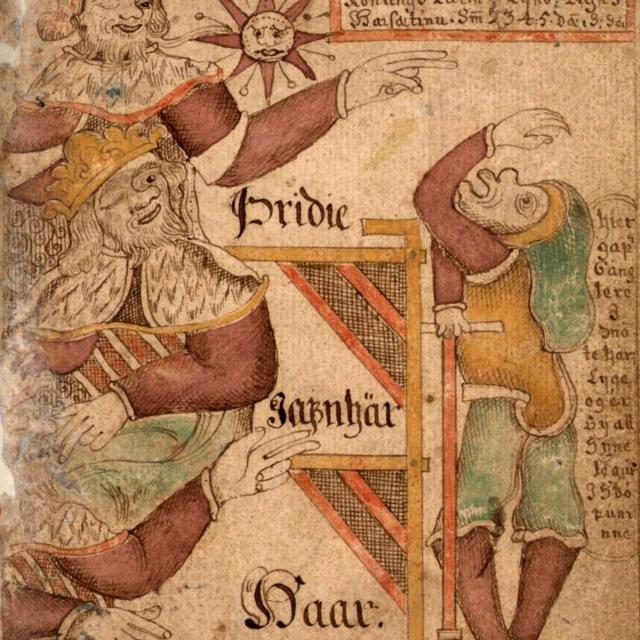
This course is an introduction to the religion of the Vikings as it is recorded in Old Norse and Scandinavian literature from the medieval period. You will learn about the different written sources and what they can teach us about pre-Christian religion in northern Europe in the Viking Age. The course surveys the primary collection of Old Norse poetry about the pre-Christian Scandinavian gods, the Poetic Edda. We will also work with the main collections of stories about the Old Norse gods in prose: Snorri Sturluson's Edda and Saxo's History of the Danes.

Class Deals by MOOC List - Click here and see Coursera's Active Discounts, Deals, and Promo Codes.

Syllabus

WEEK 1
Introduction
In this module you will learn about the history and background of Old Norse mythology. You will gain insight into the source background to Old Norse mythology, the relevant historical developments in Scandinavia and Northern Europe, and the interplay between pre-Christian religion and Christian interpretation in the sources. You will be introduced to the Old Norse sources that inform our understanding of pre-Christian and Viking Age religion in Scandinavia: Eddic poetry, skaldic poetry, Snorri's Edda, and runic inscriptions.

WEEK 2
The Eddic Poems
In this module you will learn about the primary family of gods in Norse mythology, the Æsir. There are many Æsir but very few of them have stories attached to them. You will learn about the ones that appear most in Snorri Sturluson's Edda and in the Eddic poems: Odin, Thor, Loki and a few others.

WEEK 3
Additional Sources
In this module you will learn about the secondary family of gods in Norse mythology, the Vanir. They are hardly to be considered less important than the Æsir, but especially in Snorri's Christianized version of the mythology, the Vanir's role is diminished. Here you will learn about the primary Vanir: Njörðr, Freyr and Freyja.

WEEK 4
Final Assessment
In this final assessment module you will demonstrate that you have learned the important aspects of the course in Norse mythology.


Go to Class
MOOC List is learner-supported. When you buy through links on our site, we may earn an affiliate commission.

Related Courses

Soul Beliefs: Causes and Consequences - Unit 1: Historical Foundations (Coursera) Coursera
Rutgers University

Soul Beliefs: Causes and Consequences - Unit 1: Historical Foundations (Coursera)

Throughout history, the vast majority of people around the globe have believed they have, however defined, a “soul.” While the question of whether the soul exists cannot be answered by science, what we can study are the causes and consequences of various beliefs about the soul and its prospects of surviving the death of the body. Why are soul and afterlife beliefs so common in human history? Are there adaptive advantages to assuming souls exist?

Aug 31st 2026
5-12 Weeks
Online Games: Literature, New Media, and Narrative (Coursera) Coursera
Vanderbilt University

Online Games: Literature, New Media, and Narrative (Coursera)

Intended for both newcomers who are curious about video games and experienced gamers who want to reflect on their passion, this course will explore what happens to stories, paintings, and films when they become the basis of massively multiplayer online games. The Lord of the Rings trilogy—the novels, films, and video game—are our central example of how “remediation” transforms familiar stories as they move across media.

Aug 24th 2026
5-12 Weeks
東坡詞 (Ci Poetry of Su Dong Po) (Coursera) Coursera
National Taiwan University

東坡詞 (Ci Poetry of Su Dong Po) (Coursera)

東坡詞如秋夜的星光、月色,既遙遠又親近。我們以愉悅的心情展讀《東坡詞》,徜徉於〈水調歌頭〉、〈江城子〉、〈定風波〉與〈念奴嬌〉等作品裡,如晤故人,自能心領神會,除了可以看見天才駕馭技巧的藝術表現,更可貼近東坡的內在世界,親切感受一個偉大心靈的躍動,以豐富我們的生命境界,讓我們知曉如何在人情世界中尋得心靈的安頓。

Aug 24th 2026
5-12 Weeks
Philosophy, Science and Religion: Science and Philosophy (Coursera) Coursera
University of Edinburgh

Philosophy, Science and Religion: Science and Philosophy (Coursera)

Philosophy, Science and Religion mark three of the most fundamental modes of thinking about the world and our place in it. Are these modes incompatible? Put another way: is the intellectually responsible thing to do to ‘pick sides’ and identify with one of these approaches at the exclusion of others? Or, are they complementary or mutually supportive? As is typical of questions of such magnitude, the devil is in the details. For example, it is important to work out what is really distinctive about each of these ways of inquiring about the world. In order to gain some clarity here, we’ll be investigating what some of the current leading thinkers in philosophy, science and religion are actually doing.

Aug 24th 2026
5-12 Weeks
Chemerinsky on Constitutional Law - Individual Rights and Liberties (Coursera) Coursera
University of California, Irvine

Chemerinsky on Constitutional Law - Individual Rights and Liberties (Coursera)

Chemerinsky on Constitutional Law: Individual Rights and Liberties will highlight the construction and interpretation of the U.S. Constitution through the centuries with an emphasis on protections of individual liberties and the evolution of equal protection. You'll learn the history behind the Constitution, cases that formed important precedent, and how changes in interpretation have been dependent on shifts in cultural and political climate as well as the composition of the Supreme Court.

Aug 10th 2026
5-12 Weeks
A Journey through Western Christianity: from Persecuted Faith to Global Religion (200 - 1650) (Coursera) Coursera
Yale University

A Journey through Western Christianity: from Persecuted Faith to Global Religion (200 - 1650) (Coursera)

This course follows the extraordinary development of Western Christianity from its early persecution under the Roman Empire in the third century to its global expansion with the Jesuits of the early modern world. We explore the dynamic and diverse character of a religion with an enormous cast characters. We will meet men and women who tell stories of faith as well as of violence, suppression, and division.

Aug 10th 2026
5-12 Weeks
Intellectual Humility: Practice (Coursera) Coursera
University of Edinburgh

Intellectual Humility: Practice (Coursera)

We live in a polarised world where all too often people talk past each other. But do you know when to believe what others say? For example, how quick should we be to accept something that someone else tells us is true, and what should we be looking out for when assessing a person's trustworthiness? Meanwhile, what should we do when we encounter disagreements with people who seem to be our equals? How and when should we adjust our beliefs, and how does the appropriate response vary depending on the evidence? These challenges may be especially important in the arena of religious disagreements. How should we weigh the evidence for and against various theistic and atheistic stances?

Aug 24th 2026
4 Weeks
South Asian Religions & Ecology (Coursera) Coursera
Yale University

South Asian Religions & Ecology (Coursera)

At first glance the fields of religion and ecology may seem and unlikely pairing, but a deeper consideration reveals the two have a great deal to contribute to one another and are indeed inextricably linked. Religions recognize the unity and interdependence of humans with nature. Ecological sciences affirm this deep interconnection with the natural world. This partnership can inspire work for the wellbeing of the Earth community

Aug 17th 2026
5-12 Weeks
Reasoning Across the Disciplines (Coursera) Coursera
University of North Carolina

Reasoning Across the Disciplines (Coursera)

Critical reasoning skills are a key success factor for students entering their first year of college. They must be able to think logically and form arguments. This course, designed with incoming college freshmen in mind but open to anyone, provides an essential grounding in critical reasoning skills. Faculty from multiple disciplines at the University of North Carolina at Chapel Hill offer guidance on applying critical thinking skills in the context of specific disciplines. By developing these skills, students will learn more, enjoy their courses more, and experience greater academic success.

Aug 10th 2026
5-12 Weeks
Structuring Values in Modern China (Coursera) Coursera
The Chinese University of Hong Kong

Structuring Values in Modern China (Coursera)

This sequence of four courses will propose a multi-disciplinary approach to the study of Chinese cultural history conceived of as a succession of modes of rationality (philosophical, bureaucratic, and economic). The focus will be on the moments of paradigm shift from one mode of rationality to another. For each of these moments, cultural facts and artifacts—thought, literature, ritual—will be examined in relationship to changing social, political, and economic systems.

Aug 17th 2026
5-12 Weeks