Fairy Tales: Meanings, Messages, and Morals (FutureLearn)

Fairy Tales: Meanings, Messages, and Morals (FutureLearn)

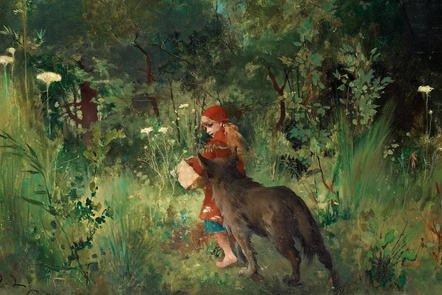
Build your skills in literary analysis and creative writing by exploring the meaning of fairy tales. Discover the fascinating circumstances and meanings behind fairy tales. On this course, you will look deeper into the enchanting and surprisingly dark themes of several well-known European fairy tales. What were the authors thinking? What were the cultural and personal concerns that have shaped these stories? What are the readers being asked to believe?

Class Deals by MOOC List - Click here and see FutureLearn's Active Discounts, Deals, and Promo Codes.

By considering the historical context of fairy tales and examining the characters, styles, and plots, you will discover that the intended morals of the original stories may not be exactly what you first thought.

What topics will you cover?

  • Exploring fairy tales
  • Interpreting literary narratives
  • Cultural context in literature

What will you achieve?
By the end of the course, you'll be able to...

  • Demonstrate close acquaintance with three famous fairy tales.
  • Explain the significance of cultural contexts in shaping fairy tales.
  • Interpret narratives at basic level.

Go to Class
MOOC List is learner-supported. When you buy through links on our site, we may earn an affiliate commission.

Related Courses

Writing and Disseminating Grey Literature (Coursera) Coursera
Indian Institute for Human Settlements

Writing and Disseminating Grey Literature (Coursera)

If you are a researcher, academic, student, development sector professional or a practitioner who is keen to reach the research-based knowledge you have created to a wider audience, this course is for you. Vast amounts of knowledge are produced by educational and research institutions through rigorous research and fieldwork. Yet, there is a dearth of access to this knowledge among non-academic communities (which includes practitioners, policymakers, and citizens) due to the language used. Researchers can bring visibility to grey literature if they engage with alternate public writing forms.

Feb 9th 2026
5-12 Weeks
Reasoning Across the Disciplines (Coursera) Coursera
University of North Carolina

Reasoning Across the Disciplines (Coursera)

Critical reasoning skills are a key success factor for students entering their first year of college. They must be able to think logically and form arguments. This course, designed with incoming college freshmen in mind but open to anyone, provides an essential grounding in critical reasoning skills. Faculty from multiple disciplines at the University of North Carolina at Chapel Hill offer guidance on applying critical thinking skills in the context of specific disciplines. By developing these skills, students will learn more, enjoy their courses more, and experience greater academic success.

May 18th 2026
5-12 Weeks
Gabriel García Márquez: Power, History and Love (FutureLearn) FutureLearn
Universidad de los Andes

Gabriel García Márquez: Power, History and Love (FutureLearn)

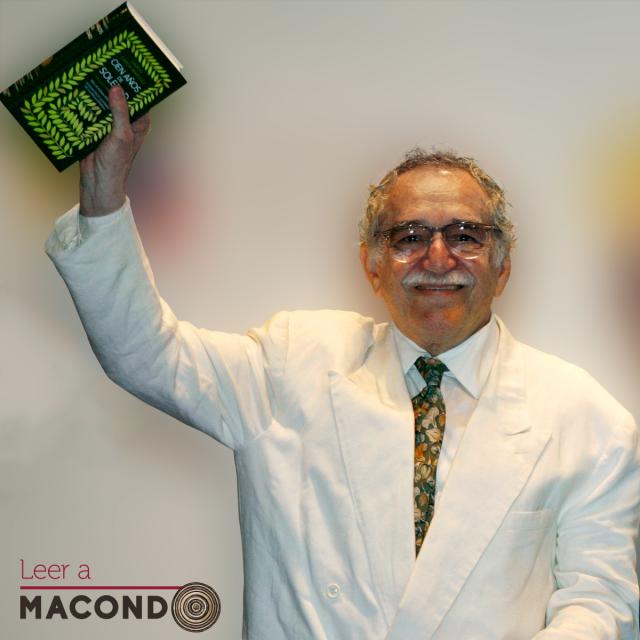
Identify the author’s contributions to world literature through the study of three of his obsessions: power, history and love. In this course you will be able to identify Colombian writer Gabriel García Márquez’s narrative contributions to world literature through the study of three of the author’s obsessions: power, history and love.

No sessions available
5-12 Weeks
Jane Austen: Myth, Reality and Global Celebrity (FutureLearn) FutureLearn
University of Southampton

Jane Austen: Myth, Reality and Global Celebrity (FutureLearn)

Discover the fascinating story of author Jane Austen, from her own life in Hampshire to what she means to a global audience today. Jane Austen went from being a moderately successful anonymous novelist in her own time to a global celebrity in ours. On this course you will explore how that happened, exploring Austen’s own literary influences, and her reputation over time.

Jan 30th 2023
3 Weeks
A-level Study Boost: Unseen Poetry and the Creative Process (FutureLearn) FutureLearn
University of Reading

A-level Study Boost: Unseen Poetry and the Creative Process (FutureLearn)

Discover effective techniques to analyse unseen poetry and learn about the creative writing process. Improve your skills in analysis and creative writing. What do you do when you encounter a poem for the first time? How can the process of writing poetry help you to enjoy and understand the written word in new ways? On this course, you’ll explore strategies for close reading and creative writing using a poem called ‘Patagonia’ by Kate Clanchy as a case study.

No sessions available
2 Weeks
Humphry Davy: Laughing Gas, Literature, and the Lamp (FutureLearn) FutureLearn
Lancaster University,Royal Institution - RI

Humphry Davy: Laughing Gas, Literature, and the Lamp (FutureLearn)

Discover Humphry Davy and his contribution to science and the arts. Before culture was divided into the sciences and the arts there was a chemist who was also a poet. Sir Humphry Davy (1778-1829) is one of the best known men of science of the nineteenth century: he was the first person to inhale nitrous oxide; he isolated nine chemical elements; and he invented the miners’ safety lamp known as the Davy lamp. This course will consider Davy’s life and career using manuscript sources held at the Royal Institution of Great Britain.

Oct 9th 2023
4 Weeks
Penshurst Place and the Sidney Family of Writers (FutureLearn) FutureLearn
Lancaster University

Penshurst Place and the Sidney Family of Writers (FutureLearn)

Uncover the literary history of Penshurst Place, the 16th-century home of the Sidney family of writers and poets. Learn how Lady Mary Wroth and the Sidney family shaped the English Renaissance. In the 16th century, Penshurst Place was the home to the Sidney family, renowned for their literary works in the age of Shakespeare. The family, including Lady Mary Wroth and her uncle Sir Philip Sidney, wrote poetry and prose that still appeal to audiences today.

No sessions available
4 Weeks
Shakespeare: Context and Stagecraft (FutureLearn) FutureLearn
King's College London

Shakespeare: Context and Stagecraft (FutureLearn)

Explore Shakespeare’s stagecraft through three of his most well-known plays: Romeo and Juliet, The Merchant of Venice and Macbeth. Study fascinating theatrical and social contexts that shaped Shakespeare’s plays. On this course, you’ll explore the language, themes, and contexts of three of Shakespeare’s most widely studied and frequently performed plays.

Available Now
2 Weeks